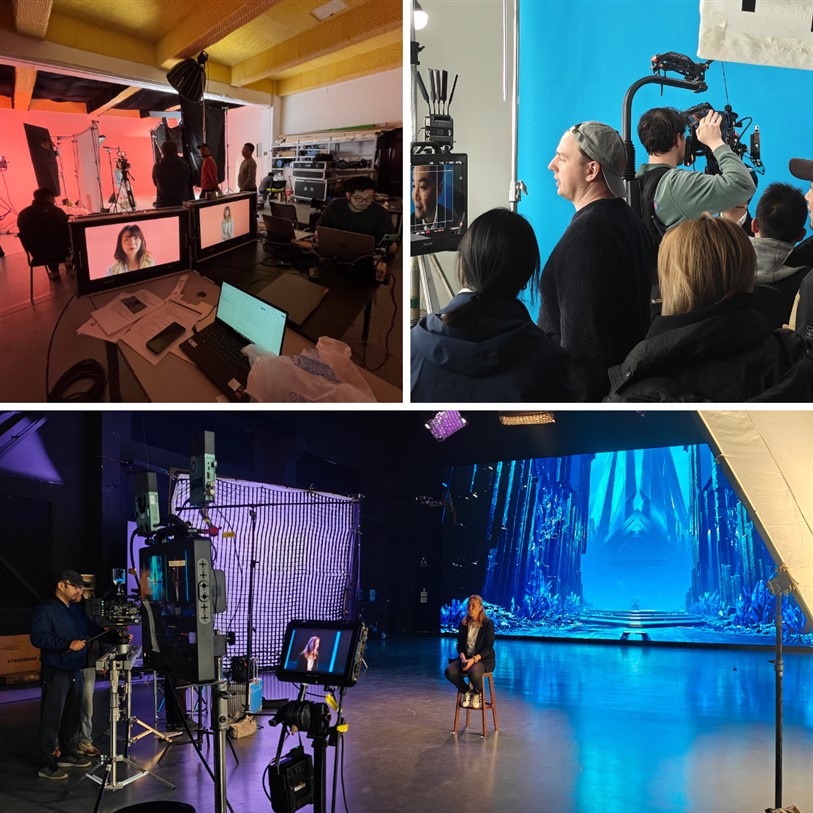
Shanghai English-Speaking Producer for Video Photo Production

A Shanghai English-speaking producer can help international clients film in China with clear communication, practical planning, and reliable local execution. For overseas brands, agencies, broadcasters, filmmakers, and corporate teams, production in Shanghai often requires more than booking a camera crew. It also involves locations, permits, equipment, schedules, transport, translation, crew coordination, and on-set problem-solving.

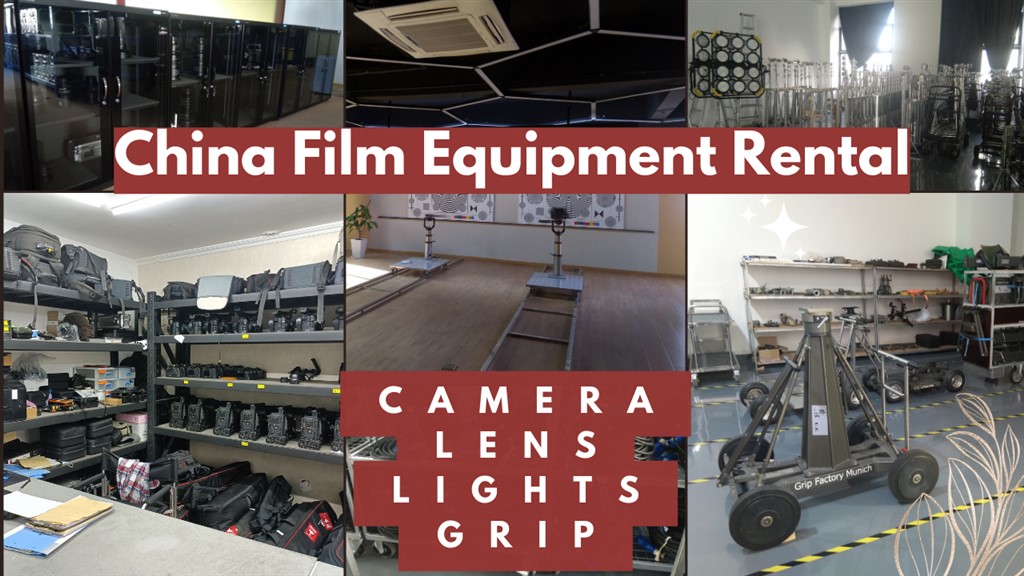
Shoot In China is based in Shanghai and supports productions across the city, nearby Suzhou and Kunshan, wider mainland China, and Hong Kong. Our bilingual English-Chinese team provides producer support, fixer services, camera crews, DOPs, equipment rental, location scouting, logistics, editing, subtitles, and post-production.

Whether you are planning a corporate interview, documentary, commercial, branded film, event video, factory shoot, or remote production, working with an English-speaking producer in Shanghai can make the process clearer and easier to manage.
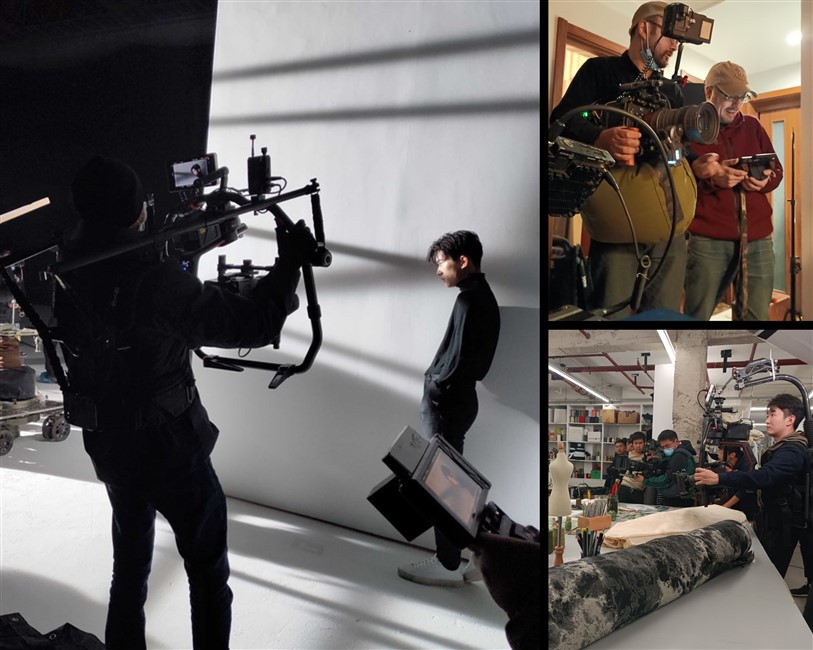
Shanghai English-Speaking Producer for Video Photo Production

Why Hire a Shanghai English-Speaking Producer?

Shanghai is one of the most practical production bases in China. It has experienced film crews, strong equipment rental options, international hotels, modern offices, studios, event venues, creative spaces, and easy access to nearby industrial cities.

However, even in Shanghai, filming still needs local knowledge. A corporate office may require visitor registration. A hotel may need management approval. A factory in Suzhou or Kunshan may have safety rules. A venue may ask for an equipment list before the crew can enter. A location may look good but be too noisy for interviews.

A Shanghai English-speaking producer helps bridge the gap between overseas production expectations and local Chinese working conditions. International clients can communicate clearly in English, while the producer works with local crew, suppliers, venue contacts, drivers, and site managers in Chinese.

This support is especially useful when the project involves overseas agencies, global marketing teams, local China offices, factory managers, bilingual crews, or remote clients joining from abroad.

English Communication With Local China Execution

The value of an English-speaking producer is not only language. It is also production judgment.

International clients often expect clear call sheets, realistic schedules, direct updates, organized crew roles, and quick feedback during production. At the same time, a China shoot needs local communication with locations, drivers, suppliers, camera teams, lighting crews, factory contacts, contributors, and office managers.

An English-speaking producer in Shanghai can support both sides. They understand how international clients explain creative ideas, and they also understand how those ideas need to be translated into local action.

This can reduce common production problems, such as unclear schedules, misunderstood location rules, missing equipment details, or interview subjects arriving unprepared.

Shanghai English-Speaking Producer Services

Shoot In China provides flexible producer support for projects of different sizes. Some clients only need one producer for a short interview day. Others need a larger team with a DOP, sound recordist, gaffer, camera assistant, fixer, production assistant, driver, drone operator, photographer, editor, and post-production support.

Our services can include:

  • English-speaking producer support
  • Bilingual English-Chinese production coordination
  • Fixer services
  • Corporate video production
  • Documentary filming
  • Commercial and branded content
  • Executive interviews
  • Event and conference filming
  • Factory and industrial shoots
  • Camera crew and DOP hire
  • Equipment rental
  • Location scouting
  • Permit and access support
  • Transport and logistics
  • Remote production support
  • Editing, subtitles, and post-production

The right setup depends on the brief. A simple interview may need a compact crew. A commercial, documentary, event, factory shoot, or multi-city project usually needs more planning and stronger coordination.

Corporate Video Production in Shanghai

Corporate video is one of the most common reasons clients need a Shanghai English-speaking producer. These projects often involve overseas marketing teams, local Chinese offices, senior executives, employees, factories, and global approval processes.

A corporate shoot may include:

  • CEO interviews
  • Leadership messages
  • Company profile videos
  • Office filming
  • Product demonstrations
  • Customer stories
  • Internal communication videos
  • Training content
  • Recruitment videos
  • Event highlights
  • Social media cutdowns

For these projects, producer support keeps the shoot organized. A producer can help confirm the interview room, brief speakers, arrange crew and equipment, manage timing, coordinate with local offices, and support bilingual communication on set.

This is especially useful when the local office is busy or unfamiliar with film production. The producer helps explain what the crew needs in practical terms, without making the process feel complicated.

Interview Filming and Executive Communication

Shanghai is a major base for executive interviews, leadership profiles, and corporate communication videos. These shoots may look simple, but the details matter.

A strong interview needs a quiet room, clean sound, controlled lighting, a suitable background, and enough time for the speaker to feel comfortable. If the interview involves both English and Chinese speakers, translation and subtitle planning may also be needed.

A Shanghai English-speaking producer can help with:

  • Interview scheduling
  • Speaker briefing
  • Question coordination
  • Room checks
  • Crew and equipment planning
  • Teleprompter support when needed
  • Makeup coordination when required
  • On-set translation
  • Client communication
  • Subtitle coordination

This support helps international teams get better interview content while keeping the shoot day efficient.

Shanghai, Suzhou, and Kunshan Production Support

Shanghai is also a practical base for shoots in Suzhou, Kunshan, Wuxi, Hangzhou, and other nearby cities. Many international companies have factories, offices, warehouses, R&D centers, and industrial facilities in these areas.

This makes the region useful for:

  • Factory filming
  • Industrial video production
  • Manufacturing B-roll
  • Engineer interviews
  • Product assembly footage
  • Warehouse and logistics visuals
  • Safety and training videos
  • Corporate case studies
  • Management interviews

Factory and industrial shoots require careful planning. Sites may have visitor registration, PPE rules, restricted areas, confidential processes, noise issues, and active production schedules.

An English-speaking producer can help communicate with plant managers, organize filming windows, brief the crew, and explain the production plan clearly to both overseas and local teams.

Documentary and Media Production Support

Documentary and media projects often need flexibility. The story may change during production. Contributors may become available late. Locations may shift. Interviews may require careful explanation.

A Shanghai English-speaking producer, working with a bilingual local team, can support:

  • Local research
  • Contributor outreach
  • Interview setup
  • Field production support
  • Translation and interpretation
  • Location access
  • Travel planning
  • Release forms
  • Cultural context
  • Schedule adjustments

This is useful for broadcasters, documentary directors, journalists, branded documentary teams, and editorial crews filming in Shanghai or elsewhere in China.

The producer helps the overseas team understand what is realistic while the local team manages communication and access on the ground.

Commercial and Branded Content Production

Commercial and branded shoots usually need more structure than a basic corporate interview. These projects may involve agencies, clients, directors, DOPs, casting, styling, art direction, makeup, lighting plans, location management, client monitoring, and post-production.

A Shanghai English-speaking producer can help overseas clients communicate creative expectations clearly while the local team manages the practical details.

Support may include:

  • Creative planning
  • Crew sourcing
  • Location research
  • Casting support
  • Supplier coordination
  • Equipment planning
  • Production scheduling
  • Client communication
  • Shoot-day management
  • Post-production coordination

This kind of support works well for brand films, product videos, commercials, lifestyle shoots, corporate campaigns, and multi-city content projects.

Event and Conference Filming in Shanghai

Shanghai hosts many corporate events, conferences, trade shows, product launches, forums, exhibitions, luxury events, and internal meetings. International clients often need reliable coverage, fast communication, and quick delivery.

Event production support may include:

  • Single-camera or multi-camera filming
  • Speaker recording
  • Panel discussion coverage
  • Audience reactions
  • Networking footage
  • Interview corner setup
  • Photography add-ons
  • Highlight video editing
  • Social media cutdowns
  • Same-day or next-day edits when possible

A Shanghai English-speaking producer can coordinate with overseas clients, local organizers, venue teams, hotel staff, AV suppliers, speakers, and camera crews.

Since event moments cannot be repeated, clear planning is essential.

Remote Production in Shanghai

Many overseas clients now need content from Shanghai without sending a full international team. Remote production can work well for interviews, office filming, factory videos, event coverage, product demos, documentary pickups, and B-roll shoots.

A Shanghai English-speaking producer can manage the local side while the overseas team joins remotely.

This may include:

  • Local crew booking
  • Location preparation
  • Contributor briefing
  • Equipment rental
  • Remote viewing setup
  • Shoot-day supervision
  • Client updates
  • Proxy uploads
  • Rushes delivery
  • Editing coordination
  • Subtitle support

Clear English communication is especially important for remote production. Since the overseas client cannot solve problems in person, producer support helps keep the shoot aligned with the brief.

Nationwide China and Hong Kong Coverage

Although Shanghai is our main base, Shoot In China supports production across mainland China and Hong Kong.

Our network covers:

  • Shanghai
  • Suzhou
  • Kunshan
  • Wuxi
  • Hangzhou
  • Beijing
  • Shenzhen
  • Guangzhou
  • Chengdu
  • Chongqing
  • Tianjin
  • Qingdao
  • Xi’an
  • Wuhan
  • Zhengzhou
  • Dalian
  • Yantai
  • Hong Kong
  • Macau

Each city works differently. Beijing may require more formal planning around institutions or cultural locations. Shenzhen and Guangzhou are strong for technology, manufacturing, logistics, and product stories. Chengdu and Chongqing work well for lifestyle, food, documentary, and western China stories. Hong Kong can be useful for finance, luxury, regional headquarters, and international-facing production.

For multi-city projects, one bilingual production partner can help keep communication, crew standards, visual approach, and delivery workflow consistent.

Hong Kong and Mainland China Production Support

Some projects need both mainland China and Hong Kong coverage. This can happen for corporate campaigns, documentary shoots, financial stories, luxury brand content, regional headquarters filming, or multi-city interviews.

Hong Kong and mainland China have different production habits, crew structures, location processes, casting expectations, and usage considerations. A producer who understands international clients and regional production workflows can help coordinate these differences.

Shoot In China can support mainland China shoots directly and coordinate Hong Kong production needs with suitable local crew and production partners when required.

Why Work With Shoot In China?

Shoot In China has supported international productions across China since 2012. Based in Shanghai, our team combines English communication, Chinese local coordination, local crew networks, equipment rental support, fixer services, and post-production capabilities.

For overseas clients, the advantage is practical. You can communicate clearly in English while still getting local Chinese production access, crew coordination, location support, logistics, and on-set problem-solving.

Whether your project is a corporate interview, documentary, commercial, event, factory shoot, branded film, remote production, or multi-city China project, Shoot In China can help plan and manage the process.

What to Prepare Before Hiring a Shanghai English-Speaking Producer

A short brief helps us respond accurately. It does not need to be final, but it should include the main details.

Useful information includes:

  • Project type
  • Shoot city or cities
  • Shoot date
  • Number of filming days
  • Location type
  • Interview subjects
  • Crew requirements
  • Equipment needs
  • Permit or access concerns
  • Factory or site requirements
  • Final video length
  • Delivery format
  • Remote viewing needs
  • Editing or subtitle needs
  • Budget range
  • Delivery deadline

With this information, we can suggest a practical crew size, schedule, equipment package, and production approach.

Contact Shoot In China for a Shanghai English-Speaking Producer

If you need a Shanghai English-speaking producer for film, corporate video, documentary, commercial, event, factory filming, branded content, remote production, or a multi-city shoot across China and Hong Kong, Shoot In China can help.

Our Shanghai-based team can support your project from the first brief to final delivery, with clear English communication, bilingual local coordination, crew hire, equipment rental, location access, logistics, editing, subtitles, and post-production.

Contact Shoot In China to discuss your next production in Shanghai, Suzhou, Kunshan, across China, or Hong Kong.
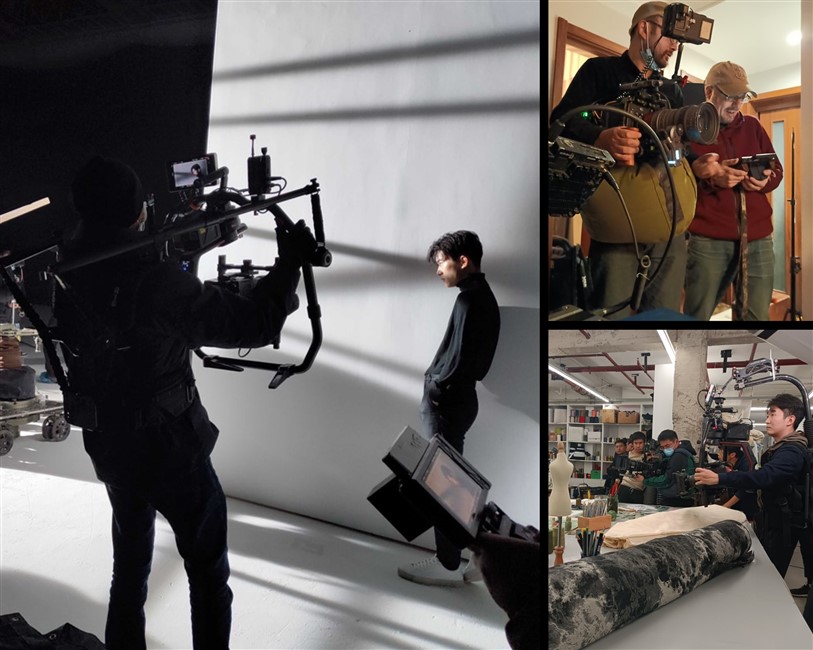
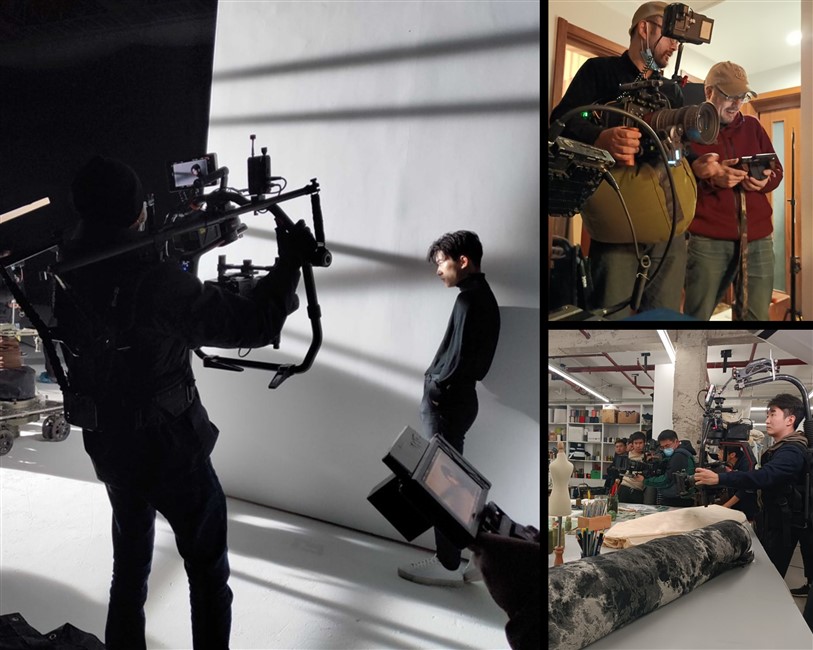
British Producer in Shanghai for Film & Corporate Shoots

A British producer in Shanghai can help international clients film in China with clearer communication, stronger creative understanding, and reliable local execution. For overseas brands, agencies, broadcasters, filmmakers, and corporate teams, shooting in China often requires more than hiring a camera crew. It also involves locations, permits, equipment, crew coordination, translation, logistics, scheduling, and fast decision-making on the ground.

Shoot In China is based in Shanghai and supports productions across the city, nearby Suzhou and Kunshan, wider mainland China, and Hong Kong. Our team combines British and Chinese production experience with bilingual English-Chinese coordination, camera crew hire, equipment rental, location support, fixer services, logistics, editing, subtitles, and post-production.

Whether you are planning a corporate interview, documentary, commercial, branded film, factory shoot, event video, or remote production, working with an English-speaking producer in Shanghai can make the process easier for international teams.

British Producer in Shanghai for Film & Corporate Shoots

Why Work With a British Producer in Shanghai?

Shanghai is one of China’s most practical production bases. It has international companies, strong crew resources, equipment rental options, studios, hotels, offices, event venues, creative spaces, and access to nearby industrial cities.

However, filming in Shanghai still needs local production knowledge. A location may require building approval. A corporate office may need visitor registration. A factory in Suzhou or Kunshan may have safety rules. A venue may need equipment lists before allowing access. A driver may need exact loading instructions.

A British producer in Shanghai helps bridge the gap between overseas production expectations and local China execution. International clients can communicate clearly in English while the local team handles Chinese communication, crew coordination, access, transport, and logistics.

This is especially useful when the shoot involves overseas agencies, corporate headquarters, local China offices, factory managers, bilingual crews, or remote clients joining from abroad.

British and Chinese Production Experience

The strength of this setup is not simply that the producer is British. The real value is the combination of international communication and China-based production experience.

International clients often want someone who understands how Western production teams work. They may expect clear call sheets, direct communication, realistic scheduling, organized crew roles, and fast updates during production.

At the same time, a successful China shoot needs local relationships and practical coordination. The production team must speak with locations, suppliers, drivers, venue managers, contributors, factory teams, crew, and local clients in Chinese.

A British producer working with a Chinese production team can support both sides. This helps keep the production clear, calm, and practical from the first brief to the final delivery.

Film and Corporate Production Services in Shanghai

Shoot In China provides flexible production support for projects of different sizes. Some clients only need a small interview crew. Others need a fuller production team with a producer, director, DOP, sound recordist, lighting crew, production assistant, fixer, driver, photographer, editor, and post-production support.

Our services can include:

  • British producer and English-speaking producer support
  • Bilingual English-Chinese production coordination
  • Fixer services
  • Corporate video production
  • Documentary filming
  • Commercial and branded content
  • Executive interviews
  • Event and conference filming
  • Factory and industrial shoots
  • Camera crew and DOP hire
  • Equipment rental
  • Location scouting
  • Permit and access support
  • Transport and logistics
  • Remote production support
  • Editing, subtitles, and post-production

The right setup depends on your brief. A simple executive interview may need a compact crew. A commercial, documentary, factory shoot, or multi-city project usually needs more planning and a stronger production structure.

Corporate Video and Executive Interviews

Corporate video is one of the most common reasons clients look for a British producer in Shanghai. These shoots often involve overseas marketing teams, local Chinese offices, senior executives, employees, factories, and global approval processes.

A corporate shoot may include:

  • CEO interviews
  • Leadership messages
  • Company profile videos
  • Office filming
  • Product demonstrations
  • Customer stories
  • Internal communication videos
  • Training content
  • Recruitment videos
  • Event highlights
  • Social media cutdowns

For these projects, producer support keeps the day organized. A producer can help confirm the interview room, brief speakers, arrange the crew, manage equipment, coordinate with local offices, and support bilingual communication on set.

This is especially useful when the local office is busy or unfamiliar with film production. The producer helps explain what the crew needs in practical terms, without making the process feel complicated.

Shanghai Production Support for International Crews

Shanghai is a strong base for international production because it offers a good mix of business access, experienced crew, rental equipment, and international infrastructure.

Common Shanghai shoot types include:

  • Corporate interviews
  • Brand films
  • Financial and professional service videos
  • Luxury and lifestyle content
  • Event highlights
  • Conference filming
  • Product videos
  • Documentary interviews
  • Office B-roll
  • Remote production

A British producer in Shanghai can help overseas clients manage the production without relying on unclear communication. This includes planning the schedule, coordinating crew, checking locations, managing client expectations, and helping the local team understand the creative brief.

Suzhou and Kunshan Production Support

Shanghai is also a practical base for shoots in Suzhou and Kunshan. Many international companies have factories, offices, R&D centers, warehouses, and industrial facilities in these areas.

This makes Suzhou and Kunshan especially useful for:

  • Factory filming
  • Industrial video production
  • Manufacturing B-roll
  • Engineer interviews
  • Product assembly footage
  • Warehouse and logistics visuals
  • Corporate case studies
  • Training videos
  • Safety videos
  • Management interviews

Factory and industrial shoots need careful coordination. Sites may have PPE requirements, visitor registration, restricted areas, confidential processes, noise issues, and active production schedules.

A producer can help communicate with plant managers, plan filming windows, organize crew movement, and make sure the shoot captures useful footage without disrupting daily operations.

Because Suzhou and Kunshan are close to Shanghai, a Shanghai-based production team can often support these shoots efficiently while keeping access to Shanghai crew and equipment resources.

Documentary and Media Production

Documentary and media shoots often require flexibility. The story may change during production. Contributors may become available late. Locations may shift. Interviews may need careful explanation.

A British producer in Shanghai, working with a bilingual local team, can support:

  • Local research
  • Contributor outreach
  • Interview setup
  • Field production support
  • Translation and interpretation
  • Location access
  • Travel planning
  • Release forms
  • Cultural context
  • Schedule adjustments

This is useful for broadcasters, documentary directors, journalists, branded documentary teams, and editorial crews filming in China.

The producer helps the overseas team understand what is realistic within the schedule, while the local team handles communication and access on the ground.

Commercial and Branded Content

Commercial and branded shoots need more structure than a basic corporate interview. These projects may involve agencies, clients, directors, DOPs, casting, styling, art direction, makeup, lighting plans, location management, client monitoring, and post-production.

A British producer in Shanghai can help overseas clients communicate creative expectations clearly while the local team manages the practical details.

Support may include:

  • Creative planning
  • Crew sourcing
  • Location research
  • Casting support
  • Supplier coordination
  • Equipment planning
  • Production scheduling
  • Client communication
  • Shoot-day management
  • Post-production coordination

This kind of support works well for product videos in Shanghai, corporate campaigns in Suzhou, commercials in Beijing, factory stories in Kunshan, lifestyle shoots in Chengdu, and multi-city brand projects.

Event and Conference Filming

Shanghai hosts many corporate events, conferences, trade shows, product launches, forums, luxury events, and internal meetings. International clients often need both reliable coverage and fast delivery.

Event production support may include:

  • Single-camera or multi-camera filming
  • Speaker recording
  • Panel discussion coverage
  • Audience reactions
  • Networking footage
  • Interview corner setup
  • Photography add-ons
  • Highlight video editing
  • Social media cutdowns
  • Same-day or next-day edits when possible

A British producer in Shanghai can help coordinate with overseas clients, local event organizers, venue teams, hotel staff, AV suppliers, speakers, and camera crews.

Because event moments cannot be repeated, clear planning is essential.

Remote Production in Shanghai and China

Many overseas clients now need content from China without sending a full international team. Remote production can work well for interviews, office filming, factory videos, event coverage, product demos, documentary pickups, and B-roll shoots.

A British producer in Shanghai can help manage the local side while the overseas team joins remotely.

This may include:

  • Local crew booking
  • Location preparation
  • Contributor briefing
  • Equipment rental
  • Remote viewing setup
  • Shoot-day supervision
  • Client updates
  • Proxy uploads
  • Rushes delivery
  • Editing coordination
  • Subtitle support

Clear English communication is especially important for remote production. Since the overseas client cannot solve problems in person, producer support helps keep the shoot aligned with the brief.

Nationwide China and Hong Kong Coverage

Although Shanghai is the main base, Shoot In China supports production across mainland China and Hong Kong.

Our network covers:

  • Shanghai
  • Suzhou
  • Kunshan
  • Wuxi
  • Hangzhou
  • Beijing
  • Shenzhen
  • Guangzhou
  • Chengdu
  • Chongqing
  • Tianjin
  • Qingdao
  • Xi’an
  • Wuhan
  • Zhengzhou
  • Dalian
  • Yantai
  • Hong Kong
  • Macau

Each city works differently. Beijing may require more formal planning around institutions or cultural locations. Shenzhen and Guangzhou are strong for technology, manufacturing, and product stories. Chengdu and Chongqing work well for lifestyle, food, documentary, and western China stories. Hong Kong can be useful for finance, luxury, regional headquarters, and international-facing production.

For multi-city projects, one bilingual production partner can help keep communication, crew standards, visual approach, and delivery workflow consistent.

Hong Kong and Mainland China Production Support

Some projects need both mainland China and Hong Kong coverage. This can happen for corporate campaigns, documentary shoots, financial stories, luxury brand content, regional headquarters filming, or multi-city interviews.

Hong Kong and mainland China have different production habits, crew structures, location processes, casting expectations, and usage considerations. A producer who understands international clients and regional production workflows can help coordinate these differences.

Shoot In China can support mainland China shoots directly and coordinate Hong Kong production needs with suitable local crew and production partners when required.

Why Work With Shoot In China?

Shoot In China has supported international productions across China since 2012. Based in Shanghai, our team combines British and Chinese production experience, English-Chinese communication, local crew networks, equipment rental support, fixer services, and post-production capabilities.

For overseas clients, the advantage is practical. You can communicate clearly in English while still getting local Chinese production access, crew coordination, location support, logistics, and on-set problem-solving.

Whether your project is a corporate interview, documentary, commercial, event, factory shoot, branded film, remote production, or multi-city China project, Shoot In China can help plan and manage the process.

What to Prepare Before Hiring a British Producer in Shanghai

A short brief helps us respond accurately. It does not need to be final, but it should include the main details.

Useful information includes:

  • Project type
  • Shoot city or cities
  • Shoot date
  • Number of filming days
  • Location type
  • Interview subjects
  • Crew requirements
  • Equipment needs
  • Permit or access concerns
  • Factory or site requirements
  • Final video length
  • Delivery format
  • Remote viewing needs
  • Editing or subtitle needs
  • Budget range
  • Delivery deadline

With this information, we can suggest a practical crew size, schedule, equipment package, and production approach.

Contact Shoot In China for a British Producer in Shanghai

If you need a British producer in Shanghai for film, corporate video, documentary, commercial, event, factory filming, branded content, remote production, or a multi-city shoot across China and Hong Kong, Shoot In China can help.

Our Shanghai-based team can support your project from the first brief to final delivery, with clear English communication, bilingual local coordination, crew hire, equipment rental, location access, logistics, editing, subtitles, and post-production.

Contact Shoot In China to discuss your next production in Shanghai, Suzhou, Kunshan, across China, or Hong Kong.
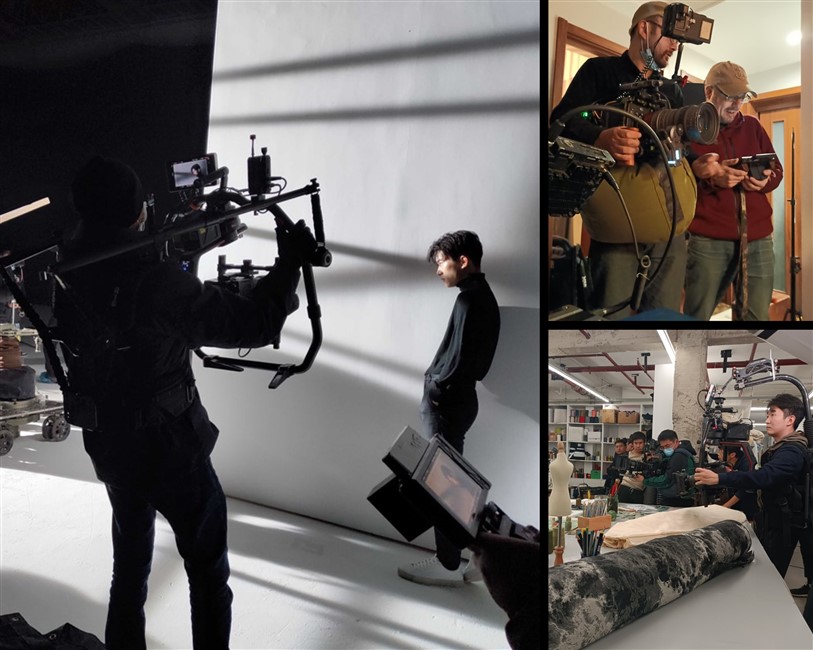
English-Speaking Director in China for Film Shoots

An English-speaking director in China can help international clients turn a creative brief into a clear, well-managed production. For overseas brands, agencies, broadcasters, filmmakers, and corporate teams, filming in China often requires more than technical crew. It also needs strong direction, clear communication, local production knowledge, and the ability to guide both international and Chinese teams on set.

China offers a wide range of filming opportunities, from corporate offices and modern skylines to factories, cultural locations, hotels, studios, event venues, and documentary environments. However, every shoot still needs careful planning. Language, local access, crew communication, location rules, schedule pressure, and client expectations all affect the final result.

Shoot In China has supported international productions across China since 2012. Based in Shanghai, our bilingual English-Chinese team provides directors, producers, fixers, camera crews, DOPs, equipment rental, location scouting, logistics, translation, editing, subtitles, and post-production.

Whether your project is a corporate film, documentary, commercial, interview, event, factory video, branded content, or remote shoot, an English-speaking director in China can help keep the creative and production process aligned.

English-Speaking Director in China for Film Shoots

Why Hire an English-Speaking Director in China?

For international clients, clear communication is often as important as visual quality. A director needs to understand the brand message, target audience, tone, shot style, interview goals, and client feedback. When the production happens in China, that director also needs to work smoothly with local crews, producers, locations, suppliers, and contributors.

An English-speaking director in China helps bridge this gap. They can communicate directly with overseas clients while working with a local bilingual production team to manage the practical details.

This is useful for:

  • Corporate videos
  • Executive interviews
  • Brand films
  • Commercials
  • Documentaries
  • Factory and industrial videos
  • Event films
  • Product videos
  • Remote productions
  • Multi-city China shoots

Instead of relying only on translation, the client can discuss creative goals directly with someone who understands both the production language and the local filming environment.

What Does an English-Speaking Director Do?

A director shapes the creative direction of a video. They guide the tone, structure, visual approach, performance, interview flow, and storytelling.

Depending on the project, an English-speaking director may support:

  • Creative treatment development
  • Script or interview structure
  • Shot list planning
  • Visual references
  • Interview direction
  • Talent or contributor guidance
  • Client communication
  • Camera and lighting approach
  • Coordination with DOP and producer
  • On-set decision-making
  • Brand tone management
  • Edit direction and feedback

For a corporate interview, the director may focus on guiding the speaker and shaping the message. For a commercial, they may work more closely with performance, framing, art direction, and visual style. For a documentary, they may guide the story while staying flexible to real situations.

English-Speaking Director Services in China

Shoot In China can provide director support as part of a wider production setup. Some projects need a director for one interview day. Others need a full production team for a commercial, brand film, documentary, or multi-city campaign.

Our services can include:

  • English-speaking director support
  • Creative planning
  • Treatment and script support
  • Interview direction
  • Corporate video direction
  • Documentary direction
  • Commercial and branded content direction
  • Bilingual producer support
  • Fixer services
  • Camera crew and DOP hire
  • Location scouting
  • Equipment rental
  • Casting support when needed
  • On-set translation and coordination
  • Editing and post-production supervision
  • English-Chinese subtitles and localization

The right setup depends on the brief. A simple interview may need a compact crew. A commercial, brand film, or documentary may need a director, producer, DOP, sound recordist, lighting crew, fixer, production assistant, and post-production team.

Corporate Video Direction in China

Corporate videos often need a director who can make business content feel clear, human, and professional. These projects may involve senior executives, company teams, factories, customers, partners, or internal departments.

A corporate project may include:

  • CEO messages
  • Leadership interviews
  • Company profile videos
  • Brand films
  • Office filming
  • Factory B-roll
  • Product demonstrations
  • Customer stories
  • Recruitment videos
  • Training content
  • Internal communication videos
  • Event highlights

An English-speaking director helps international clients shape the message. They can guide interviews, manage tone, suggest supporting visuals, and work with the crew to keep the final video focused.

This is especially useful when the client team is overseas but the filming happens in a Chinese office, factory, hotel, or event venue.

Interview Direction and Executive Communication

Interview filming is one of the strongest use cases for an English-speaking director in China. A good interview is not only about asking questions. It is about helping the speaker feel comfortable, stay on message, and communicate naturally.

The director may help with:

  • Interview question structure
  • Speaker briefing
  • Tone and delivery
  • Follow-up questions
  • Message clarity
  • Performance confidence
  • Bilingual interview support
  • Edit-friendly answers

For executive interviews, this can make a major difference. Senior speakers often have limited time. The director needs to help them communicate clearly without making the process feel forced.

When interviews involve both English and Chinese speakers, bilingual producer and subtitle support can help keep the final content consistent.

Commercial and Branded Content Direction

Commercial and branded projects usually require more visual control. They may involve client references, creative treatments, casting, styling, art direction, lighting plans, product details, and multiple approval layers.

An English-speaking director in China can help overseas brands and agencies keep the creative idea clear while working with local resources.

Support may include:

  • Creative treatment development
  • Visual reference planning
  • Shot list creation
  • Talent direction
  • Product demonstration direction
  • Location planning
  • Camera and lighting collaboration
  • Client communication
  • Edit direction

This is useful for product videos in Shenzhen, corporate brand films in Shanghai, commercials in Beijing, lifestyle shoots in Chengdu, and factory stories in Wuxi or Suzhou.

Documentary Direction and Field Production

Documentary work needs flexibility, patience, and local understanding. The director must follow the story while making practical decisions on location.

In China, documentary projects may involve contributors, local communities, company teams, cultural locations, factories, institutions, or public spaces. An English-speaking director can work with the international client while relying on local producer and fixer support for access, communication, and logistics.

Documentary support may include:

  • Story development
  • Interview direction
  • Contributor communication
  • Field production planning
  • Location access
  • Local research
  • Translation and interpretation
  • Release form support
  • Edit structure support

Because documentary plans often change during filming, a strong local team helps the director stay flexible without losing control of the schedule.

Factory and Industrial Video Direction

Factory and industrial films are common in China. They can support corporate communication, B2B marketing, investor presentations, training videos, internal updates, and customer stories.

These shoots often need a director who can make complex processes easy to understand. The video should show what the company does, how the operation works, and why the process matters.

A factory or industrial video may include:

  • Management interviews
  • Engineer interviews
  • Production line footage
  • Machinery details
  • Quality control scenes
  • Warehouse and logistics visuals
  • Product demonstrations
  • Safety and training content

Industrial locations need careful communication. There may be safety rules, PPE, restricted areas, confidential processes, noise, and active production schedules. A bilingual producer or fixer helps the director work smoothly with the site team.

Remote Direction and Production in China

Many overseas clients now need video content from China without sending a full international team. Remote production can work well for interviews, office filming, factory videos, product demos, events, documentary pickups, and B-roll.

An English-speaking director in China can manage the creative side locally while the overseas team joins remotely.

This may include:

  • Pre-shoot creative alignment
  • Shot list planning
  • Interview direction
  • Local crew briefing
  • Remote viewing support
  • Client updates
  • Rushes review
  • Edit direction
  • Subtitle and delivery coordination

Remote production depends on clear communication. Having an English-speaking director on the ground helps reduce uncertainty and keeps the shoot closer to the client’s expectations.

Working With Bilingual Producers and Fixers

A director works best when supported by a strong local production team. In China, this often means working with bilingual producers and fixers who can manage local communication, access, crew, transport, and logistics.

Shoot In China can provide:

  • English-Chinese producer support
  • Fixer services
  • Location scouting
  • Permit and access coordination
  • Crew booking
  • Equipment rental
  • Transport planning
  • Translation on set
  • Post-production coordination

This allows the director to focus on creative decisions while the production team handles local details.

Production Coverage Across China

Shoot In China supports English-speaking direction and production services across major Chinese cities.

Our network covers Shanghai, Beijing, Shenzhen, Guangzhou, Chengdu, Hong Kong, Macau, Hangzhou, Suzhou, Wuxi, Tianjin, Qingdao, Chongqing, Xi’an, Wuhan, Zhengzhou, Dalian, Yantai, and other locations.

Shanghai is strong for corporate videos, interviews, commercials, finance, fashion, and events. Beijing works well for media, documentary, cultural, institutional, and technology projects. Shenzhen and Guangzhou are useful for product videos, manufacturing, logistics, technology, and Greater Bay Area stories.

Chengdu and Chongqing are strong for lifestyle, food, documentary, and western China business content. Suzhou, Wuxi, Hangzhou, Tianjin, and Qingdao often work well for factory, corporate, and regional business shoots.

For multi-city projects, one production partner can help keep communication, crew standards, visual direction, and delivery workflow consistent.

Why Work With Shoot In China?

Shoot In China has supported international productions across China since 2012. Based in Shanghai, our team understands both overseas client expectations and local production conditions.

We provide English-speaking directors, bilingual producers, fixers, camera crews, DOPs, videographers, equipment rental, location scouting, logistics, editing, subtitles, and post-production.

Clients work with us because we keep production practical and communication clear. We help explain what is realistic, what needs more preparation, and how to build the right team for the job.

Whether your project is a corporate film, interview, documentary, commercial, event, factory shoot, brand film, remote production, or multi-city campaign, we can help plan and manage the process.

What to Prepare Before Hiring an English-Speaking Director in China

A short brief helps us respond accurately. It does not need to be final, but it should include the main details.

Useful information includes:

  • Project type
  • Target city or cities
  • Shoot date
  • Number of filming days
  • Creative references
  • Target audience
  • Key message
  • Interview subjects
  • Locations
  • Crew requirements
  • Equipment needs
  • Final video length
  • Delivery format
  • Editing needs
  • Subtitle or translation needs
  • Remote viewing requirements
  • Budget range
  • Delivery deadline

With this information, we can suggest the right director, crew size, schedule, equipment package, and production approach.

Contact Shoot In China for an English-Speaking Director in China

If you need an English-speaking director in China for a corporate video, documentary, commercial, event, factory shoot, interview, branded film, or remote production, Shoot In China can help.

Our bilingual team can support your project from creative planning to final delivery, with clear English communication, local China production knowledge, crew hire, locations, equipment, logistics, and post-production.

Contact Shoot In China to discuss your next production in China.

British Producer in China for Film Video Photo Shoots

A British producer in China can be valuable for international clients who need clear English communication, Western production understanding, and reliable local execution. For overseas brands, agencies, broadcasters, and filmmakers, filming in China often involves more than finding a camera crew. It also requires planning, locations, permits, equipment, crew coordination, translation, logistics, and fast decision-making on the ground.

At Shoot In China, our production team includes Matt Clarke, a UK-trained producer who studied film in Britain and worked at the BBC before moving to China in 2005. His experience in China spans writing, camera work, editing, freelancing, and producing for local production companies, giving him a strong understanding of both international production expectations and local China workflows.

Based in Shanghai, Shoot In China supports productions across the country with bilingual English-Chinese producers, fixers, camera crews, DOPs, equipment rental, location scouting, logistics, post-production, subtitles, and editing.

British Producer in China for Film Video Photo Shoots

Why Work With a British Producer in China?

For international crews, communication is often as important as technical skill. A British producer in China can help overseas clients explain their brief clearly, understand the local production environment, and avoid misunderstandings during pre-production and on set.

This is especially useful for:

  • Corporate videos
  • Executive interviews
  • Documentaries
  • Commercials
  • Branded content
  • Event filming
  • Factory and industrial shoots
  • Remote production
  • Multi-city China projects

A British producer who has lived and worked in China for many years can bridge two production cultures. They understand how overseas directors, agencies, and clients like to work. At the same time, they know how local crews, locations, suppliers, and schedules operate in China.

That combination helps keep the production practical, clear, and better organized.

Matt Clarke and the Shoot In China Team

Matt Clarke brings a rare mix of UK film background and long-term China production experience. He studied film in the UK, worked at the BBC, and has been working in China since 2005 across production houses, freelance writing, camera work, editing, and producing.

He works alongside Clark Wang, who began his production career in 2006 at a Shanghai production house. Clark’s language skills and China-wide network have supported many international shoots, with producer credits including National Geographic’s Megastructures – Tibet Railway and clients such as Ferrari, Dior, GM, Nike, Ford, and Disney.

Together, the team combines English communication, Chinese local coordination, producer experience, fixer support, and nationwide crew resources. This makes Shoot In China useful for international productions that need both creative understanding and practical execution.

British Producer in China Services

Shoot In China provides production support for projects of different sizes. Some clients need a producer for one interview day. Others need a full production team with a DOP, sound recordist, lighting crew, fixer, production assistant, driver, drone operator, editor, and post-production support.

Our services can include:

  • English-speaking producer support
  • Bilingual English-Chinese coordination
  • Fixer services
  • Local producer support
  • Camera crew and DOP hire
  • Location scouting
  • Permit and access support
  • Equipment rental
  • Interview scheduling
  • Contributor briefing
  • Factory and industrial filming support
  • Event filming support
  • Transport and logistics
  • Remote production setup
  • Editing, subtitles, and post-production

The right setup depends on the brief. A simple corporate interview may need a compact crew. A commercial, documentary, factory video, or multi-city shoot usually needs more planning and a stronger production structure.

Corporate Video and Interview Production

Corporate video is one of the most common reasons international clients look for an English-speaking or British producer in China. These projects often involve overseas marketing teams, local Chinese offices, senior executives, factories, regional partners, and global approval processes.

A corporate shoot may include:

  • Executive interviews
  • CEO messages
  • Company profile videos
  • Office filming
  • Product demonstrations
  • Customer stories
  • Internal communication videos
  • Training videos
  • Recruitment content
  • Event highlights
  • Social media cutdowns

For these projects, producer support keeps the day organized. A producer can help confirm the interview room, brief speakers, arrange the crew, manage equipment, coordinate with local offices, and support bilingual communication on set.

This is especially useful when the local office is busy or unfamiliar with film production. The producer helps explain what the crew needs without making the process feel complicated.

Documentary and Media Production Support

Documentary and media projects often need flexible support. The story may change. Contributors may become available late. Locations may shift. Interviews may require careful explanation.

A British producer in China, working with a bilingual local team, can help with:

  • Local research
  • Contributor outreach
  • Interview setup
  • Field production support
  • Translation and interpretation
  • Location access
  • Release form coordination
  • Cultural context
  • Travel planning
  • Schedule adjustments

This support is useful for broadcasters, documentary directors, journalists, branded documentary teams, and editorial crews filming in China.

Commercial and Branded Content Production

Commercial and branded shoots usually need a more structured production process. These projects may involve agencies, clients, directors, DOPs, casting, styling, art direction, makeup, locations, lighting plans, client monitoring, and detailed schedules.

A British producer in China can help overseas clients communicate creative expectations clearly while the local team manages the practical details.

This may include:

  • Crew sourcing
  • Location research
  • Casting support
  • Supplier coordination
  • Equipment planning
  • Production scheduling
  • Client communication
  • Shoot-day management
  • Post-production coordination

This kind of support works well for product videos in Shenzhen, corporate campaigns in Shanghai, commercials in Beijing, lifestyle shoots in Chengdu, factory stories in Wuxi, and multi-city brand projects.

Bilingual Production Support Across China

Shoot In China is based in Shanghai, but the team supports productions across major Chinese cities. The network covers locations including Shanghai, Beijing, Shenzhen, Guangzhou, Chengdu, Hong Kong, Suzhou, Wuxi, Tianjin, Qingdao, Xi’an, Chongqing, and other cities.

The team includes producers, production managers, cinematographers, post-production specialists, and technical crew. This wider production structure means the support goes beyond one producer, helping international clients manage planning, filming, translation, logistics, and delivery across China.

Remote Production With a British Producer in China

Many overseas clients now need content from China without sending a full international team. Remote production can work well for interviews, office filming, factory videos, event coverage, product demos, documentary pickups, and B-roll shoots.

A British producer in China can help manage the local side while overseas clients join remotely.

This may include:

  • Local crew booking
  • Location preparation
  • Contributor briefing
  • Equipment rental
  • Remote viewing setup
  • Shoot-day supervision
  • Client updates
  • Proxy uploads
  • Rushes delivery
  • Editing coordination
  • Subtitle support

Clear English communication is especially important for remote production, because the overseas client cannot solve problems in person. Producer support helps keep the shoot aligned with the brief.

Why Work With Shoot In China?

Shoot In China has supported international productions across China since 2012. The team combines British and Chinese production experience, English-Chinese communication, local crew networks, equipment rental support, fixer services, and post-production capabilities.

For overseas clients, the advantage is practical. You can communicate clearly in English while still getting local Chinese production access, crew coordination, location support, logistics, and on-set problem-solving.

Whether your project is a corporate interview, documentary, commercial, event, factory shoot, branded film, remote production, or multi-city China project, Shoot In China can help plan and manage the process.

Contact Shoot In China for a British Producer in China

If you need a British producer in China for film, video, corporate, documentary, commercial, event, or remote production, Shoot In China can help.

Our Shanghai-based team can support your project from the first brief to final delivery, with English communication, bilingual local coordination, crew hire, equipment rental, locations, logistics, and post-production.

Contact Shoot In China to discuss your next production in China.

China Bilingual Producer for Film Video Photo Productions

A China bilingual producer helps international teams plan, communicate, and film more efficiently across China. For overseas brands, agencies, broadcasters, filmmakers, and corporate clients, a successful shoot is rarely just about hiring a camera crew. It also depends on local communication, location access, permits, equipment rental, crew booking, transport, translation, scheduling, and on-set coordination.

China can be a strong production market, with experienced crews, modern cities, industrial locations, cultural settings, and many different visual possibilities. However, each city works differently. A shoot in Shanghai may be simple to organize, while a project in Beijing, Shenzhen, Chengdu, Guangzhou, Wuxi, or Xi’an may require a different production approach.

Shoot In China has supported international productions across China since 2012. Based in Shanghai, our bilingual English-Chinese team provides producer support, fixer services, camera crews, DOPs, videographers, equipment rental, location scouting, logistics, editing, subtitles, and post-production.

Whether your project is a corporate interview, documentary, commercial, event, factory shoot, branded film, or remote production, a China bilingual producer can help turn your brief into a practical filming plan.

China Bilingual Producer for Film  Video Photo Productions

Why Hire a China Bilingual Producer?

Filming in China often involves several layers of communication. The overseas client may speak English. The local office, factory, venue, driver, supplier, or contributor may speak Chinese. The camera crew may be bilingual or partly Chinese-speaking. Meanwhile, the final video may need English, Chinese, or bilingual delivery.

A China bilingual producer helps connect these sides. They can communicate with local contacts in Chinese while keeping the international producer, director, agency, or brand team updated in English.

This matters because small misunderstandings can create delays. A location may agree to filming before understanding the crew size. A factory may restrict certain production areas. A hotel may need approval before equipment enters. A driver may need very specific loading instructions. An interview subject may need a clear briefing before the shoot.

A bilingual producer checks these details early and keeps the production better organized.

What Does a China Bilingual Producer Do?

A bilingual producer does much more than translate. The role combines production planning, local coordination, communication, scheduling, and problem-solving.

Depending on the project, a China bilingual producer may support:

  • Production planning
  • Crew booking
  • Equipment rental coordination
  • Location scouting
  • Permit and access communication
  • Interview scheduling
  • Contributor briefing
  • Casting support when needed
  • Transport and driver planning
  • Hotel and travel coordination
  • Call sheet preparation
  • On-set translation
  • Client communication
  • Remote production setup
  • Editing and subtitle coordination
  • Post-production delivery

For a simple corporate interview, the producer may focus on location, crew, equipment, and communication. For a documentary, commercial, event, or multi-city shoot, the producer may manage a wider production workflow.

China Bilingual Producer Services

Shoot In China provides flexible bilingual producer support for projects of different sizes. Some clients only need one local producer for a short shoot. Others need a larger team with a DOP, sound recordist, gaffer, fixer, production assistant, driver, drone operator, editor, and post-production crew.

Our China bilingual producer services include:

  • English-Chinese production coordination
  • Local producer support
  • Fixer services
  • Camera crew and DOP hire
  • Videographer hire
  • Location scouting
  • Permit and access support
  • Equipment rental coordination
  • Interview and contributor coordination
  • Transport and logistics
  • Factory and industrial filming support
  • Event filming support
  • Remote production coordination
  • Translation on set
  • Editing, subtitles, and post-production

The right setup depends on the brief. A lean crew may be enough for a simple interview. However, a documentary, commercial, factory video, or multi-city production usually needs more planning and stronger local coordination.

Corporate Video Production Support in China

Corporate video is one of the most common reasons to hire a bilingual producer in China. These projects often involve overseas marketing teams, local Chinese offices, senior executives, employees, factory managers, and global approval processes.

A corporate shoot may include:

  • Executive interviews
  • CEO messages
  • Company profile videos
  • Office filming
  • Factory B-roll
  • Product demonstrations
  • Customer stories
  • Training videos
  • Internal communication content
  • Event highlights
  • Recruitment videos
  • Social media cutdowns

For these projects, the producer helps organize the schedule, brief speakers, confirm rooms, arrange crew and equipment, manage local office communication, and support translation on set.

This support is especially useful when the local office is busy or unfamiliar with video production. The producer can explain what the crew needs in practical terms, while keeping the process respectful and efficient for the company team.

Documentary and Media Production Support

Documentary and media shoots need a different type of support. They often involve real people, flexible schedules, local research, changing locations, and sensitive communication.

A China bilingual producer can help with:

  • Local research
  • Contributor outreach
  • Interview setup
  • Field production support
  • Translation and interpretation
  • Location access
  • Release form support
  • Cultural context
  • Travel planning
  • Schedule adjustments

For documentary projects, local judgment matters. A producer can help the crew understand what is realistic within the schedule, how to approach contributors, and how to adapt when the story changes.

This support is useful for broadcasters, documentary directors, journalists, branded documentary teams, and editorial crews filming in China.

Commercial and Branded Content Production

Commercial and branded shoots usually need a more structured production process. These projects may involve agencies, clients, directors, DOPs, casting, styling, makeup, locations, lighting plans, art direction, client monitoring, and detailed schedules.

A China bilingual producer helps connect the creative brief with local execution. This may include crew sourcing, supplier coordination, location research, casting support, equipment planning, production scheduling, client communication, shoot-day management, and post-production coordination.

For brand projects, consistency matters. The producer helps local crews understand the visual references, tone, product requirements, approval process, and delivery expectations.

Whether the project is a technology video in Shenzhen, a corporate campaign in Shanghai, a commercial in Beijing, a lifestyle shoot in Chengdu, or a factory story in Wuxi, bilingual production support helps keep the process clear.

Factory and Industrial Filming in China

China is a major location for factory, logistics, manufacturing, engineering, and supply chain filming. These shoots can be useful for corporate videos, B2B marketing, investor communication, training, internal content, and customer stories.

However, factory filming needs careful planning. Sites may involve safety rules, visitor registration, PPE, restricted areas, confidential processes, noise, and active production lines.

A bilingual producer can help with:

  • Factory access coordination
  • Safety briefing support
  • Communication with site managers
  • Production line filming plans
  • Interview scheduling
  • Restricted area checks
  • Equipment movement
  • Translation on site
  • B-roll planning
  • Post-production subtitles

The goal is to capture useful footage without disrupting daily operations. This requires clear communication before the crew arrives.

Event and Conference Production Support

Events move quickly, and key moments cannot be repeated. A bilingual producer helps make sure the crew understands the schedule, venue rules, AV setup, speaker timing, and client priorities before the event starts.

Event support can include:

  • Crew booking
  • Multi-camera planning
  • Venue access coordination
  • Speaker schedule checks
  • Audio feed coordination
  • Interview corner setup
  • Photography add-ons
  • Highlight video planning
  • Same-day or next-day edit coordination
  • Social media delivery

For international events in China, bilingual support is especially useful. The crew may need to communicate with venue staff, hotel teams, AV suppliers, local organizers, security, brand teams, speakers, and overseas clients.

Good communication helps the crew capture the event without slowing it down.

Location Scouting and Filming Access

Location planning is one of the most important parts of production in China. A location may look good in photos but still fail on the shoot day because of sound, lighting, access, power, crowd levels, parking, or management rules.

A China bilingual producer can help check:

  • Visual suitability
  • Sound conditions
  • Natural light
  • Power supply
  • Parking and loading
  • Crew movement
  • Filming hours
  • Management rules
  • Safety requirements
  • Public access
  • Crowd levels
  • Permit needs
  • Travel time
  • Backup options

Some shoots only need approval from a private office, hotel, factory, or venue. Others need more formal preparation. Public areas, universities, cultural sites, transport hubs, malls, industrial facilities, and drone locations may each have different rules.

Early location checks help reduce last-minute changes and protect the schedule.

Crew Hire and Equipment Rental

A China bilingual producer helps build the right crew and equipment package for the project. The goal is not to make the shoot bigger than necessary. The goal is to create a setup that fits the schedule, location, budget, and final delivery.

Depending on the shoot, crew may include:

  • Producer
  • Fixer
  • Production manager
  • Assistant director
  • Director of photography
  • Camera operator
  • Camera assistant
  • Sound recordist
  • Gaffer
  • Grip
  • Drone operator
  • Photographer
  • Production assistant
  • Driver
  • Translator
  • Hair and makeup artist
  • Art department support
  • Editor
  • Colorist

Equipment may include cameras, lenses, lighting, grip, sound kits, monitors, teleprompters, drones, data backup tools, and remote viewing systems.

For a simple interview, a compact kit may be enough. For a commercial, documentary, event, or brand film, a fuller crew and technical package may be needed.

On-Set Coordination and Translation

On set, the bilingual producer helps everyone stay aligned. This may include the director, client, camera crew, sound team, lighting team, local office, location contact, driver, and interview subject.

On-set support may include:

  • Tracking the schedule
  • Managing call times
  • Coordinating the next setup
  • Translating instructions
  • Briefing interview subjects
  • Speaking with location contacts
  • Managing transport timing
  • Supporting client feedback
  • Solving local problems
  • Adjusting the plan when needed

This role is especially important when the overseas director, producer, or client does not speak Chinese. Instead of simple word-for-word translation, a good bilingual producer explains the intention behind requests so the local team can respond properly.

Remote Production With a China Bilingual Producer

Many overseas clients now need footage from China without sending a full international team. Remote production can work well for corporate interviews, factory videos, office filming, product demonstrations, event coverage, documentary pickups, and simple B-roll.

A China bilingual producer can manage the local side while the overseas team joins remotely.

This may include:

  • Local crew booking
  • Location preparation
  • Contributor briefing
  • Equipment rental
  • Remote viewing setup
  • Shoot-day supervision
  • Client updates
  • Proxy uploads
  • Rushes delivery
  • Editing coordination
  • Subtitle support

Before filming, we help confirm the shot list, interview questions, visual references, sound needs, delivery format, and file workflow. This makes remote production easier to manage and more reliable.

Multi-City Production Across China

Many China productions involve more than one city. A project may include interviews in Shanghai, factory filming in Shenzhen, event coverage in Beijing, office scenes in Guangzhou, lifestyle footage in Chengdu, and regional B-roll in Xi’an or Wuxi.

Multi-city shoots need careful planning. The producer must consider crew continuity, equipment transport, local access, hotel bookings, travel time, and visual consistency.

Sometimes one traveling crew works best. Sometimes local crews in each city are more efficient. Often, a hybrid approach is the most practical.

Shoot In China supports productions across Shanghai, Beijing, Shenzhen, Guangzhou, Chengdu, Chongqing, Hong Kong, Hangzhou, Suzhou, Wuxi, Tianjin, Qingdao, Xi’an, Wuhan, Zhengzhou, Dalian, Yantai, and other Chinese cities.

Why Work With Shoot In China?

Shoot In China has supported international productions across China since 2012. Based in Shanghai, our team understands both overseas client expectations and local production conditions.

We provide bilingual producers, fixers, camera crews, DOPs, videographers, equipment rental, location scouting, logistics, editing, subtitles, and post-production.

Clients work with us because we keep production practical. We help explain what is realistic, what needs more preparation, and how to build the right team for the job.

Whether your project is a one-day interview, documentary, factory shoot, commercial, event, corporate film, remote shoot, or multi-city production, we can help plan and manage the process.

What to Prepare Before Hiring a China Bilingual Producer

A short brief helps us respond accurately. It does not need to be final, but it should include the main details.

Useful information includes:

  • Project type
  • Target city or cities
  • Shoot date
  • Number of filming days
  • Location type
  • Interview subjects
  • Crew requirements
  • Equipment needs
  • Permit or access concerns
  • Final video length
  • Delivery format
  • Remote viewing needs
  • Editing or subtitle needs
  • Budget range
  • Delivery deadline

With this information, we can suggest a practical crew size, schedule, equipment package, and production approach.

Contact Shoot In China for a China Bilingual Producer

If you need a China bilingual producer for a corporate video, documentary, commercial, event, factory shoot, interview, branded film, remote production, or multi-city project, Shoot In China can help.

A strong bilingual producer gives your team more than translation. They help plan the shoot, coordinate local resources, manage communication, solve problems, and keep the production moving from the first brief to final delivery.

Contact Shoot In China to discuss your next production in China.

Chengdu Bilingual Fixer for Film & Video Shoots

A Chengdu bilingual fixer helps international production teams film more smoothly in one of southwest China’s most distinctive cities. Chengdu is known for its relaxed pace, food culture, teahouses, creative districts, technology zones, hotels, business areas, and access to wider Sichuan locations. However, a successful shoot still depends on local communication, location access, crew planning, equipment, transport, timing, and on-set coordination.

For overseas producers, agencies, broadcasters, brands, and filmmakers, filming in Chengdu often involves more than hiring a camera crew. You may also need a fixer, local producer, DOP, sound recordist, driver, translator, location contact, equipment rental, interview coordination, and post-production support.

Shoot In China has supported international productions across China since 2012. Based in Shanghai, with a bilingual English-Chinese network covering Chengdu and other major cities, we provide fixer services, producers, camera crews, DOPs, videographers, equipment rental, location support, logistics, editing, subtitles, and post-production.

Whether you are planning a corporate interview, documentary, commercial, event, food story, factory shoot, branded film, or remote production, a reliable Chengdu bilingual fixer can help turn your brief into a practical shoot plan.

Chengdu Bilingual Fixer for Film & Video Shoots

Why Hire a Chengdu Bilingual Fixer?

Chengdu is a strong location for productions that need culture, lifestyle, business, technology, food, hospitality, and regional China stories. The city can feel modern, warm, local, creative, and highly visual depending on the location.

However, filming in Chengdu still needs local knowledge. A teahouse may look perfect but be too noisy. A restaurant may need filming before opening hours. A hotel may require management approval. A factory may restrict access to certain areas. An interview subject may need a clearer briefing in Chinese.

A Chengdu bilingual fixer helps check these details early. They communicate with local contacts in Chinese while keeping overseas clients, directors, producers, and agencies updated in English.

This support reduces confusion and helps the production move more efficiently on the shoot day.

Chengdu Bilingual Fixer Services

Shoot In China provides flexible fixer support for projects of different sizes. Some clients only need one bilingual fixer for a short interview. Others need a wider production team with a producer, DOP, sound recordist, gaffer, camera assistant, driver, photographer, drone operator, editor, and post-production support.

Our Chengdu bilingual fixer services include:

  • English-Chinese fixer support
  • Local producer coordination
  • Location scouting
  • Location access checks
  • Permit and approval support
  • Interview and contributor coordination
  • Local research
  • Crew hire
  • Camera crew and DOP booking
  • Equipment rental coordination
  • Transport and logistics
  • Corporate video support
  • Documentary field support
  • Event filming coordination
  • Food and lifestyle filming support
  • Factory and industrial filming support
  • Remote production coordination
  • Editing, subtitles, and post-production support

The right setup depends on the brief. A small corporate interview may only need a lean crew. However, a documentary, commercial, event, brand film, or multi-location project usually needs more planning and stronger local support.

What a Chengdu Fixer Does

A fixer is the local bridge between the international team and the Chengdu filming environment. Their role is practical, flexible, and often essential.

A Chengdu fixer may help with:

  • Local research
  • Location communication
  • Filming permission support
  • English-Chinese translation
  • Interview scheduling
  • Contributor briefing
  • Crew and supplier coordination
  • Driver and transport planning
  • Equipment access
  • Call sheet details
  • On-set coordination
  • Local troubleshooting
  • Remote production updates

A good fixer does more than translate. They understand production pressure. They know why sound control matters, why lighting setup takes time, why restaurants or teahouses need careful timing, and why local contacts need clear information before the crew arrives.

This helps the shoot move more smoothly.

Corporate Video Fixer in Chengdu

Chengdu is increasingly used for corporate video production, especially for companies with operations in southwest China. The city is useful for regional headquarters, technology companies, hotels, factories, universities, research centers, and professional service firms.

Corporate projects may include:

  • Executive interviews
  • CEO messages
  • Company profile videos
  • Office filming
  • Customer stories
  • Product demonstrations
  • Training videos
  • Internal communication content
  • Event highlights
  • Recruitment videos
  • Social media cutdowns

For corporate shoots, the fixer helps coordinate with local offices, confirm access, brief speakers, arrange transport, and support bilingual communication. The camera crew can then focus on lighting, sound, framing, and B-roll.

Together, this support helps create business content that feels professional, clear, and well organized.

Documentary, Food, and Lifestyle Production Support

Chengdu is one of China’s strongest cities for documentary, food, and lifestyle storytelling. The city has teahouses, parks, local markets, restaurants, creative spaces, neighborhoods, modern offices, and access to wider Sichuan culture.

Documentary and lifestyle shoots often need flexibility. A contributor may become available late. A location may change. Weather or traffic may affect timing. A food shoot may need to work around restaurant service hours.

A Chengdu bilingual fixer can support:

  • Local research
  • Contributor outreach
  • Restaurant and teahouse coordination
  • Interview setup
  • Field production support
  • Translation and interpretation
  • Location access
  • Travel planning
  • Release form support
  • Cultural context
  • Schedule adjustments

For international crews, local judgment matters. A fixer can help explain what is practical, what needs more preparation, and how to approach people or locations respectfully.

Commercial and Branded Content Support

Commercial and branded shoots in Chengdu may involve agencies, clients, directors, DOPs, casting, styling, makeup, locations, lighting plans, equipment rental, client monitoring, and detailed schedules.

A bilingual fixer helps connect the creative plan with local execution. This may include:

  • Location research
  • Casting support
  • Supplier communication
  • Equipment coordination
  • Crew support
  • Transport planning
  • Local permissions
  • On-set translation
  • Client and location communication
  • Shoot-day troubleshooting

Chengdu can provide strong visual settings for lifestyle, food, hospitality, technology, culture, and regional brand stories. However, each location has its own limits. A fixer helps the production understand what is possible before the shoot day.

Event and Conference Fixer in Chengdu

Chengdu hosts conferences, product launches, corporate meetings, technology forums, hospitality events, cultural activities, and brand activations. Event filming needs strong coordination because key moments cannot be repeated.

A fixer can support:

  • Venue communication
  • Crew access coordination
  • Speaker schedule checks
  • Audio feed coordination
  • Interview corner setup
  • Guest and VIP coordination
  • Photography add-ons
  • Highlight video planning
  • Same-day or next-day edit support
  • Social media delivery coordination

For international events, bilingual support is useful. The crew may need to communicate with venue staff, hotel teams, AV suppliers, local organizers, security, brand teams, speakers, and overseas clients.

Clear communication helps the crew capture the event without slowing it down.

Factory and Industrial Filming in Chengdu

Chengdu and the wider Sichuan region also support factory, technology, research, logistics, and industrial filming. These shoots can be useful for corporate films, B2B marketing, training videos, internal communication, and customer stories.

Factory and industrial filming may include:

  • Production line footage
  • Machinery and process shots
  • Worker and engineer interviews
  • Product assembly
  • Quality control scenes
  • Warehouse and logistics visuals
  • Safety and training content
  • Management interviews
  • Facility exterior shots

These shoots need careful planning. Sites may involve safety rules, visitor registration, PPE requirements, restricted areas, confidential processes, and active production schedules.

A bilingual fixer helps communicate with site managers, explain the filming plan, and keep the crew moving without disrupting daily operations.

Location Scouting and Access in Chengdu

Location planning is one of the most important parts of filming in Chengdu. A location may look good in photos but still fail on the shoot day because of sound, access, lighting, power, parking, or management rules.

A Chengdu bilingual fixer can help check:

  • Visual suitability
  • Sound conditions
  • Available light
  • Power supply
  • Parking and loading
  • Crew movement
  • Filming hours
  • Management rules
  • Safety requirements
  • Public access
  • Crowd levels
  • Permit needs
  • Travel time
  • Backup options

Some locations only need approval from a private owner, office, hotel, restaurant, or factory. Others need more formal preparation. Public spaces, cultural sites, universities, malls, rooftops, and drone locations may require extra planning.

Early location checks help reduce last-minute changes.

Crew Hire and Equipment Rental in Chengdu

Chengdu has a growing production market, with local crew and equipment options available for many types of shoots. For more specialized needs, additional gear or crew may come from other cities.

Depending on your project, we can help arrange:

  • Fixer
  • Local producer
  • Production manager
  • Assistant director
  • Director of photography
  • Camera operator
  • Camera assistant
  • Sound recordist
  • Gaffer
  • Grip
  • Drone operator
  • Photographer
  • Production assistant
  • Driver
  • Translator
  • Hair and makeup artist
  • Editor
  • Colorist

Equipment may include cameras, lenses, lighting, grip, sound kits, monitors, teleprompters, drones, data backup tools, and remote viewing systems.

A small interview may only need a compact package. A commercial, documentary, event, or brand film may need a fuller crew and technical setup.

Remote Production With a Chengdu Bilingual Fixer

Many international clients now need content from Chengdu without sending a full overseas team. Remote production can work well for interviews, office filming, event coverage, food stories, factory shoots, product videos, and B-roll capture.

A Chengdu bilingual fixer can help manage the local side of the shoot while the overseas team joins remotely.

This may include:

  • Local crew booking
  • Location preparation
  • Contributor briefing
  • Remote viewing setup
  • Shoot-day supervision
  • Client updates
  • Proxy uploads
  • Rushes delivery
  • Editing coordination
  • Subtitle support

Before filming, it helps to confirm the shot list, interview questions, visual references, framing style, sound requirements, file workflow, and delivery format.

Chengdu as Part of a Southwest China Shoot

Chengdu often works well as a base for southwest China productions. A project may include Chengdu for interviews, lifestyle footage, or corporate scenes, then continue to Chongqing, Guiyang, Kunming, Xi’an, or other regional cities.

Multi-city shoots need careful coordination. The team must consider crew continuity, equipment transport, local permissions, hotel bookings, travel time, and visual consistency.

Sometimes one traveling crew is best. Sometimes local teams in each city are more efficient. Often, a hybrid model works well.

Shoot In China supports productions across Chengdu, Chongqing, Shanghai, Beijing, Shenzhen, Guangzhou, Hong Kong, Hangzhou, Suzhou, Wuxi, Tianjin, Qingdao, Xi’an, Wuhan, Zhengzhou, Dalian, Yantai, and other cities.

Why Work With Shoot In China?

Shoot In China has supported international productions across China since 2012. Based in Shanghai, our team understands both international production expectations and local working conditions.

We provide fixer services, bilingual producers, camera crews, DOPs, videographers, equipment rental, location support, logistics, translation, editing, subtitles, and post-production.

Clients work with us because we keep production practical. We help explain what is realistic, what needs more preparation, and how to build the right team for the job.

Whether your project is a one-day interview, documentary, commercial, event, corporate video, food story, factory shoot, remote shoot, or multi-city production, we can help plan and manage the process.

What to Prepare Before Hiring a Chengdu Bilingual Fixer

A short brief helps us respond accurately. It does not need to be final, but it should include the main details.

Useful information includes:

  • Project type
  • Shoot date
  • Number of filming days
  • Location type
  • Interview subjects
  • Crew requirements
  • Equipment needs
  • Permit or access concerns
  • Final video length
  • Delivery format
  • Remote viewing needs
  • Editing or subtitle needs
  • Budget range
  • Delivery deadline

With this information, we can suggest a practical crew size, schedule, equipment package, and production approach.

Contact Shoot In China for Chengdu Bilingual Fixer Support

If you need a Chengdu bilingual fixer for a corporate video, documentary, commercial, event, interview, branded film, food story, factory shoot, media project, or remote production, Shoot In China can help.

A strong fixer gives your team more than local translation. They help arrange access, communicate with local contacts, coordinate resources, solve problems, and keep the production moving from planning to delivery.

Contact Shoot In China to discuss your next Chengdu production.

Shanghai Videographer for Film & Corporate Shoots

A Shanghai videographer can help international clients capture professional video content in one of China’s most important business and creative cities. Shanghai offers modern skylines, historic streets, corporate offices, industrial spaces, luxury hotels, studios, event venues, and strong production resources.

Shoot In China has been based in Shanghai since 2012. Our bilingual English-Chinese team supports international brands, Fortune 500 companies, media organizations, agencies, filmmakers, and corporate clients with videographers, camera crews, production support, fixer services, equipment rental, location scouting, permits, logistics, and post-production.

Whether you need a solo camera operator, a small interview crew, or a larger production team, we help match the right Shanghai videographer setup to your project.

Shanghai Videographer

Why Hire a Shanghai Videographer?

Shanghai is a practical city for video production. Many international companies have offices here. The city also has strong infrastructure, experienced crews, good equipment access, and a wide range of filming locations.

However, a successful shoot still needs local planning. A corporate interview may require building access, quiet rooms, lighting control, and client coordination. An event may need multi-camera coverage, audio feeds, fast turnaround, and venue communication. A branded shoot may need locations, styling, art direction, and a larger camera team.

Therefore, hiring a local Shanghai videographer can save time and reduce friction. You get someone who understands the city, the locations, the production pace, and the practical needs of filming in China.

For international clients, bilingual support is also useful. It helps connect overseas expectations with local crew, venues, contributors, drivers, and suppliers.

Shanghai Videographer Services

Shoot In China provides videographer and video production support for projects of different sizes. Some clients need a simple one-camera setup. Others need a full crew with producer, DP, sound recordist, gaffer, assistant, makeup artist, and editor.

Our services can include:

  • Shanghai videographer hire
  • Camera operator and DP support
  • Corporate video filming
  • Executive interviews
  • Event filming
  • Documentary shoots
  • Branded content
  • Product videos
  • Factory and industrial filming
  • Office and workplace videos
  • Social media content
  • Multi-camera filming
  • Sound recording
  • Lighting setup
  • Equipment rental
  • Bilingual production support
  • Location scouting
  • Fixer services
  • Editing and post-production
  • Subtitles and translation

We can keep the setup lean when the project is simple. However, we can also scale the crew when the shoot needs more control.

Corporate Video Production in Shanghai

Shanghai is one of China’s strongest cities for corporate video production. Many regional headquarters, financial firms, technology companies, manufacturing groups, luxury brands, and professional service companies are based here.

A local Shanghai videographer can support:

  • Executive interviews
  • Company profile videos
  • Office filming
  • Internal communications
  • Customer stories
  • Product demonstrations
  • Recruitment videos
  • Training videos
  • Conference content
  • Social media clips
  • Brand films

Corporate shoots often look simple, but the details matter. The interview room must be quiet. The background should feel professional. The lighting needs to be controlled. The schedule must respect senior executives and client teams.

Because of this, we often recommend a small but proper crew: videographer or DP, sound recordist, lighting assistant, and bilingual producer when needed.

Interview Filming With a Shanghai Videographer

Interview filming is one of the most common requests from international clients. It may involve executives, employees, customers, experts, or documentary contributors.

A good interview setup usually needs more than one camera. It also needs clean audio, flattering lighting, a suitable background, and enough time for setup.

For interview shoots, we can provide:

  • One-camera or two-camera setup
  • Professional sound recording
  • LED lighting package
  • Teleprompter if needed
  • Bilingual producer or fixer
  • Makeup artist
  • Location support
  • Translation and subtitles
  • Editing and delivery

In Shanghai, interview locations often include offices, hotels, studios, conference rooms, showrooms, factories, and event venues. Before filming, we help check the location for sound, lighting, power, access, and background.

This preparation helps the shoot day run more smoothly.

Event Videographer in Shanghai

Shanghai hosts conferences, product launches, trade shows, corporate meetings, fashion events, exhibitions, internal town halls, and luxury brand activations. These events often need reliable video coverage and fast delivery.

An event videographer in Shanghai can provide:

  • Single-camera event coverage
  • Multi-camera filming
  • Speaker recording
  • Panel discussion filming
  • B-roll capture
  • Interview corner setup
  • Highlight video editing
  • Social media clips
  • Photography add-on
  • Live streaming support
  • Same-day or next-day edits when possible

Event filming requires planning. The crew needs to know the schedule, venue rules, audio feed options, lighting conditions, branding requirements, and delivery deadline.

Therefore, we help coordinate with event organizers, AV teams, venues, and client contacts before the shoot begins.

Documentary and Editorial Videographer Support

Shanghai is also a strong city for documentary, media, and editorial filming. The city can support stories about finance, culture, urban change, design, fashion, technology, food, architecture, education, and international business.

For documentary projects, a Shanghai videographer may need to work quickly and flexibly. The crew may film interviews, observational scenes, B-roll, street details, workplace moments, or contributor-led sequences.

Shoot In China can support documentary shoots with:

  • Local videographer or DP
  • Sound recordist
  • Bilingual fixer
  • Contributor coordination
  • Location access
  • Translation
  • Release form support
  • Transport planning
  • Equipment rental
  • Field production support

Documentary work often changes during filming. As a result, local production support helps protect the schedule while allowing space for real moments.

Branded Content and Commercial Video

For branded content, visual quality and production control matter. A solo videographer may work for simple social content. However, larger brand films often need a fuller crew and more planning.

Depending on the project, we can support:

  • Creative production planning
  • Director or DP hire
  • Casting and talent coordination
  • Location scouting
  • Art department support
  • HMU and styling
  • Camera crew
  • Lighting and grip
  • Drone filming
  • Product filming
  • Editing and motion graphics

Shanghai is a strong base for branded production because it offers many location types, experienced crew, good equipment rental, and professional post-production options.

However, branded shoots often need client approvals, careful scheduling, and strong on-set coordination. That is where a bilingual production team helps.

Equipment and Crew Options

The right videographer setup depends on your project. A small interview shoot may need one camera operator, one sound recordist, and a basic lighting kit. A corporate brand film may need a DP, assistant camera, gaffer, grip, producer, and makeup artist.

Common equipment options include:

  • Sony, Canon, ARRI, RED, or Blackmagic cameras
  • Cinema and photo lens packages
  • LED lighting kits
  • Wireless microphones
  • Boom microphone
  • Tripods and sliders
  • Gimbals
  • Monitors
  • Teleprompter
  • Drone filming
  • Data backup tools

We help match equipment to the job. More gear is not always better. The goal is to create the right setup for the schedule, location, budget, and final delivery.

Bilingual Production Support in Shanghai

For international clients, hiring a videographer is often only one part of the job. You may also need local coordination, translation, location access, crew communication, or client management.

Shoot In China can provide bilingual English-Chinese support for the full production process. This includes speaking with venues, briefing contributors, coordinating drivers, arranging equipment, translating on set, and keeping overseas producers updated.

This support is especially useful when the shoot involves Chinese client offices, local staff, factory teams, venue managers, or interview subjects.

A bilingual production team reduces confusion and helps the videographer focus on filming.

Shanghai Videographer for Remote Production

Many international clients now need video content from Shanghai without sending a full overseas team. Remote production can work well for interviews, office videos, factory shoots, events, product demonstrations, and documentary pickups.

For remote shoots, we can help with:

  • Local crew booking
  • Equipment rental
  • Location preparation
  • Contributor briefing
  • Remote viewing setup
  • Client communication
  • Proxy file upload
  • Rushes delivery
  • Editing and subtitle support

Remote production still needs clear planning. Therefore, we confirm the brief, shot list, interview questions, visual references, sound needs, delivery format, and file workflow before filming.

Coverage Beyond Shanghai

Although this page focuses on hiring a Shanghai videographer, Shoot In China supports filming across China.

Our network covers Beijing, Shenzhen, Guangzhou, Chengdu, Hong Kong, Macau, Hangzhou, Suzhou, Qingdao, Tianjin, Chongqing, Xi’an, and other major cities.

In Beijing, we support media, documentary, corporate, cultural, and institutional projects. In Shenzhen, we often film technology, manufacturing, innovation, and startup stories. In Guangzhou, we support trade, logistics, industrial content, food culture, and Greater Bay Area productions.

Meanwhile, Chengdu is strong for food, lifestyle, documentary, and western China stories. Hong Kong works well for finance, luxury brands, regional headquarters, and international logistics.

For multi-city shoots, we can help keep crew standards, communication, equipment planning, and delivery workflow consistent.

Why Work With Shoot In China?

Shoot In China has supported international productions across China since 2012. Based in Shanghai, we understand the city’s production environment and the needs of overseas clients.

We provide videographers, camera crews, bilingual producers, fixers, location managers, equipment rental, permits, logistics, editing, subtitles, and post-production.

Clients work with us because we offer practical local support and clear English-Chinese communication. We help you understand what is realistic, what needs more preparation, and how to build the right crew for the job.

Whether your project is a one-hour interview or a multi-day brand shoot, we can help plan and deliver it properly.

What to Prepare Before Hiring a Shanghai Videographer

Before contacting a videographer, it helps to prepare a short brief. It does not need to be final, but it should include the main details.

Useful information includes:

  • Project type
  • Shoot date
  • Number of filming days
  • Location or venue
  • Interview subjects or talent needs
  • Final video length
  • Delivery format
  • Camera style
  • Sound requirements
  • Lighting needs
  • Editing needs
  • Subtitle or translation needs
  • Budget range
  • Remote viewing requirements

With this information, we can recommend the right crew size, equipment package, and production approach.

Contact Shoot In China for a Shanghai Videographer

If you need a Shanghai videographer for a corporate video, interview, event, documentary, branded film, commercial, social media shoot, or remote production, Shoot In China can help.

Since 2012, our Shanghai-based bilingual English-Chinese team has supported international clients with videographers, camera crews, fixer services, production support, equipment rental, location scouting, logistics, and post-production across China.

Contact Shoot In China to discuss your next Shanghai video production.

China Bilingual Fixer, Producer & Assistant Director

A China bilingual fixer can help international crews work through the practical, cultural, and language challenges of filming in China. For many productions, that role also extends into local producing, assistant directing, schedule control, and on-set coordination.

Clark Wang, founder of Shoot In China, works as a bilingual fixer, producer, and assistant director for international film, video, documentary, commercial, corporate, and branded content productions across China. Based in Shanghai, Clark has supported overseas producers, directors, agencies, brands, and media teams since 2012.

Through Shoot In China, Clark and his bilingual English-Chinese team provide production support, crew hire, location scouting, filming permits, equipment rental, translation, logistics, remote production, and post-production across Shanghai, Beijing, Shenzhen, Guangzhou, Chengdu, Hong Kong, Macau, and other major Chinese cities.

China Bilingual Fixer, Producer & Assistant Director

Why a China Bilingual Fixer Matters

Filming in China can offer strong production value, varied locations, and access to many different stories. However, it also requires local knowledge. Each city has its own rhythm, location rules, approval process, suppliers, crew network, and communication style.

A bilingual fixer helps your production understand how things work locally. They speak with location owners, brief contributors, coordinate crew, arrange transport, check permissions, translate on set, and solve problems before they slow down the shoot.

Yet the role is not only about language. A good fixer also understands production pressure. They know why a quiet interview room matters. They know why equipment loading needs to be planned. They know why a location that looks great in photos may not work for sound, access, lighting, or management approval.

Therefore, a China bilingual fixer becomes a bridge between the overseas team and the local production environment.

Clark Wang: China Bilingual Fixer, Producer, and Assistant Director

Clark Wang is a Shanghai-based bilingual fixer, producer, and assistant director who helps international productions work efficiently in China. Since 2012, he has supported overseas clients through Shoot In China, working across documentaries, commercials, corporate videos, branded content, interviews, events, and remote productions.

As a China bilingual fixer, Clark helps clients understand local production realities. He communicates with location owners, crew, suppliers, contributors, drivers, and client-side contacts in Chinese, while keeping overseas producers and directors updated in English.

As a producer, he helps shape the production plan. This can include reviewing the brief, building crew options, preparing budgets, sourcing equipment, scouting locations, checking permissions, and managing local logistics.

As an assistant director, Clark can support the shoot day more directly. He helps keep the schedule moving, coordinates crew and contributors, tracks timing, manages local communication, and keeps the production focused when plans change.

This combination is useful for international teams that need one reliable local point of contact who understands both creative priorities and practical execution.

China Bilingual Fixer, Producer, and Assistant Director Services

Shoot In China provides flexible production support for international projects across China. Depending on the shoot, Clark Wang and the team can work as your local fixer, bilingual producer, assistant director, production manager, or full-service production partner.

Our services can include:

  • English-Chinese fixer support
  • Local producer support
  • Assistant director support
  • Shoot schedule coordination
  • On-set timing and crew communication
  • Location scouting and access checks
  • Filming permit advice
  • Crew hire and crew briefing
  • Equipment rental coordination
  • Interview and contributor coordination
  • Translation and interpretation
  • Transport and logistics planning
  • Call sheets and production notes
  • Remote production management
  • Drone filming coordination
  • Post-production coordination
  • Subtitle translation and localization

For smaller projects, Clark may work as both fixer and local producer. For larger shoots, he can coordinate with a wider team that includes a production manager, location manager, AD team, bilingual assistants, camera crew, sound team, gaffer, grip, drivers, and post-production support.

Location Scouting and Local Access in China

China offers a wide range of filming locations. You may need a modern office in Shanghai, a technology company in Shenzhen, a cultural site in Beijing, a factory in Guangzhou, a lifestyle location in Chengdu, or a regional story in western China.

A China bilingual fixer helps identify locations that are not only visually suitable but also practical for filming.

When scouting, we consider the visual match, sound conditions, lighting control, power access, loading, parking, crew movement, security rules, management approval, interview suitability, crowd control, travel time, and filming restrictions.

This matters because a location can look excellent in photos but create serious problems on the shoot day. For example, a room may have strong daylight but poor sound. A rooftop may have a good skyline view but strict safety limits. A factory may allow filming but only during certain hours. A public area may need more preparation than expected.

With local support, your team can make better decisions before production begins.

Permits and Production Permissions

Filming permissions in China depend on the city, location, project type, equipment, crew size, and final use. Some shoots only require approval from a private venue. Others may need more formal permission or longer preparation.

For example, filming in an office may involve building management and visitor registration. Filming in a factory may require safety approval and internal coordination. Filming in public spaces may need more careful planning. Meanwhile, sensitive locations may require extra caution.

Shoot In China helps clarify what is realistic. We can communicate with local contacts, explain production needs in Chinese, and help prepare basic information for approvals.

This does not mean every permit can be rushed. However, clear communication early in the process can prevent many avoidable delays.

Crew Hire and Equipment Rental

A strong local crew can make a major difference. Through Shoot In China’s network, Clark Wang and the team can help arrange experienced production professionals across major Chinese cities.

Depending on the project, we can support fixers, bilingual producers, production managers, directors of photography, camera operators, camera assistants, sound recordists, gaffers, grips, drone pilots, photographers, production assistants, drivers, translators, hair and makeup artists, art department crew, and casting support.

We can also help source cameras, lenses, lighting, grip, sound, monitors, teleprompters, drones, and other production equipment.

For a small corporate interview, a compact crew and lighting kit may be enough. For a commercial or branded shoot, you may need a fuller setup. Therefore, we match crew and equipment to the actual project instead of overcomplicating the production.

On-Set Support as Fixer and Assistant Director

On the shoot day, international productions often need more than translation. They need someone who can keep the day practical, calm, and organized.

As a fixer and assistant director, Clark Wang can help manage communication between the director, producer, client, local crew, contributors, location contacts, drivers, and suppliers. He can also help track the schedule, prepare the next setup, confirm movement plans, and reduce delays caused by unclear instructions.

This is especially useful when the overseas director or producer does not speak Chinese. Instead of relying on direct translation alone, Clark helps explain the intention behind each request and make sure the local team understands what needs to happen next.

For documentary shoots, this may mean adjusting the day around real people and changing situations. For corporate shoots, it may mean keeping interviews, office scenes, client approvals, and executive schedules on track. For commercial projects, it may mean supporting a larger crew structure with clearer timing and local coordination.

Bilingual Communication for International Crews

Many production problems come from small misunderstandings. A venue may not understand why the crew needs more setup time. A driver may not know the exact loading point. A contributor may feel nervous before an interview. A local client may not know why sound control is important.

This is where bilingual production support becomes essential.

Clark Wang works directly with both international clients and local teams. Therefore, he understands the tone needed on both sides. Sometimes the job requires direct action. Sometimes it requires patience. Often, it requires both.

Good bilingual communication helps keep the shoot focused. It also reduces friction between overseas expectations and local working habits.

China Bilingual Fixer for Documentary and Media Shoots

Documentary, editorial, and media productions often need flexible local support. The story may change. Contributors may become available at short notice. Locations may need adjustment. Interviews may require careful communication.

Shoot In China can help with local research, contributor outreach, interview setup, translation, location suggestions, schedule planning, cultural context, local travel coordination, release form support, and field production assistance.

For international media teams, a bilingual fixer can also help explain what is practical within the schedule. This is especially useful when crews arrive with limited shoot days and need to capture strong material quickly.

Producer Support for Corporate and Brand Shoots

Corporate and brand productions need a different type of discipline. The tone must be professional. The schedule must respect executives, clients, and local offices. The footage must meet brand expectations.

Shoot In China supports executive interviews, office filming, factory shoots, customer stories, product videos, brand films, internal communications, conference filming, event coverage, and remote corporate shoots.

For these projects, Clark Wang and the team can help coordinate with local client offices, confirm rooms, prepare crew, arrange equipment, manage logistics, and support English-Chinese communication throughout the shoot.

This helps overseas producers avoid confusion and keeps the local client comfortable.

Remote Production Support in China

Many overseas teams now need footage from China without sending a full crew. In these cases, a local bilingual producer or fixer becomes even more important.

Shoot In China can manage local filming while your overseas team joins remotely. We can help prepare the location, book the crew, brief contributors, manage the shoot day, share updates, and arrange file delivery.

Remote production can work well for corporate interviews, factory filming, office scenes, event coverage, documentary pickups, product demonstrations, brand content, and simple B-roll shoots.

However, remote shoots still need clear planning. Therefore, we help confirm the brief, shot list, interview questions, visual references, equipment setup, and delivery format before filming begins.

Coverage Across China

Although Clark Wang and Shoot In China are based in Shanghai, our production network covers many major cities.

In Shanghai, we support corporate videos, interviews, commercials, finance stories, brand films, fashion, events, and lifestyle content. In Beijing, we assist media, documentary, culture, education, technology, and institutional projects. In Shenzhen, we support technology, hardware, electronics, innovation, manufacturing, startup stories, and product filming.

Meanwhile, Guangzhou is useful for trade, logistics, manufacturing, food culture, corporate shoots, and Greater Bay Area projects. Chengdu is strong for documentary, lifestyle, food, culture, western China business stories, and regional filming. Hong Kong works well for finance, luxury brands, regional headquarters, international media, and bilingual crew support.

For multi-city productions, one bilingual production partner can keep the workflow more consistent. This helps with scheduling, crew standards, communication, logistics, and budget control.

Why Work with Shoot In China?

Shoot In China has supported productions across China since 2012. Our team combines local production knowledge with international communication.

Clients work with us because we provide bilingual English-Chinese support, a reliable Shanghai base, nationwide production coverage, fixer and local producer services, assistant director support, crew hire, equipment rental, location scouting, access coordination, documentary experience, corporate production support, remote production options, and post-production services.

More importantly, we focus on practical solutions. We help clients understand what can be done, what needs more time, and what may require a different approach.

For overseas producers, this clarity is often the most valuable part of working with a local team.

What to Prepare Before Hiring a China Bilingual Fixer

Before contacting a fixer, producer, or assistant director in China, it helps to prepare a simple brief. It does not need to be final, but it should include the main details.

Useful information includes:

  • Project type
  • Target city or cities
  • Shoot dates
  • Number of filming days
  • Location needs
  • Interview subjects or talent requirements
  • Crew size
  • Equipment needs
  • Permit concerns
  • Budget range
  • Delivery format
  • Remote viewing needs
  • Post-production needs

If your brief is still early, Clark and the Shoot In China team can help shape the production approach. However, early details make it easier to suggest the right crew, locations, schedule, and budget.

Contact Clark Wang for China Production Support

If you need a China bilingual fixer, producer, or assistant director for a film, documentary, commercial, corporate video, branded project, event, interview, or remote production, Clark Wang and Shoot In China can help.

Since 2012, Shoot In China has provided English-Chinese production support, fixer services, local producing, assistant director support, crew hire, equipment rental, location scouting, permits, logistics, and post-production across China.

Whether you are filming in Shanghai, Beijing, Shenzhen, Guangzhou, Chengdu, Hong Kong, or several cities at once, we can help you plan clearly, communicate smoothly, and work efficiently on the ground.

Contact Shoot In China to discuss your next production in China.

Filming in China Cost: Budget, Crew & Logistics Guide

Budget is often the first serious question international producers ask when planning a shoot in China. Before creative decisions are locked, the production team usually needs to understand what the real cost drivers are. In practice, filming in China cost is shaped less by a single headline number and more by a combination of crew structure, equipment choices, city logistics, location access, travel, and production management.

China can support a wide range of budgets. A compact corporate interview can be handled with a small bilingual crew and modest equipment package. A multi-city commercial campaign with agency oversight, high-end camera systems, and complex location coordination operates very differently. The difference between these two models is not only scale, but also the type of planning required.

For international productions, budgeting accurately in China means understanding how local workflows function. Cost control depends on early decisions around crew size, technical package, location complexity, and scheduling efficiency. This guide explains how producers typically think about filming costs in China and which categories matter most when building a realistic production budget.

Filming in China Cost: Budget, Crew & Logistics Guide

What Actually Shapes Filming Costs in China

The total cost of a production in China is usually determined by six main areas: crew, equipment, locations, travel, production management, and schedule length. These categories interact with each other. A more experienced crew may cost more per day but save time on set. A larger camera and lighting package may improve image quality, but it can also increase transportation and setup time.

One of the most common budgeting mistakes is treating China as a single production market with uniform pricing. In reality, filming cost varies by city, project type, and level of complexity. Shanghai, Beijing, Shenzhen, Guangzhou, and Hong Kong each have different production ecosystems. Costs can also shift depending on whether the project is corporate, documentary, branded content, or a larger commercial campaign.

The practical question is not whether China is cheap or expensive. The more useful question is how to match the production approach to the project’s actual needs.

Crew Cost and Production Structure

Crew is one of the most important parts of any China production budget. Most international productions combine a visiting creative core with a locally hired technical team. That structure usually keeps costs under control while maintaining local efficiency.

A small shoot may involve a producer or fixer, director of photography, camera assistant, sound recordist, and production assistant. A larger commercial shoot may add gaffer, grip crew, hair and makeup, stylist, art department, digital imaging technician, and agency support.

Crew cost is influenced by several factors:

• city and local labor market
• experience level of the crew
• language ability and bilingual coordination
• whether the role is technical, creative, or managerial
• overtime and schedule compression

In practice, local crew hiring is often more efficient than flying in full technical teams from abroad. Local technicians already know the rental ecosystem, location realities, and on-set workflow. That usually reduces both cost and operational friction.

Equipment Rental Cost in China

Most productions filming in China rent equipment locally rather than importing it. This is usually the more practical option. China’s major production cities have mature rental infrastructure for cameras, lenses, lighting, grip, sound, and monitoring systems.

Equipment budgets vary widely depending on the production format. A simple corporate shoot may need only a compact camera kit, two or three lights, basic sound, and support gear. A high-end commercial may require a cinema camera package, prime lens set, wireless video, large lighting units, grip rigging, and a DIT setup.

Camera and lighting packages are often the largest technical cost after crew. However, the visible rental cost is only part of the equation. Bigger gear packages also affect:

• transportation needs
• loading and unloading time
• crew size
• power requirements
• location restrictions

This is why technical decisions should never be separated from logistics. A smaller package may lower rental cost and reduce setup time at the same time.

Location Fees and Permit-Related Cost

Location cost in China depends heavily on the type of space being filmed. Private offices, studios, factories, hotels, and retail environments each operate differently. Some locations only require internal approval from property management. Others may involve multiple layers of coordination.

A simple interview in a private office can be relatively straightforward. A shoot in a landmark district, public-facing commercial area, or managed historic site can be more expensive due to access restrictions, supervision requirements, and time limitations.

Location-related cost often includes:

• location rental fee
• property management fee
• security or supervision fee
• cleaning or restoration deposit
• scouting and recce time
• permit coordination time

International producers sometimes underestimate the cost of filming access because they focus only on formal permits. In practice, location control is often more important than the paperwork itself. Many of the real costs come from negotiating access, protecting schedule certainty, and ensuring the crew can actually work efficiently once on site.

Travel, Accommodation, and Cross-City Logistics

China is a large country, and travel cost becomes significant when productions move between cities. A single-city shoot in Shanghai or Beijing is much easier to budget than a project covering Beijing, Shenzhen, and Hong Kong in one schedule.

Travel costs may include:

• domestic flights or high-speed rail
• ground transportation and vans
• hotel accommodation
• per diems or meal allowances
• baggage or equipment freight
• intercity courier and shipping support

Cross-city productions also generate hidden cost through lost time. Travel days reduce filming days, and equipment movement creates operational complexity. This is why many productions in China try to build local crew bases in each city instead of moving the full team everywhere.

The cheapest schedule on paper is not always the most efficient schedule in practice. A more localized approach can reduce fatigue, transport risk, and downtime.

Corporate Shoots vs Commercial Shoots vs Documentary Budgets

Not every production category follows the same cost structure. Corporate shoots are often the most predictable. They usually involve controlled environments, smaller crews, and shorter schedules. The main costs are crew, camera package, lighting, sound, and basic production management.

Commercial shoots are more complex. They often involve agencies, clients, multiple stakeholders, larger art direction needs, more advanced lighting, and stricter image expectations. These projects require stronger scheduling, more prep, and higher contingency planning. Costs rise quickly because more departments are involved.

Documentary productions usually travel lighter, but they carry different risks. Smaller crews reduce some daily costs, but location unpredictability, travel, translation, research, and long shooting windows can still make documentary production expensive over time.

Understanding the project type is essential before benchmarking cost. A two-day branded content shoot and a two-day documentary field shoot may have similar crew numbers but very different operational demands.

Budgeting for Bilingual Production Management

One area international productions should never under-budget is production coordination. In China, bilingual communication often determines whether the shoot stays efficient. Producers, line producers, fixers, and bilingual coordinators do more than translate. They connect the international team with local crew, property managers, drivers, rental houses, and sometimes local authorities.

This coordination affects every budget category because it reduces mistakes.

Strong production management helps with:

• clear crew briefings
• location communication
• equipment preparation
• travel scheduling
• problem-solving during the shoot
• keeping departments aligned

When producers try to save money by minimizing this layer, the result is often a more expensive production day. Delays, misunderstandings, and last-minute fixes usually cost more than proper coordination.

Schedule Length, Overtime, and Time Compression

Time is one of the largest hidden costs in China production budgeting. A project may look affordable as a one-day shoot, but become significantly more expensive if the schedule is too compressed.

Compressed schedules create pressure in several ways:

• more overtime for crew
• less margin for transport delays
• fewer setup and test windows
• higher risk of technical mistakes
• reduced flexibility if locations change

A slightly longer schedule can sometimes lower the total risk of the shoot, even if it increases some direct costs. Producers need to balance day rate efficiency against operational reality. In dense cities like Beijing or Hong Kong, travel time alone can affect how many setups are possible in a day.

The best budget is usually not the most aggressive one. It is the one that fits the real pace of the location and the technical package.

Hidden Costs International Producers Often Miss

When budgeting filming in China, several cost items are commonly overlooked. These are rarely the largest line items, but they can affect the final total if ignored.

Common hidden costs include:

• tech recce days before the shoot
• equipment prep and return days
• translation during interviews
• local assistant support for paperwork
• power solutions for difficult locations
• extra vehicles for crew and gear separation
• weather backup plans
• post-shoot data handling and courier

These items often appear late in the budgeting process because they seem secondary. In reality, they are part of making the shoot run smoothly.

A good China budget is usually built from operational detail, not just headline line items.

Practical Takeaways for Estimating Filming in China Cost

Filming in China cost can be highly competitive when the project is structured properly. The country offers experienced crews, strong rental infrastructure, and a broad range of filming environments. At the same time, cost control depends on clear planning rather than assumptions.

International producers usually get the most reliable budgets when they define the following early:

• number of shoot days
• city or cities involved
• crew size and departments needed
• camera and lighting level
• location type and access complexity
• travel model for crew and gear

The more precise these decisions are, the more realistic the budget becomes.

China is not a market where one flat number explains production cost. The real budget comes from matching the production design to the actual needs of the project. When crew structure, technical package, and logistics are aligned from the start, productions can control cost without sacrificing operational reliability.

Hong Kong Film Equipment Rental: Production Guide

Hong Kong has long been one of Asia’s most established filmmaking centers. Decades of feature film production, television broadcasting, and international advertising have created a mature technical ecosystem that supports both local and international crews. For producers arriving from overseas, equipment sourcing becomes one of the earliest operational decisions during pre-production.

Although some productions initially consider transporting equipment internationally, most filming projects in Hong Kong rely heavily on local rental infrastructure. Professional rental houses maintain extensive inventories of cameras, lenses, lighting systems, and grip equipment used across commercial, documentary, and narrative filmmaking.

Understanding how equipment rental operates in Hong Kong allows international producers to plan technical packages more efficiently. Equipment availability, transportation logistics, crew integration, and scheduling constraints all influence how productions assemble their gear.

This guide outlines how film equipment rental typically functions in Hong Kong and how international productions integrate local technical resources into their filming workflows.

Hong Kong Film Equipment Rental: Production Guide

Hong Kong’s Equipment Rental Ecosystem

Hong Kong maintains a well-developed equipment rental industry supported by the city’s long history of film production. Rental companies provide the tools required for a wide range of projects, from small interview shoots to large commercial campaigns.

Equipment inventories commonly include:

• digital cinema cameras
• cinema lenses and accessories
• lighting systems and modifiers
• grip equipment and rigging tools
• wireless monitoring systems

Rental houses usually employ technicians who maintain, test, and prepare equipment before it leaves the warehouse. These technicians verify compatibility between camera systems, lenses, batteries, and recording media.

Because Hong Kong regularly hosts international productions, rental facilities are accustomed to preparing equipment packages that match global production standards.


Why Productions Often Rent Equipment Locally

International productions frequently arrive in Hong Kong with the option of shipping their own equipment. However, in many cases, local rental offers a more efficient solution.

Transporting camera systems across borders introduces logistical considerations such as customs clearance, carnet documentation, and shipping delays. While these processes are manageable, they can complicate tight production schedules.

Local equipment rental reduces these complications.

By sourcing equipment directly within Hong Kong, productions can assemble camera and lighting packages quickly. If technical requirements change during filming, rental houses can adjust equipment lists with minimal delay.

This flexibility is particularly useful for projects that involve multiple filming locations or evolving creative requirements.


Camera Systems and Recording Infrastructure

Camera systems form the core of any production’s technical setup. Hong Kong rental houses maintain inventories of digital cinema cameras used across the commercial and television industries.

A standard camera rental package typically includes:

• camera bodies
• lens mounts and adapters
• monitoring systems
• recording media
• camera support accessories

Camera assistants work with rental technicians to confirm that each component functions correctly before filming begins.

During equipment preparation sessions, crews verify frame rates, recording formats, and color pipeline requirements. These checks ensure that camera systems operate consistently throughout the production schedule.

Reliable camera preparation helps prevent technical interruptions once filming begins.


Lighting Equipment and Production Design

Lighting equipment represents another key component of equipment rental in Hong Kong. Productions often combine natural lighting with artificial sources to achieve specific visual styles.

Rental inventories commonly include:

• LED lighting systems
• tungsten fixtures
• HMI lights for daylight balancing
• softboxes and diffusion modifiers
• power distribution systems

Lighting technicians evaluate each filming location to determine which equipment is necessary.

For interview shoots, compact lighting kits may be sufficient. Commercial productions often require more extensive setups involving multiple fixtures and grip support.

Technical scouts allow the lighting department to test equipment configurations before the filming schedule begins.


Grip Equipment and Camera Movement

Grip equipment supports both camera movement and lighting placement. Hong Kong rental houses provide a wide variety of grip tools used in professional production environments.

Typical grip equipment includes:

• C-stands and light stands
• rigging hardware
• camera dollies and track systems
• jib arms and cranes
• stabilization rigs

Grip technicians assemble these systems on location, ensuring that cameras and lighting equipment remain stable during filming.

For productions involving complex camera movement, grip teams often conduct early setup to test motion paths and safety conditions.

This preparation ensures that camera movement systems function smoothly throughout the shoot.


Equipment Delivery and Location Logistics

Equipment logistics in Hong Kong require careful coordination due to the city’s dense urban layout. Narrow streets, heavy traffic, and limited loading areas can influence delivery schedules.

Rental houses typically deliver equipment directly to the filming location or a nearby staging area.

Delivery planning often considers:

• building access restrictions
• elevator capacity in high-rise buildings
• parking availability for equipment vehicles

Production assistants and technicians supervise equipment unloading and confirm that all items arrive safely.

After filming concludes, the gear is repacked and returned to the rental facility for inspection and maintenance.

This system allows rental houses to maintain equipment reliability across multiple productions.


Integration With Local Technical Crew

Equipment rental in Hong Kong often operates in close coordination with locally hired technical crews. Camera assistants, lighting technicians, and grip specialists frequently have extensive experience with equipment supplied by local rental houses.

This familiarity allows crews to assemble technical setups quickly.

Local technicians also understand how equipment behaves in common filming environments such as office buildings, rooftop locations, and street-level urban spaces.

For international productions, this integration between equipment suppliers and local crew members helps streamline technical preparation.

The visiting creative team can focus on directing and storytelling while experienced technicians manage the technical infrastructure.


Cross-Border Productions and Equipment Strategy

Many productions filmed in Hong Kong also include locations in mainland China. Commercial campaigns, corporate videos, and documentary projects often combine scenes across several cities.

When productions cross the Hong Kong–mainland border, equipment logistics require additional planning.

Some productions transport camera packages between cities, while others rent equipment separately in each location.

Each approach has advantages depending on the production schedule.

Transporting equipment maintains visual consistency, while renting locally reduces transportation complexity.

Pre-production planning helps determine which strategy best suits the project.


Scheduling and Equipment Preparation

Efficient production scheduling depends heavily on equipment preparation. Rental houses usually organize camera and lighting packages one or two days before filming begins.

During preparation sessions, camera assistants inspect equipment and test connections between all components.

These checks include verifying:

• camera recording systems
• lens calibration
• battery performance
• wireless monitoring

The production team may also make adjustments to the equipment package at this stage.

Well-organized preparation ensures that filming can begin immediately once the crew arrives on location.

This efficiency becomes particularly important when productions operate on tight timelines.


Managing Technical Risks

Technical challenges can arise during any production. Planning ahead helps minimize their impact on filming schedules.

Common risks include:

• equipment malfunctions
• weather affecting outdoor setups
• power limitations at locations
• transportation delays

Rental houses often provide backup components and replacement equipment when needed.

Camera assistants and lighting technicians also carry spare accessories that allow quick troubleshooting on set.

By anticipating these issues during pre-production, crews can maintain continuity even if unexpected technical problems occur.


Practical Considerations for International Producers

Hong Kong’s equipment rental industry provides international productions with access to a wide range of professional filmmaking tools. The city’s technical infrastructure supports everything from small documentary teams to large-scale commercial productions.

For visiting producers, local equipment sourcing often simplifies logistics and reduces administrative complexity.

Hong Kong’s experienced technicians, well-maintained rental inventories, and efficient transportation networks create an environment where productions can assemble technical packages quickly and reliably.

When combined with careful pre-production planning and strong crew coordination, the city offers a production environment capable of supporting complex filming projects across a wide range of formats.

Understanding how equipment rental operates in Hong Kong allows international teams to approach production with realistic expectations and a clear logistical strategy.