A China bilingual producer helps international teams plan, communicate, and film more efficiently across China. For overseas brands, agencies, broadcasters, filmmakers, and corporate clients, a successful shoot is rarely just about hiring a camera crew. It also depends on local communication, location access, permits, equipment rental, crew booking, transport, translation, scheduling, and on-set coordination.
China can be a strong production market, with experienced crews, modern cities, industrial locations, cultural settings, and many different visual possibilities. However, each city works differently. A shoot in Shanghai may be simple to organize, while a project in Beijing, Shenzhen, Chengdu, Guangzhou, Wuxi, or Xi’an may require a different production approach.
Shoot In China has supported international productions across China since 2012. Based in Shanghai, our bilingual English-Chinese team provides producer support, fixer services, camera crews, DOPs, videographers, equipment rental, location scouting, logistics, editing, subtitles, and post-production.
Whether your project is a corporate interview, documentary, commercial, event, factory shoot, branded film, or remote production, a China bilingual producer can help turn your brief into a practical filming plan.
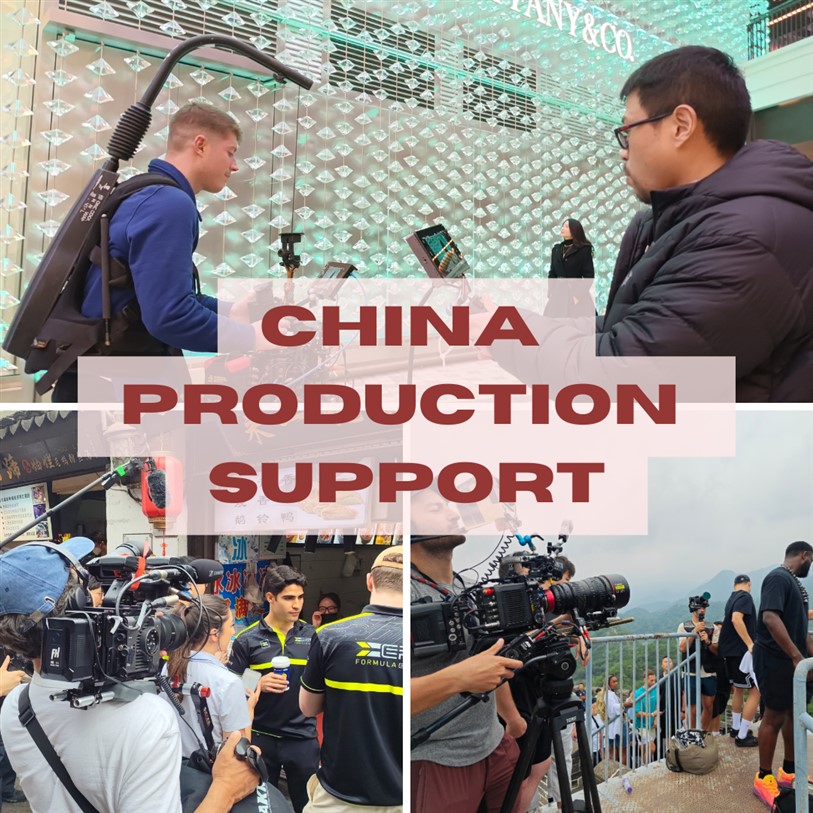
Why Hire a China Bilingual Producer?
Filming in China often involves several layers of communication. The overseas client may speak English. The local office, factory, venue, driver, supplier, or contributor may speak Chinese. The camera crew may be bilingual or partly Chinese-speaking. Meanwhile, the final video may need English, Chinese, or bilingual delivery.
A China bilingual producer helps connect these sides. They can communicate with local contacts in Chinese while keeping the international producer, director, agency, or brand team updated in English.
This matters because small misunderstandings can create delays. A location may agree to filming before understanding the crew size. A factory may restrict certain production areas. A hotel may need approval before equipment enters. A driver may need very specific loading instructions. An interview subject may need a clear briefing before the shoot.
A bilingual producer checks these details early and keeps the production better organized.
What Does a China Bilingual Producer Do?
A bilingual producer does much more than translate. The role combines production planning, local coordination, communication, scheduling, and problem-solving.
Depending on the project, a China bilingual producer may support:
- Production planning
- Crew booking
- Equipment rental coordination
- Location scouting
- Permit and access communication
- Interview scheduling
- Contributor briefing
- Casting support when needed
- Transport and driver planning
- Hotel and travel coordination
- Call sheet preparation
- On-set translation
- Client communication
- Remote production setup
- Editing and subtitle coordination
- Post-production delivery
For a simple corporate interview, the producer may focus on location, crew, equipment, and communication. For a documentary, commercial, event, or multi-city shoot, the producer may manage a wider production workflow.
China Bilingual Producer Services
Shoot In China provides flexible bilingual producer support for projects of different sizes. Some clients only need one local producer for a short shoot. Others need a larger team with a DOP, sound recordist, gaffer, fixer, production assistant, driver, drone operator, editor, and post-production crew.
Our China bilingual producer services include:
- English-Chinese production coordination
- Local producer support
- Fixer services
- Camera crew and DOP hire
- Videographer hire
- Location scouting
- Permit and access support
- Equipment rental coordination
- Interview and contributor coordination
- Transport and logistics
- Factory and industrial filming support
- Event filming support
- Remote production coordination
- Translation on set
- Editing, subtitles, and post-production
The right setup depends on the brief. A lean crew may be enough for a simple interview. However, a documentary, commercial, factory video, or multi-city production usually needs more planning and stronger local coordination.
Corporate Video Production Support in China
Corporate video is one of the most common reasons to hire a bilingual producer in China. These projects often involve overseas marketing teams, local Chinese offices, senior executives, employees, factory managers, and global approval processes.
A corporate shoot may include:
- Executive interviews
- CEO messages
- Company profile videos
- Office filming
- Factory B-roll
- Product demonstrations
- Customer stories
- Training videos
- Internal communication content
- Event highlights
- Recruitment videos
- Social media cutdowns
For these projects, the producer helps organize the schedule, brief speakers, confirm rooms, arrange crew and equipment, manage local office communication, and support translation on set.
This support is especially useful when the local office is busy or unfamiliar with video production. The producer can explain what the crew needs in practical terms, while keeping the process respectful and efficient for the company team.
Documentary and Media Production Support
Documentary and media shoots need a different type of support. They often involve real people, flexible schedules, local research, changing locations, and sensitive communication.
A China bilingual producer can help with:
- Local research
- Contributor outreach
- Interview setup
- Field production support
- Translation and interpretation
- Location access
- Release form support
- Cultural context
- Travel planning
- Schedule adjustments
For documentary projects, local judgment matters. A producer can help the crew understand what is realistic within the schedule, how to approach contributors, and how to adapt when the story changes.
This support is useful for broadcasters, documentary directors, journalists, branded documentary teams, and editorial crews filming in China.
Commercial and Branded Content Production
Commercial and branded shoots usually need a more structured production process. These projects may involve agencies, clients, directors, DOPs, casting, styling, makeup, locations, lighting plans, art direction, client monitoring, and detailed schedules.
A China bilingual producer helps connect the creative brief with local execution. This may include crew sourcing, supplier coordination, location research, casting support, equipment planning, production scheduling, client communication, shoot-day management, and post-production coordination.
For brand projects, consistency matters. The producer helps local crews understand the visual references, tone, product requirements, approval process, and delivery expectations.
Whether the project is a technology video in Shenzhen, a corporate campaign in Shanghai, a commercial in Beijing, a lifestyle shoot in Chengdu, or a factory story in Wuxi, bilingual production support helps keep the process clear.
Factory and Industrial Filming in China
China is a major location for factory, logistics, manufacturing, engineering, and supply chain filming. These shoots can be useful for corporate videos, B2B marketing, investor communication, training, internal content, and customer stories.
However, factory filming needs careful planning. Sites may involve safety rules, visitor registration, PPE, restricted areas, confidential processes, noise, and active production lines.
A bilingual producer can help with:
- Factory access coordination
- Safety briefing support
- Communication with site managers
- Production line filming plans
- Interview scheduling
- Restricted area checks
- Equipment movement
- Translation on site
- B-roll planning
- Post-production subtitles
The goal is to capture useful footage without disrupting daily operations. This requires clear communication before the crew arrives.
Event and Conference Production Support
Events move quickly, and key moments cannot be repeated. A bilingual producer helps make sure the crew understands the schedule, venue rules, AV setup, speaker timing, and client priorities before the event starts.
Event support can include:
- Crew booking
- Multi-camera planning
- Venue access coordination
- Speaker schedule checks
- Audio feed coordination
- Interview corner setup
- Photography add-ons
- Highlight video planning
- Same-day or next-day edit coordination
- Social media delivery
For international events in China, bilingual support is especially useful. The crew may need to communicate with venue staff, hotel teams, AV suppliers, local organizers, security, brand teams, speakers, and overseas clients.
Good communication helps the crew capture the event without slowing it down.
Location Scouting and Filming Access
Location planning is one of the most important parts of production in China. A location may look good in photos but still fail on the shoot day because of sound, lighting, access, power, crowd levels, parking, or management rules.
A China bilingual producer can help check:
- Visual suitability
- Sound conditions
- Natural light
- Power supply
- Parking and loading
- Crew movement
- Filming hours
- Management rules
- Safety requirements
- Public access
- Crowd levels
- Permit needs
- Travel time
- Backup options
Some shoots only need approval from a private office, hotel, factory, or venue. Others need more formal preparation. Public areas, universities, cultural sites, transport hubs, malls, industrial facilities, and drone locations may each have different rules.
Early location checks help reduce last-minute changes and protect the schedule.
Crew Hire and Equipment Rental
A China bilingual producer helps build the right crew and equipment package for the project. The goal is not to make the shoot bigger than necessary. The goal is to create a setup that fits the schedule, location, budget, and final delivery.
Depending on the shoot, crew may include:
- Producer
- Fixer
- Production manager
- Assistant director
- Director of photography
- Camera operator
- Camera assistant
- Sound recordist
- Gaffer
- Grip
- Drone operator
- Photographer
- Production assistant
- Driver
- Translator
- Hair and makeup artist
- Art department support
- Editor
- Colorist
Equipment may include cameras, lenses, lighting, grip, sound kits, monitors, teleprompters, drones, data backup tools, and remote viewing systems.
For a simple interview, a compact kit may be enough. For a commercial, documentary, event, or brand film, a fuller crew and technical package may be needed.
On-Set Coordination and Translation
On set, the bilingual producer helps everyone stay aligned. This may include the director, client, camera crew, sound team, lighting team, local office, location contact, driver, and interview subject.
On-set support may include:
- Tracking the schedule
- Managing call times
- Coordinating the next setup
- Translating instructions
- Briefing interview subjects
- Speaking with location contacts
- Managing transport timing
- Supporting client feedback
- Solving local problems
- Adjusting the plan when needed
This role is especially important when the overseas director, producer, or client does not speak Chinese. Instead of simple word-for-word translation, a good bilingual producer explains the intention behind requests so the local team can respond properly.
Remote Production With a China Bilingual Producer
Many overseas clients now need footage from China without sending a full international team. Remote production can work well for corporate interviews, factory videos, office filming, product demonstrations, event coverage, documentary pickups, and simple B-roll.
A China bilingual producer can manage the local side while the overseas team joins remotely.
This may include:
- Local crew booking
- Location preparation
- Contributor briefing
- Equipment rental
- Remote viewing setup
- Shoot-day supervision
- Client updates
- Proxy uploads
- Rushes delivery
- Editing coordination
- Subtitle support
Before filming, we help confirm the shot list, interview questions, visual references, sound needs, delivery format, and file workflow. This makes remote production easier to manage and more reliable.
Multi-City Production Across China
Many China productions involve more than one city. A project may include interviews in Shanghai, factory filming in Shenzhen, event coverage in Beijing, office scenes in Guangzhou, lifestyle footage in Chengdu, and regional B-roll in Xi’an or Wuxi.
Multi-city shoots need careful planning. The producer must consider crew continuity, equipment transport, local access, hotel bookings, travel time, and visual consistency.
Sometimes one traveling crew works best. Sometimes local crews in each city are more efficient. Often, a hybrid approach is the most practical.
Shoot In China supports productions across Shanghai, Beijing, Shenzhen, Guangzhou, Chengdu, Chongqing, Hong Kong, Hangzhou, Suzhou, Wuxi, Tianjin, Qingdao, Xi’an, Wuhan, Zhengzhou, Dalian, Yantai, and other Chinese cities.
Why Work With Shoot In China?
Shoot In China has supported international productions across China since 2012. Based in Shanghai, our team understands both overseas client expectations and local production conditions.
We provide bilingual producers, fixers, camera crews, DOPs, videographers, equipment rental, location scouting, logistics, editing, subtitles, and post-production.
Clients work with us because we keep production practical. We help explain what is realistic, what needs more preparation, and how to build the right team for the job.
Whether your project is a one-day interview, documentary, factory shoot, commercial, event, corporate film, remote shoot, or multi-city production, we can help plan and manage the process.
What to Prepare Before Hiring a China Bilingual Producer
A short brief helps us respond accurately. It does not need to be final, but it should include the main details.
Useful information includes:
- Project type
- Target city or cities
- Shoot date
- Number of filming days
- Location type
- Interview subjects
- Crew requirements
- Equipment needs
- Permit or access concerns
- Final video length
- Delivery format
- Remote viewing needs
- Editing or subtitle needs
- Budget range
- Delivery deadline
With this information, we can suggest a practical crew size, schedule, equipment package, and production approach.
Contact Shoot In China for a China Bilingual Producer
If you need a China bilingual producer for a corporate video, documentary, commercial, event, factory shoot, interview, branded film, remote production, or multi-city project, Shoot In China can help.
A strong bilingual producer gives your team more than translation. They help plan the shoot, coordinate local resources, manage communication, solve problems, and keep the production moving from the first brief to final delivery.
Contact Shoot In China to discuss your next production in China.