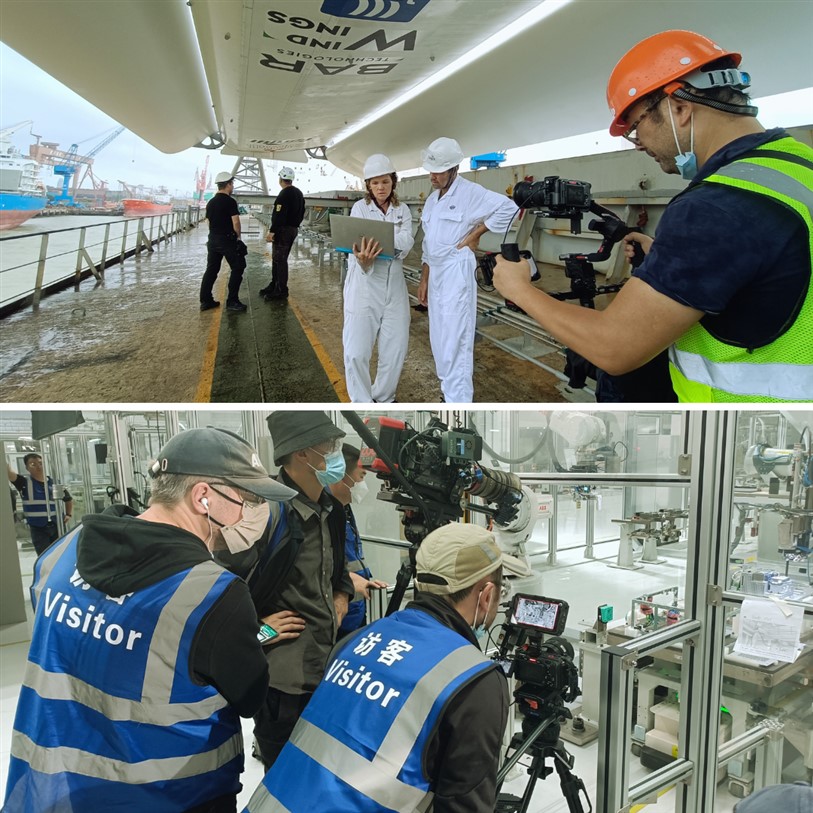
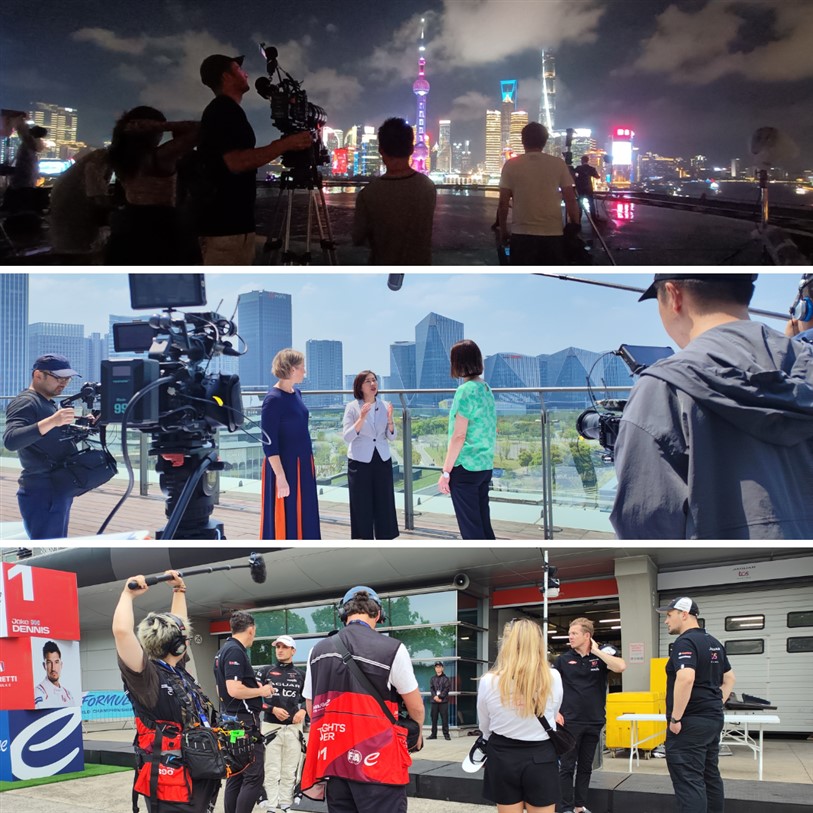
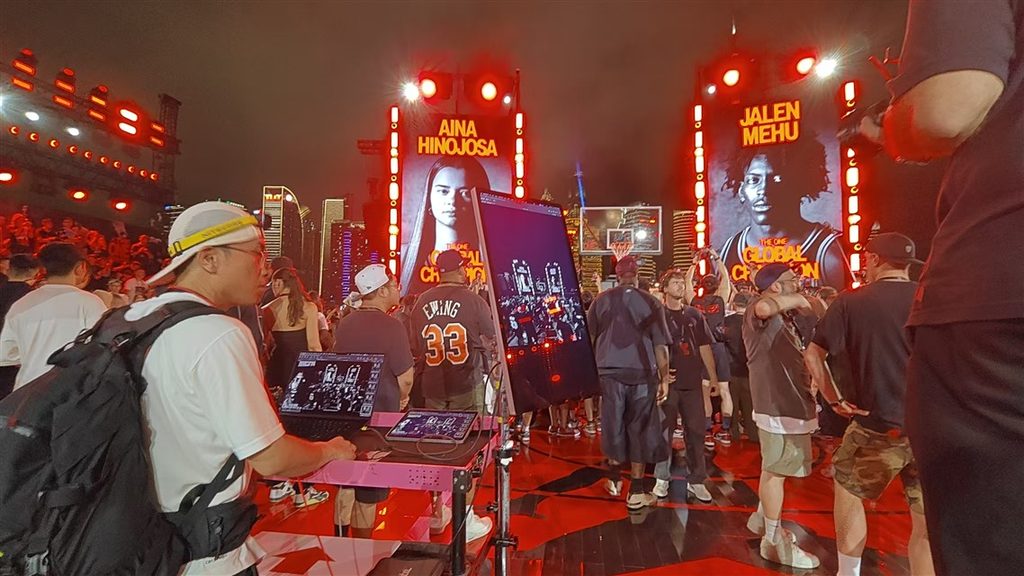
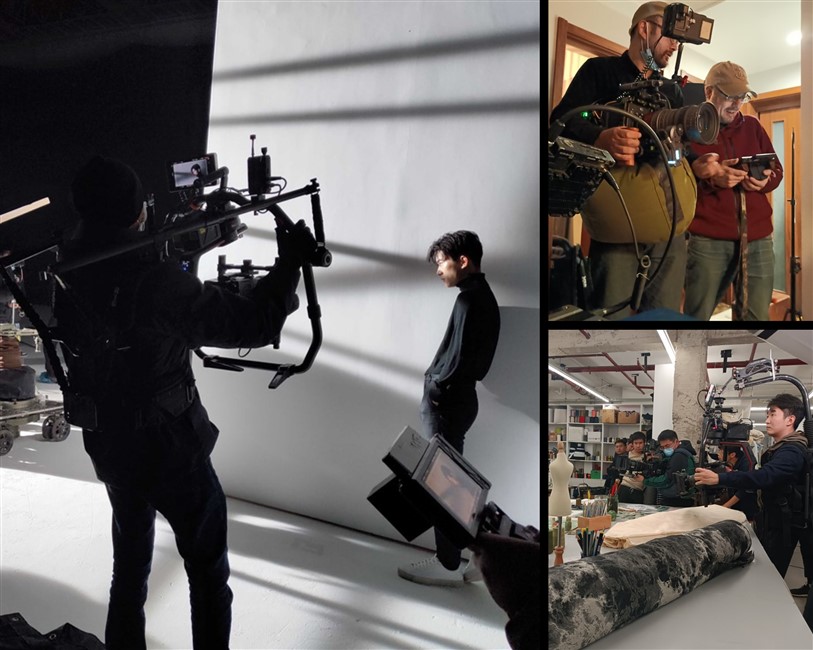
Shanghai Videographer for Film & Corporate Shoots

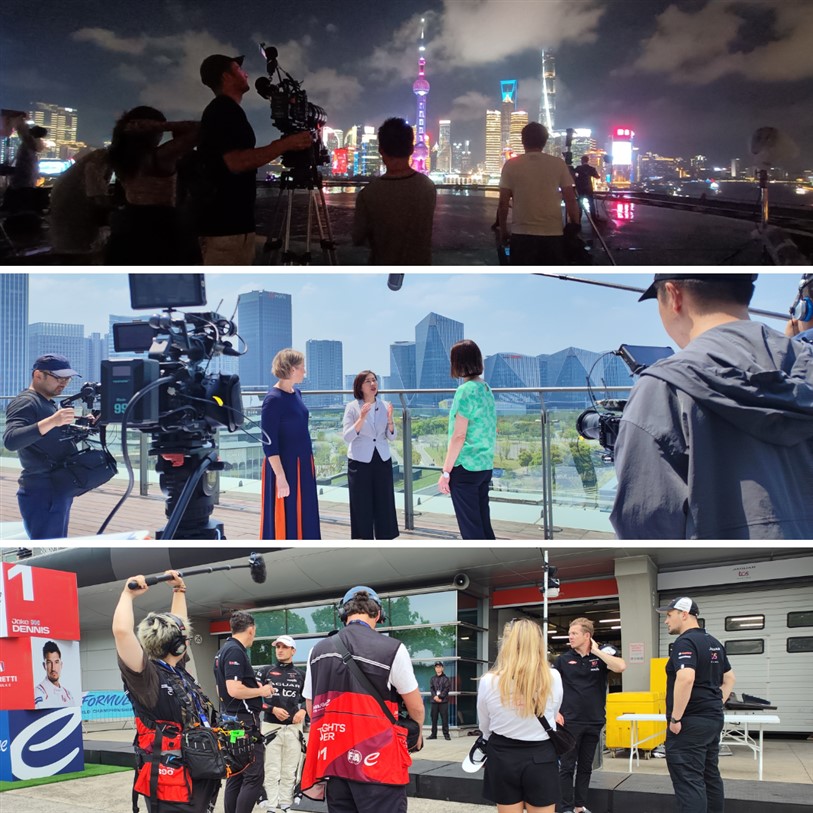
A Shanghai videographer can help international clients capture professional video content in one of China’s most important business and creative cities. Shanghai offers modern skylines, historic streets, corporate offices, industrial spaces, luxury hotels, studios, event venues, and strong production resources.

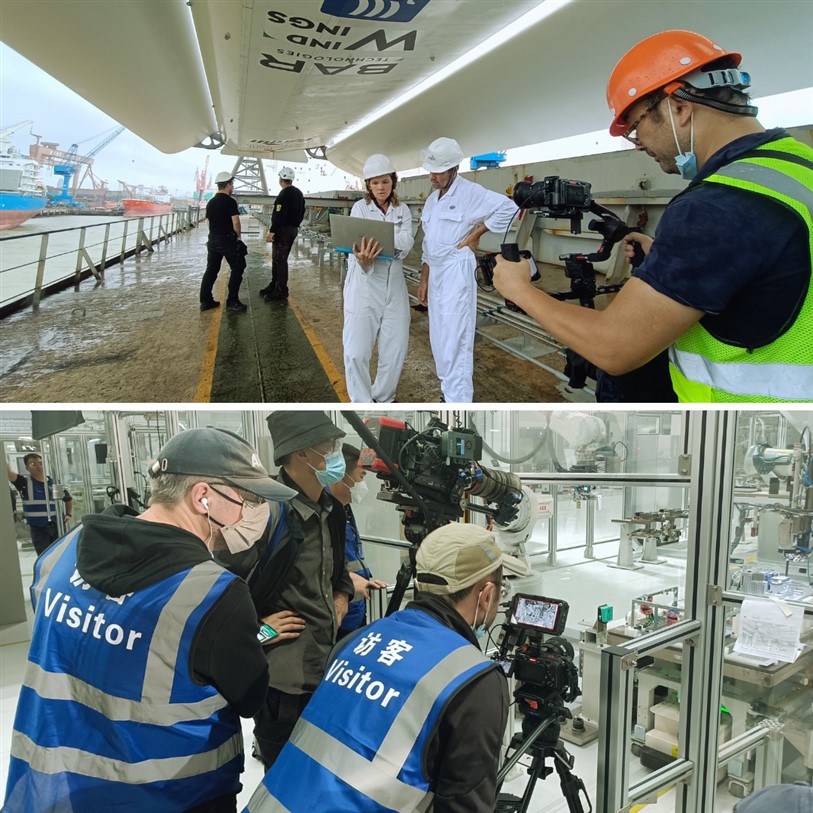
Shoot In China has been based in Shanghai since 2012. Our bilingual English-Chinese team supports international brands, Fortune 500 companies, media organizations, agencies, filmmakers, and corporate clients with videographers, camera crews, production support, fixer services, equipment rental, location scouting, permits, logistics, and post-production.

Whether you need a solo camera operator, a small interview crew, or a larger production team, we help match the right Shanghai videographer setup to your project.

Shanghai Videographer

Why Hire a Shanghai Videographer?

Shanghai is a practical city for video production. Many international companies have offices here. The city also has strong infrastructure, experienced crews, good equipment access, and a wide range of filming locations.

However, a successful shoot still needs local planning. A corporate interview may require building access, quiet rooms, lighting control, and client coordination. An event may need multi-camera coverage, audio feeds, fast turnaround, and venue communication. A branded shoot may need locations, styling, art direction, and a larger camera team.

Therefore, hiring a local Shanghai videographer can save time and reduce friction. You get someone who understands the city, the locations, the production pace, and the practical needs of filming in China.

For international clients, bilingual support is also useful. It helps connect overseas expectations with local crew, venues, contributors, drivers, and suppliers.

Shanghai Videographer Services

Shoot In China provides videographer and video production support for projects of different sizes. Some clients need a simple one-camera setup. Others need a full crew with producer, DP, sound recordist, gaffer, assistant, makeup artist, and editor.

Our services can include:

  • Shanghai videographer hire
  • Camera operator and DP support
  • Corporate video filming
  • Executive interviews
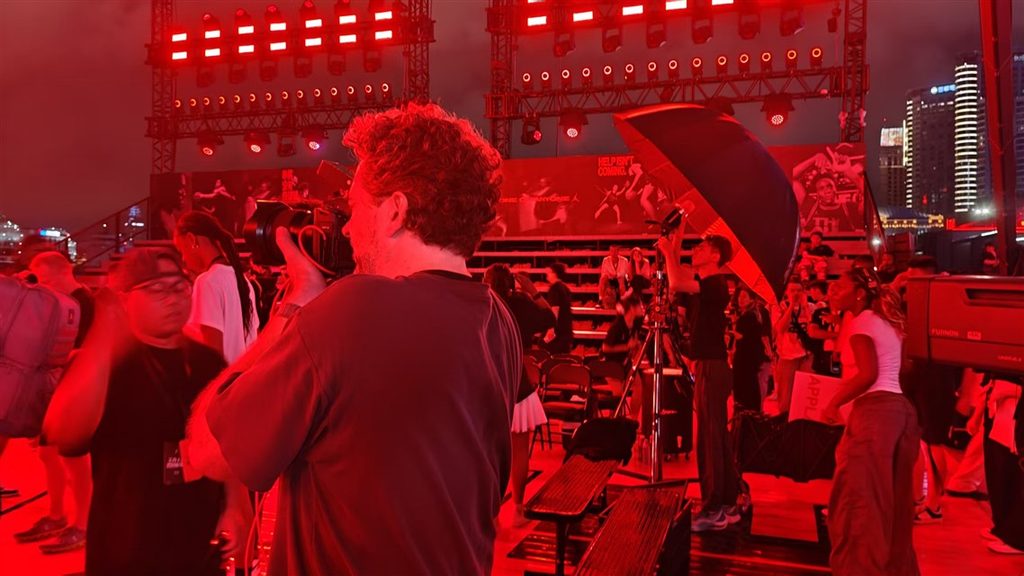
  • Event filming
  • Documentary shoots
  • Branded content
  • Product videos
  • Factory and industrial filming
  • Office and workplace videos
  • Social media content
  • Multi-camera filming
  • Sound recording
  • Lighting setup
  • Equipment rental
  • Bilingual production support
  • Location scouting
  • Fixer services
  • Editing and post-production
  • Subtitles and translation

We can keep the setup lean when the project is simple. However, we can also scale the crew when the shoot needs more control.

Corporate Video Production in Shanghai

Shanghai is one of China’s strongest cities for corporate video production. Many regional headquarters, financial firms, technology companies, manufacturing groups, luxury brands, and professional service companies are based here.

A local Shanghai videographer can support:

  • Executive interviews
  • Company profile videos
  • Office filming
  • Internal communications
  • Customer stories
  • Product demonstrations
  • Recruitment videos
  • Training videos
  • Conference content
  • Social media clips
  • Brand films

Corporate shoots often look simple, but the details matter. The interview room must be quiet. The background should feel professional. The lighting needs to be controlled. The schedule must respect senior executives and client teams.

Because of this, we often recommend a small but proper crew: videographer or DP, sound recordist, lighting assistant, and bilingual producer when needed.

Interview Filming With a Shanghai Videographer

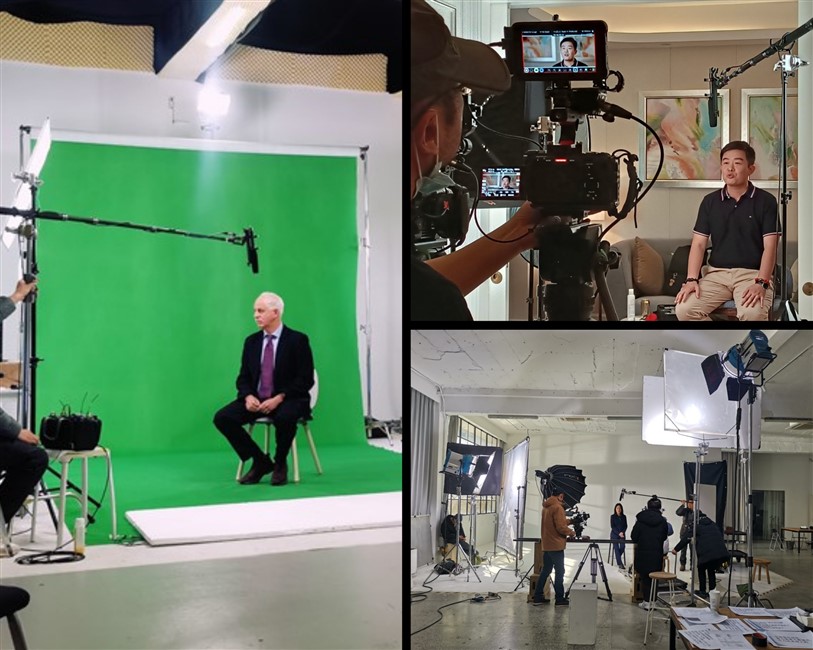
Interview filming is one of the most common requests from international clients. It may involve executives, employees, customers, experts, or documentary contributors.

A good interview setup usually needs more than one camera. It also needs clean audio, flattering lighting, a suitable background, and enough time for setup.

For interview shoots, we can provide:

  • One-camera or two-camera setup
  • Professional sound recording
  • LED lighting package
  • Teleprompter if needed
  • Bilingual producer or fixer
  • Makeup artist
  • Location support
  • Translation and subtitles
  • Editing and delivery

In Shanghai, interview locations often include offices, hotels, studios, conference rooms, showrooms, factories, and event venues. Before filming, we help check the location for sound, lighting, power, access, and background.

This preparation helps the shoot day run more smoothly.

Event Videographer in Shanghai

Shanghai hosts conferences, product launches, trade shows, corporate meetings, fashion events, exhibitions, internal town halls, and luxury brand activations. These events often need reliable video coverage and fast delivery.

An event videographer in Shanghai can provide:

  • Single-camera event coverage
  • Multi-camera filming
  • Speaker recording
  • Panel discussion filming
  • B-roll capture
  • Interview corner setup
  • Highlight video editing
  • Social media clips
  • Photography add-on
  • Live streaming support
  • Same-day or next-day edits when possible

Event filming requires planning. The crew needs to know the schedule, venue rules, audio feed options, lighting conditions, branding requirements, and delivery deadline.

Therefore, we help coordinate with event organizers, AV teams, venues, and client contacts before the shoot begins.

Documentary and Editorial Videographer Support

Shanghai is also a strong city for documentary, media, and editorial filming. The city can support stories about finance, culture, urban change, design, fashion, technology, food, architecture, education, and international business.

For documentary projects, a Shanghai videographer may need to work quickly and flexibly. The crew may film interviews, observational scenes, B-roll, street details, workplace moments, or contributor-led sequences.

Shoot In China can support documentary shoots with:

  • Local videographer or DP
  • Sound recordist
  • Bilingual fixer
  • Contributor coordination
  • Location access
  • Translation
  • Release form support
  • Transport planning
  • Equipment rental
  • Field production support

Documentary work often changes during filming. As a result, local production support helps protect the schedule while allowing space for real moments.

Branded Content and Commercial Video

For branded content, visual quality and production control matter. A solo videographer may work for simple social content. However, larger brand films often need a fuller crew and more planning.

Depending on the project, we can support:

  • Creative production planning
  • Director or DP hire
  • Casting and talent coordination
  • Location scouting
  • Art department support
  • HMU and styling
  • Camera crew
  • Lighting and grip
  • Drone filming
  • Product filming
  • Editing and motion graphics

Shanghai is a strong base for branded production because it offers many location types, experienced crew, good equipment rental, and professional post-production options.

However, branded shoots often need client approvals, careful scheduling, and strong on-set coordination. That is where a bilingual production team helps.

Equipment and Crew Options

The right videographer setup depends on your project. A small interview shoot may need one camera operator, one sound recordist, and a basic lighting kit. A corporate brand film may need a DP, assistant camera, gaffer, grip, producer, and makeup artist.

Common equipment options include:

  • Sony, Canon, ARRI, RED, or Blackmagic cameras
  • Cinema and photo lens packages
  • LED lighting kits
  • Wireless microphones
  • Boom microphone
  • Tripods and sliders
  • Gimbals
  • Monitors
  • Teleprompter
  • Drone filming
  • Data backup tools

We help match equipment to the job. More gear is not always better. The goal is to create the right setup for the schedule, location, budget, and final delivery.

Bilingual Production Support in Shanghai

For international clients, hiring a videographer is often only one part of the job. You may also need local coordination, translation, location access, crew communication, or client management.

Shoot In China can provide bilingual English-Chinese support for the full production process. This includes speaking with venues, briefing contributors, coordinating drivers, arranging equipment, translating on set, and keeping overseas producers updated.

This support is especially useful when the shoot involves Chinese client offices, local staff, factory teams, venue managers, or interview subjects.

A bilingual production team reduces confusion and helps the videographer focus on filming.

Shanghai Videographer for Remote Production

Many international clients now need video content from Shanghai without sending a full overseas team. Remote production can work well for interviews, office videos, factory shoots, events, product demonstrations, and documentary pickups.

For remote shoots, we can help with:

  • Local crew booking
  • Equipment rental
  • Location preparation
  • Contributor briefing
  • Remote viewing setup
  • Client communication
  • Proxy file upload
  • Rushes delivery
  • Editing and subtitle support

Remote production still needs clear planning. Therefore, we confirm the brief, shot list, interview questions, visual references, sound needs, delivery format, and file workflow before filming.

Coverage Beyond Shanghai

Although this page focuses on hiring a Shanghai videographer, Shoot In China supports filming across China.

Our network covers Beijing, Shenzhen, Guangzhou, Chengdu, Hong Kong, Macau, Hangzhou, Suzhou, Qingdao, Tianjin, Chongqing, Xi’an, and other major cities.

In Beijing, we support media, documentary, corporate, cultural, and institutional projects. In Shenzhen, we often film technology, manufacturing, innovation, and startup stories. In Guangzhou, we support trade, logistics, industrial content, food culture, and Greater Bay Area productions.

Meanwhile, Chengdu is strong for food, lifestyle, documentary, and western China stories. Hong Kong works well for finance, luxury brands, regional headquarters, and international logistics.

For multi-city shoots, we can help keep crew standards, communication, equipment planning, and delivery workflow consistent.

Why Work With Shoot In China?

Shoot In China has supported international productions across China since 2012. Based in Shanghai, we understand the city’s production environment and the needs of overseas clients.

We provide videographers, camera crews, bilingual producers, fixers, location managers, equipment rental, permits, logistics, editing, subtitles, and post-production.

Clients work with us because we offer practical local support and clear English-Chinese communication. We help you understand what is realistic, what needs more preparation, and how to build the right crew for the job.

Whether your project is a one-hour interview or a multi-day brand shoot, we can help plan and deliver it properly.

What to Prepare Before Hiring a Shanghai Videographer

Before contacting a videographer, it helps to prepare a short brief. It does not need to be final, but it should include the main details.

Useful information includes:

  • Project type
  • Shoot date
  • Number of filming days
  • Location or venue
  • Interview subjects or talent needs
  • Final video length
  • Delivery format
  • Camera style
  • Sound requirements
  • Lighting needs
  • Editing needs
  • Subtitle or translation needs
  • Budget range
  • Remote viewing requirements

With this information, we can recommend the right crew size, equipment package, and production approach.

Contact Shoot In China for a Shanghai Videographer

If you need a Shanghai videographer for a corporate video, interview, event, documentary, branded film, commercial, social media shoot, or remote production, Shoot In China can help.

Since 2012, our Shanghai-based bilingual English-Chinese team has supported international clients with videographers, camera crews, fixer services, production support, equipment rental, location scouting, logistics, and post-production across China.

Contact Shoot In China to discuss your next Shanghai video production.

China Bilingual Fixer, Producer & Assistant Director

A China bilingual fixer can help international crews work through the practical, cultural, and language challenges of filming in China. For many productions, that role also extends into local producing, assistant directing, schedule control, and on-set coordination.

Clark Wang, founder of Shoot In China, works as a bilingual fixer, producer, and assistant director for international film, video, documentary, commercial, corporate, and branded content productions across China. Based in Shanghai, Clark has supported overseas producers, directors, agencies, brands, and media teams since 2012.

Through Shoot In China, Clark and his bilingual English-Chinese team provide production support, crew hire, location scouting, filming permits, equipment rental, translation, logistics, remote production, and post-production across Shanghai, Beijing, Shenzhen, Guangzhou, Chengdu, Hong Kong, Macau, and other major Chinese cities.

China Bilingual Fixer, Producer & Assistant Director

Why a China Bilingual Fixer Matters

Filming in China can offer strong production value, varied locations, and access to many different stories. However, it also requires local knowledge. Each city has its own rhythm, location rules, approval process, suppliers, crew network, and communication style.

A bilingual fixer helps your production understand how things work locally. They speak with location owners, brief contributors, coordinate crew, arrange transport, check permissions, translate on set, and solve problems before they slow down the shoot.

Yet the role is not only about language. A good fixer also understands production pressure. They know why a quiet interview room matters. They know why equipment loading needs to be planned. They know why a location that looks great in photos may not work for sound, access, lighting, or management approval.

Therefore, a China bilingual fixer becomes a bridge between the overseas team and the local production environment.

Clark Wang: China Bilingual Fixer, Producer, and Assistant Director

Clark Wang is a Shanghai-based bilingual fixer, producer, and assistant director who helps international productions work efficiently in China. Since 2012, he has supported overseas clients through Shoot In China, working across documentaries, commercials, corporate videos, branded content, interviews, events, and remote productions.

As a China bilingual fixer, Clark helps clients understand local production realities. He communicates with location owners, crew, suppliers, contributors, drivers, and client-side contacts in Chinese, while keeping overseas producers and directors updated in English.

As a producer, he helps shape the production plan. This can include reviewing the brief, building crew options, preparing budgets, sourcing equipment, scouting locations, checking permissions, and managing local logistics.

As an assistant director, Clark can support the shoot day more directly. He helps keep the schedule moving, coordinates crew and contributors, tracks timing, manages local communication, and keeps the production focused when plans change.

This combination is useful for international teams that need one reliable local point of contact who understands both creative priorities and practical execution.

China Bilingual Fixer, Producer, and Assistant Director Services

Shoot In China provides flexible production support for international projects across China. Depending on the shoot, Clark Wang and the team can work as your local fixer, bilingual producer, assistant director, production manager, or full-service production partner.

Our services can include:

  • English-Chinese fixer support
  • Local producer support
  • Assistant director support
  • Shoot schedule coordination
  • On-set timing and crew communication
  • Location scouting and access checks
  • Filming permit advice
  • Crew hire and crew briefing
  • Equipment rental coordination
  • Interview and contributor coordination
  • Translation and interpretation
  • Transport and logistics planning
  • Call sheets and production notes
  • Remote production management
  • Drone filming coordination
  • Post-production coordination
  • Subtitle translation and localization

For smaller projects, Clark may work as both fixer and local producer. For larger shoots, he can coordinate with a wider team that includes a production manager, location manager, AD team, bilingual assistants, camera crew, sound team, gaffer, grip, drivers, and post-production support.

Location Scouting and Local Access in China

China offers a wide range of filming locations. You may need a modern office in Shanghai, a technology company in Shenzhen, a cultural site in Beijing, a factory in Guangzhou, a lifestyle location in Chengdu, or a regional story in western China.

A China bilingual fixer helps identify locations that are not only visually suitable but also practical for filming.

When scouting, we consider the visual match, sound conditions, lighting control, power access, loading, parking, crew movement, security rules, management approval, interview suitability, crowd control, travel time, and filming restrictions.

This matters because a location can look excellent in photos but create serious problems on the shoot day. For example, a room may have strong daylight but poor sound. A rooftop may have a good skyline view but strict safety limits. A factory may allow filming but only during certain hours. A public area may need more preparation than expected.

With local support, your team can make better decisions before production begins.

Permits and Production Permissions

Filming permissions in China depend on the city, location, project type, equipment, crew size, and final use. Some shoots only require approval from a private venue. Others may need more formal permission or longer preparation.

For example, filming in an office may involve building management and visitor registration. Filming in a factory may require safety approval and internal coordination. Filming in public spaces may need more careful planning. Meanwhile, sensitive locations may require extra caution.

Shoot In China helps clarify what is realistic. We can communicate with local contacts, explain production needs in Chinese, and help prepare basic information for approvals.

This does not mean every permit can be rushed. However, clear communication early in the process can prevent many avoidable delays.

Crew Hire and Equipment Rental

A strong local crew can make a major difference. Through Shoot In China’s network, Clark Wang and the team can help arrange experienced production professionals across major Chinese cities.

Depending on the project, we can support fixers, bilingual producers, production managers, directors of photography, camera operators, camera assistants, sound recordists, gaffers, grips, drone pilots, photographers, production assistants, drivers, translators, hair and makeup artists, art department crew, and casting support.

We can also help source cameras, lenses, lighting, grip, sound, monitors, teleprompters, drones, and other production equipment.

For a small corporate interview, a compact crew and lighting kit may be enough. For a commercial or branded shoot, you may need a fuller setup. Therefore, we match crew and equipment to the actual project instead of overcomplicating the production.

On-Set Support as Fixer and Assistant Director

On the shoot day, international productions often need more than translation. They need someone who can keep the day practical, calm, and organized.

As a fixer and assistant director, Clark Wang can help manage communication between the director, producer, client, local crew, contributors, location contacts, drivers, and suppliers. He can also help track the schedule, prepare the next setup, confirm movement plans, and reduce delays caused by unclear instructions.

This is especially useful when the overseas director or producer does not speak Chinese. Instead of relying on direct translation alone, Clark helps explain the intention behind each request and make sure the local team understands what needs to happen next.

For documentary shoots, this may mean adjusting the day around real people and changing situations. For corporate shoots, it may mean keeping interviews, office scenes, client approvals, and executive schedules on track. For commercial projects, it may mean supporting a larger crew structure with clearer timing and local coordination.

Bilingual Communication for International Crews

Many production problems come from small misunderstandings. A venue may not understand why the crew needs more setup time. A driver may not know the exact loading point. A contributor may feel nervous before an interview. A local client may not know why sound control is important.

This is where bilingual production support becomes essential.

Clark Wang works directly with both international clients and local teams. Therefore, he understands the tone needed on both sides. Sometimes the job requires direct action. Sometimes it requires patience. Often, it requires both.

Good bilingual communication helps keep the shoot focused. It also reduces friction between overseas expectations and local working habits.

China Bilingual Fixer for Documentary and Media Shoots

Documentary, editorial, and media productions often need flexible local support. The story may change. Contributors may become available at short notice. Locations may need adjustment. Interviews may require careful communication.

Shoot In China can help with local research, contributor outreach, interview setup, translation, location suggestions, schedule planning, cultural context, local travel coordination, release form support, and field production assistance.

For international media teams, a bilingual fixer can also help explain what is practical within the schedule. This is especially useful when crews arrive with limited shoot days and need to capture strong material quickly.

Producer Support for Corporate and Brand Shoots

Corporate and brand productions need a different type of discipline. The tone must be professional. The schedule must respect executives, clients, and local offices. The footage must meet brand expectations.

Shoot In China supports executive interviews, office filming, factory shoots, customer stories, product videos, brand films, internal communications, conference filming, event coverage, and remote corporate shoots.

For these projects, Clark Wang and the team can help coordinate with local client offices, confirm rooms, prepare crew, arrange equipment, manage logistics, and support English-Chinese communication throughout the shoot.

This helps overseas producers avoid confusion and keeps the local client comfortable.

Remote Production Support in China

Many overseas teams now need footage from China without sending a full crew. In these cases, a local bilingual producer or fixer becomes even more important.

Shoot In China can manage local filming while your overseas team joins remotely. We can help prepare the location, book the crew, brief contributors, manage the shoot day, share updates, and arrange file delivery.

Remote production can work well for corporate interviews, factory filming, office scenes, event coverage, documentary pickups, product demonstrations, brand content, and simple B-roll shoots.

However, remote shoots still need clear planning. Therefore, we help confirm the brief, shot list, interview questions, visual references, equipment setup, and delivery format before filming begins.

Coverage Across China

Although Clark Wang and Shoot In China are based in Shanghai, our production network covers many major cities.

In Shanghai, we support corporate videos, interviews, commercials, finance stories, brand films, fashion, events, and lifestyle content. In Beijing, we assist media, documentary, culture, education, technology, and institutional projects. In Shenzhen, we support technology, hardware, electronics, innovation, manufacturing, startup stories, and product filming.

Meanwhile, Guangzhou is useful for trade, logistics, manufacturing, food culture, corporate shoots, and Greater Bay Area projects. Chengdu is strong for documentary, lifestyle, food, culture, western China business stories, and regional filming. Hong Kong works well for finance, luxury brands, regional headquarters, international media, and bilingual crew support.

For multi-city productions, one bilingual production partner can keep the workflow more consistent. This helps with scheduling, crew standards, communication, logistics, and budget control.

Why Work with Shoot In China?

Shoot In China has supported productions across China since 2012. Our team combines local production knowledge with international communication.

Clients work with us because we provide bilingual English-Chinese support, a reliable Shanghai base, nationwide production coverage, fixer and local producer services, assistant director support, crew hire, equipment rental, location scouting, access coordination, documentary experience, corporate production support, remote production options, and post-production services.

More importantly, we focus on practical solutions. We help clients understand what can be done, what needs more time, and what may require a different approach.

For overseas producers, this clarity is often the most valuable part of working with a local team.

What to Prepare Before Hiring a China Bilingual Fixer

Before contacting a fixer, producer, or assistant director in China, it helps to prepare a simple brief. It does not need to be final, but it should include the main details.

Useful information includes:

  • Project type
  • Target city or cities
  • Shoot dates
  • Number of filming days
  • Location needs
  • Interview subjects or talent requirements
  • Crew size
  • Equipment needs
  • Permit concerns
  • Budget range
  • Delivery format
  • Remote viewing needs
  • Post-production needs

If your brief is still early, Clark and the Shoot In China team can help shape the production approach. However, early details make it easier to suggest the right crew, locations, schedule, and budget.

Contact Clark Wang for China Production Support

If you need a China bilingual fixer, producer, or assistant director for a film, documentary, commercial, corporate video, branded project, event, interview, or remote production, Clark Wang and Shoot In China can help.

Since 2012, Shoot In China has provided English-Chinese production support, fixer services, local producing, assistant director support, crew hire, equipment rental, location scouting, permits, logistics, and post-production across China.

Whether you are filming in Shanghai, Beijing, Shenzhen, Guangzhou, Chengdu, Hong Kong, or several cities at once, we can help you plan clearly, communicate smoothly, and work efficiently on the ground.

Contact Shoot In China to discuss your next production in China.

Filming in China Cost: Budget, Crew & Logistics Guide

Budget is often the first serious question international producers ask when planning a shoot in China. Before creative decisions are locked, the production team usually needs to understand what the real cost drivers are. In practice, filming in China cost is shaped less by a single headline number and more by a combination of crew structure, equipment choices, city logistics, location access, travel, and production management.

China can support a wide range of budgets. A compact corporate interview can be handled with a small bilingual crew and modest equipment package. A multi-city commercial campaign with agency oversight, high-end camera systems, and complex location coordination operates very differently. The difference between these two models is not only scale, but also the type of planning required.

For international productions, budgeting accurately in China means understanding how local workflows function. Cost control depends on early decisions around crew size, technical package, location complexity, and scheduling efficiency. This guide explains how producers typically think about filming costs in China and which categories matter most when building a realistic production budget.

Filming in China Cost: Budget, Crew & Logistics Guide

What Actually Shapes Filming Costs in China

The total cost of a production in China is usually determined by six main areas: crew, equipment, locations, travel, production management, and schedule length. These categories interact with each other. A more experienced crew may cost more per day but save time on set. A larger camera and lighting package may improve image quality, but it can also increase transportation and setup time.

One of the most common budgeting mistakes is treating China as a single production market with uniform pricing. In reality, filming cost varies by city, project type, and level of complexity. Shanghai, Beijing, Shenzhen, Guangzhou, and Hong Kong each have different production ecosystems. Costs can also shift depending on whether the project is corporate, documentary, branded content, or a larger commercial campaign.

The practical question is not whether China is cheap or expensive. The more useful question is how to match the production approach to the project’s actual needs.

Crew Cost and Production Structure

Crew is one of the most important parts of any China production budget. Most international productions combine a visiting creative core with a locally hired technical team. That structure usually keeps costs under control while maintaining local efficiency.

A small shoot may involve a producer or fixer, director of photography, camera assistant, sound recordist, and production assistant. A larger commercial shoot may add gaffer, grip crew, hair and makeup, stylist, art department, digital imaging technician, and agency support.

Crew cost is influenced by several factors:

• city and local labor market
• experience level of the crew
• language ability and bilingual coordination
• whether the role is technical, creative, or managerial
• overtime and schedule compression

In practice, local crew hiring is often more efficient than flying in full technical teams from abroad. Local technicians already know the rental ecosystem, location realities, and on-set workflow. That usually reduces both cost and operational friction.

Equipment Rental Cost in China

Most productions filming in China rent equipment locally rather than importing it. This is usually the more practical option. China’s major production cities have mature rental infrastructure for cameras, lenses, lighting, grip, sound, and monitoring systems.

Equipment budgets vary widely depending on the production format. A simple corporate shoot may need only a compact camera kit, two or three lights, basic sound, and support gear. A high-end commercial may require a cinema camera package, prime lens set, wireless video, large lighting units, grip rigging, and a DIT setup.

Camera and lighting packages are often the largest technical cost after crew. However, the visible rental cost is only part of the equation. Bigger gear packages also affect:

• transportation needs
• loading and unloading time
• crew size
• power requirements
• location restrictions

This is why technical decisions should never be separated from logistics. A smaller package may lower rental cost and reduce setup time at the same time.

Location Fees and Permit-Related Cost

Location cost in China depends heavily on the type of space being filmed. Private offices, studios, factories, hotels, and retail environments each operate differently. Some locations only require internal approval from property management. Others may involve multiple layers of coordination.

A simple interview in a private office can be relatively straightforward. A shoot in a landmark district, public-facing commercial area, or managed historic site can be more expensive due to access restrictions, supervision requirements, and time limitations.

Location-related cost often includes:

• location rental fee
• property management fee
• security or supervision fee
• cleaning or restoration deposit
• scouting and recce time
• permit coordination time

International producers sometimes underestimate the cost of filming access because they focus only on formal permits. In practice, location control is often more important than the paperwork itself. Many of the real costs come from negotiating access, protecting schedule certainty, and ensuring the crew can actually work efficiently once on site.

Travel, Accommodation, and Cross-City Logistics

China is a large country, and travel cost becomes significant when productions move between cities. A single-city shoot in Shanghai or Beijing is much easier to budget than a project covering Beijing, Shenzhen, and Hong Kong in one schedule.

Travel costs may include:

• domestic flights or high-speed rail
• ground transportation and vans
• hotel accommodation
• per diems or meal allowances
• baggage or equipment freight
• intercity courier and shipping support

Cross-city productions also generate hidden cost through lost time. Travel days reduce filming days, and equipment movement creates operational complexity. This is why many productions in China try to build local crew bases in each city instead of moving the full team everywhere.

The cheapest schedule on paper is not always the most efficient schedule in practice. A more localized approach can reduce fatigue, transport risk, and downtime.

Corporate Shoots vs Commercial Shoots vs Documentary Budgets

Not every production category follows the same cost structure. Corporate shoots are often the most predictable. They usually involve controlled environments, smaller crews, and shorter schedules. The main costs are crew, camera package, lighting, sound, and basic production management.

Commercial shoots are more complex. They often involve agencies, clients, multiple stakeholders, larger art direction needs, more advanced lighting, and stricter image expectations. These projects require stronger scheduling, more prep, and higher contingency planning. Costs rise quickly because more departments are involved.

Documentary productions usually travel lighter, but they carry different risks. Smaller crews reduce some daily costs, but location unpredictability, travel, translation, research, and long shooting windows can still make documentary production expensive over time.

Understanding the project type is essential before benchmarking cost. A two-day branded content shoot and a two-day documentary field shoot may have similar crew numbers but very different operational demands.

Budgeting for Bilingual Production Management

One area international productions should never under-budget is production coordination. In China, bilingual communication often determines whether the shoot stays efficient. Producers, line producers, fixers, and bilingual coordinators do more than translate. They connect the international team with local crew, property managers, drivers, rental houses, and sometimes local authorities.

This coordination affects every budget category because it reduces mistakes.

Strong production management helps with:

• clear crew briefings
• location communication
• equipment preparation
• travel scheduling
• problem-solving during the shoot
• keeping departments aligned

When producers try to save money by minimizing this layer, the result is often a more expensive production day. Delays, misunderstandings, and last-minute fixes usually cost more than proper coordination.

Schedule Length, Overtime, and Time Compression

Time is one of the largest hidden costs in China production budgeting. A project may look affordable as a one-day shoot, but become significantly more expensive if the schedule is too compressed.

Compressed schedules create pressure in several ways:

• more overtime for crew
• less margin for transport delays
• fewer setup and test windows
• higher risk of technical mistakes
• reduced flexibility if locations change

A slightly longer schedule can sometimes lower the total risk of the shoot, even if it increases some direct costs. Producers need to balance day rate efficiency against operational reality. In dense cities like Beijing or Hong Kong, travel time alone can affect how many setups are possible in a day.

The best budget is usually not the most aggressive one. It is the one that fits the real pace of the location and the technical package.

Hidden Costs International Producers Often Miss

When budgeting filming in China, several cost items are commonly overlooked. These are rarely the largest line items, but they can affect the final total if ignored.

Common hidden costs include:

• tech recce days before the shoot
• equipment prep and return days
• translation during interviews
• local assistant support for paperwork
• power solutions for difficult locations
• extra vehicles for crew and gear separation
• weather backup plans
• post-shoot data handling and courier

These items often appear late in the budgeting process because they seem secondary. In reality, they are part of making the shoot run smoothly.

A good China budget is usually built from operational detail, not just headline line items.

Practical Takeaways for Estimating Filming in China Cost

Filming in China cost can be highly competitive when the project is structured properly. The country offers experienced crews, strong rental infrastructure, and a broad range of filming environments. At the same time, cost control depends on clear planning rather than assumptions.

International producers usually get the most reliable budgets when they define the following early:

• number of shoot days
• city or cities involved
• crew size and departments needed
• camera and lighting level
• location type and access complexity
• travel model for crew and gear

The more precise these decisions are, the more realistic the budget becomes.

China is not a market where one flat number explains production cost. The real budget comes from matching the production design to the actual needs of the project. When crew structure, technical package, and logistics are aligned from the start, productions can control cost without sacrificing operational reliability.

Hong Kong Film Equipment Rental: Production Guide

Hong Kong has long been one of Asia’s most established filmmaking centers. Decades of feature film production, television broadcasting, and international advertising have created a mature technical ecosystem that supports both local and international crews. For producers arriving from overseas, equipment sourcing becomes one of the earliest operational decisions during pre-production.

Although some productions initially consider transporting equipment internationally, most filming projects in Hong Kong rely heavily on local rental infrastructure. Professional rental houses maintain extensive inventories of cameras, lenses, lighting systems, and grip equipment used across commercial, documentary, and narrative filmmaking.

Understanding how equipment rental operates in Hong Kong allows international producers to plan technical packages more efficiently. Equipment availability, transportation logistics, crew integration, and scheduling constraints all influence how productions assemble their gear.

This guide outlines how film equipment rental typically functions in Hong Kong and how international productions integrate local technical resources into their filming workflows.

Hong Kong Film Equipment Rental: Production Guide

Hong Kong’s Equipment Rental Ecosystem

Hong Kong maintains a well-developed equipment rental industry supported by the city’s long history of film production. Rental companies provide the tools required for a wide range of projects, from small interview shoots to large commercial campaigns.

Equipment inventories commonly include:

• digital cinema cameras
• cinema lenses and accessories
• lighting systems and modifiers
• grip equipment and rigging tools
• wireless monitoring systems

Rental houses usually employ technicians who maintain, test, and prepare equipment before it leaves the warehouse. These technicians verify compatibility between camera systems, lenses, batteries, and recording media.

Because Hong Kong regularly hosts international productions, rental facilities are accustomed to preparing equipment packages that match global production standards.


Why Productions Often Rent Equipment Locally

International productions frequently arrive in Hong Kong with the option of shipping their own equipment. However, in many cases, local rental offers a more efficient solution.

Transporting camera systems across borders introduces logistical considerations such as customs clearance, carnet documentation, and shipping delays. While these processes are manageable, they can complicate tight production schedules.

Local equipment rental reduces these complications.

By sourcing equipment directly within Hong Kong, productions can assemble camera and lighting packages quickly. If technical requirements change during filming, rental houses can adjust equipment lists with minimal delay.

This flexibility is particularly useful for projects that involve multiple filming locations or evolving creative requirements.


Camera Systems and Recording Infrastructure

Camera systems form the core of any production’s technical setup. Hong Kong rental houses maintain inventories of digital cinema cameras used across the commercial and television industries.

A standard camera rental package typically includes:

• camera bodies
• lens mounts and adapters
• monitoring systems
• recording media
• camera support accessories

Camera assistants work with rental technicians to confirm that each component functions correctly before filming begins.

During equipment preparation sessions, crews verify frame rates, recording formats, and color pipeline requirements. These checks ensure that camera systems operate consistently throughout the production schedule.

Reliable camera preparation helps prevent technical interruptions once filming begins.


Lighting Equipment and Production Design

Lighting equipment represents another key component of equipment rental in Hong Kong. Productions often combine natural lighting with artificial sources to achieve specific visual styles.

Rental inventories commonly include:

• LED lighting systems
• tungsten fixtures
• HMI lights for daylight balancing
• softboxes and diffusion modifiers
• power distribution systems

Lighting technicians evaluate each filming location to determine which equipment is necessary.

For interview shoots, compact lighting kits may be sufficient. Commercial productions often require more extensive setups involving multiple fixtures and grip support.

Technical scouts allow the lighting department to test equipment configurations before the filming schedule begins.


Grip Equipment and Camera Movement

Grip equipment supports both camera movement and lighting placement. Hong Kong rental houses provide a wide variety of grip tools used in professional production environments.

Typical grip equipment includes:

• C-stands and light stands
• rigging hardware
• camera dollies and track systems
• jib arms and cranes
• stabilization rigs

Grip technicians assemble these systems on location, ensuring that cameras and lighting equipment remain stable during filming.

For productions involving complex camera movement, grip teams often conduct early setup to test motion paths and safety conditions.

This preparation ensures that camera movement systems function smoothly throughout the shoot.


Equipment Delivery and Location Logistics

Equipment logistics in Hong Kong require careful coordination due to the city’s dense urban layout. Narrow streets, heavy traffic, and limited loading areas can influence delivery schedules.

Rental houses typically deliver equipment directly to the filming location or a nearby staging area.

Delivery planning often considers:

• building access restrictions
• elevator capacity in high-rise buildings
• parking availability for equipment vehicles

Production assistants and technicians supervise equipment unloading and confirm that all items arrive safely.

After filming concludes, the gear is repacked and returned to the rental facility for inspection and maintenance.

This system allows rental houses to maintain equipment reliability across multiple productions.


Integration With Local Technical Crew

Equipment rental in Hong Kong often operates in close coordination with locally hired technical crews. Camera assistants, lighting technicians, and grip specialists frequently have extensive experience with equipment supplied by local rental houses.

This familiarity allows crews to assemble technical setups quickly.

Local technicians also understand how equipment behaves in common filming environments such as office buildings, rooftop locations, and street-level urban spaces.

For international productions, this integration between equipment suppliers and local crew members helps streamline technical preparation.

The visiting creative team can focus on directing and storytelling while experienced technicians manage the technical infrastructure.


Cross-Border Productions and Equipment Strategy

Many productions filmed in Hong Kong also include locations in mainland China. Commercial campaigns, corporate videos, and documentary projects often combine scenes across several cities.

When productions cross the Hong Kong–mainland border, equipment logistics require additional planning.

Some productions transport camera packages between cities, while others rent equipment separately in each location.

Each approach has advantages depending on the production schedule.

Transporting equipment maintains visual consistency, while renting locally reduces transportation complexity.

Pre-production planning helps determine which strategy best suits the project.


Scheduling and Equipment Preparation

Efficient production scheduling depends heavily on equipment preparation. Rental houses usually organize camera and lighting packages one or two days before filming begins.

During preparation sessions, camera assistants inspect equipment and test connections between all components.

These checks include verifying:

• camera recording systems
• lens calibration
• battery performance
• wireless monitoring

The production team may also make adjustments to the equipment package at this stage.

Well-organized preparation ensures that filming can begin immediately once the crew arrives on location.

This efficiency becomes particularly important when productions operate on tight timelines.


Managing Technical Risks

Technical challenges can arise during any production. Planning ahead helps minimize their impact on filming schedules.

Common risks include:

• equipment malfunctions
• weather affecting outdoor setups
• power limitations at locations
• transportation delays

Rental houses often provide backup components and replacement equipment when needed.

Camera assistants and lighting technicians also carry spare accessories that allow quick troubleshooting on set.

By anticipating these issues during pre-production, crews can maintain continuity even if unexpected technical problems occur.


Practical Considerations for International Producers

Hong Kong’s equipment rental industry provides international productions with access to a wide range of professional filmmaking tools. The city’s technical infrastructure supports everything from small documentary teams to large-scale commercial productions.

For visiting producers, local equipment sourcing often simplifies logistics and reduces administrative complexity.

Hong Kong’s experienced technicians, well-maintained rental inventories, and efficient transportation networks create an environment where productions can assemble technical packages quickly and reliably.

When combined with careful pre-production planning and strong crew coordination, the city offers a production environment capable of supporting complex filming projects across a wide range of formats.

Understanding how equipment rental operates in Hong Kong allows international teams to approach production with realistic expectations and a clear logistical strategy.

Hong Kong Camera Crew: Production Guide

Hong Kong has long been one of Asia’s most active production environments. Its dense skyline, distinctive architecture, harbor landscapes, and fast-paced urban culture have attracted filmmakers for decades. International commercials, documentaries, television programs, and branded content regularly use the city as a filming location.

For visiting productions, assembling a reliable Hong Kong camera crew is a key step during pre-production. The city maintains a deep pool of experienced camera professionals who work across advertising, television drama, feature films, and corporate content.

Because Hong Kong’s production industry developed alongside international cinema, many local crews are accustomed to global filming standards. Camera teams often collaborate with directors, agencies, and producers from different countries.

Understanding how camera departments operate in Hong Kong helps international producers integrate local crews into their production workflow. Crew structure, equipment logistics, and location conditions all influence how camera teams work in the city.

This guide outlines how Hong Kong camera crews typically function and how international productions organize filming within the city.

Hong Kong Camera Crew: Production Guide

Structure of a Hong Kong Camera Crew

Camera crews in Hong Kong generally follow the same professional structure used in international productions. Crew size varies depending on the scale and complexity of the project.

A typical camera department may include:

• director of photography
• camera operator
• first assistant camera or focus puller
• second assistant camera
• digital imaging technician on larger productions

For smaller productions such as interviews or documentary filming, the crew may be reduced to a cinematographer and one assistant.

Commercial productions often involve a larger team to manage complex camera setups, multiple lenses, and monitoring systems.

Each role focuses on a specific technical responsibility, allowing the camera department to operate efficiently during fast-paced filming schedules.


Collaboration With International Creative Teams

Many productions filmed in Hong Kong involve directors, producers, and agency representatives traveling from overseas. These visiting creative teams often rely on locally hired camera crews to execute the visual plan.

During pre-production, the camera department works with the director to determine the visual approach of the project.

Discussions may involve topics such as:

• camera systems and formats
• lens selection
• camera movement techniques
• lighting integration

Because international productions often operate under strict timelines, clear technical planning helps ensure that camera setups can be executed quickly once filming begins.

Hong Kong camera crews are accustomed to adapting to different directing styles and production environments.


Equipment Infrastructure and Technical Resources

Hong Kong maintains a strong technical infrastructure supporting film and video production. Rental houses supply professional camera systems, lenses, lighting equipment, and grip tools used across the industry.

Most productions source equipment locally rather than transporting gear internationally.

Local rental houses typically provide:

• digital cinema cameras
• cinema lens sets
• monitoring and wireless video systems
• camera stabilization and support equipment

Camera assistants coordinate with rental technicians to assemble and test equipment packages before filming.

This preparation ensures compatibility between camera bodies, lenses, recording systems, and power supplies.

Reliable equipment infrastructure allows productions to operate efficiently even when schedules are compressed.


Camera Movement and Visual Techniques

Camera movement plays a central role in shaping visual storytelling. Hong Kong productions frequently employ a range of movement techniques depending on the creative requirements of the project.

Common camera movement systems include:

• handheld camera rigs
• gimbal stabilization systems
• track and dolly setups
• crane or jib arms

Commercial productions often combine several of these techniques within a single shoot.

Grip teams work alongside the camera department to assemble movement equipment and ensure stability during filming.

Because many Hong Kong locations are compact or crowded, crews often adapt camera setups to fit within tight physical spaces.

This flexibility allows productions to maintain visual quality even in complex urban environments.


Location Constraints and Urban Filming Conditions

Hong Kong’s dense urban landscape creates unique filming conditions. Narrow streets, tall buildings, and heavy pedestrian traffic influence how camera crews approach location setups.

Public spaces often require careful coordination with property managers or local authorities when large equipment setups are involved.

As a result, camera teams frequently use compact equipment packages that allow them to work efficiently in confined areas.

Location scouting helps determine where camera positions can be placed and how movement systems will operate within the available space.

Careful planning ensures that filming can proceed smoothly without disrupting surrounding activity.


Bilingual Communication on Set

Hong Kong’s international production environment benefits from widespread use of English within the film industry. Many camera professionals communicate comfortably with international crews.

This reduces language barriers that sometimes arise in cross-border productions.

However, productions involving local communities, property managers, or public locations may still require bilingual coordination.

Production coordinators or fixers often assist with communication between departments.

Clear communication ensures that camera setups, lighting adjustments, and shooting schedules remain synchronized across the entire production team.


Cross-Border Production Between Hong Kong and Mainland China

Many productions filmed in Hong Kong also include scenes shot in mainland China. Commercial campaigns, documentaries, and corporate films often combine locations across multiple cities.

When productions move between Hong Kong and mainland cities such as Shenzhen or Guangzhou, camera crews may either travel with the production or collaborate with local teams in each region.

Equipment logistics also require careful planning when crossing the border.

Some productions transport camera packages between cities, while others assemble separate equipment packages in each location.

Pre-production planning helps determine which approach best suits the production schedule.


Scheduling and Production Efficiency

Filming schedules in Hong Kong are often influenced by the city’s fast pace and limited space. Production teams must consider traffic conditions, pedestrian activity, and location availability when planning daily shooting schedules.

Early preparation helps minimize delays.

Camera departments typically conduct equipment checks and technical preparation before filming begins.

These preparations ensure that recording systems, lenses, and monitoring equipment function properly once the crew arrives on location.

Because many productions operate on tight timelines, efficient collaboration between departments becomes essential.

Well-organized crews can move quickly between setups while maintaining high production standards.


Managing Production Risks

International productions entering Hong Kong often anticipate logistical challenges during pre-production.

Common considerations include:

• weather changes
• crowded urban environments
• limited equipment staging areas
• transportation delays

Camera crews play a key role in adapting to these conditions. Flexible camera setups and efficient equipment management allow productions to continue filming even when conditions change.

Planning alternative camera positions and simplified equipment packages can also reduce risk during complex shoots.

Preparation and communication remain the most effective strategies for maintaining smooth production operations.


Practical Considerations for International Producers

Working with a Hong Kong camera crew provides international productions with access to experienced professionals who understand both local filming conditions and global production standards.

For producers planning projects in the region, early coordination of crew, equipment, and locations helps ensure efficient filming.

Hong Kong offers a unique combination of visual diversity, technical expertise, and logistical efficiency. The city’s camera crews regularly operate across commercials, documentaries, and corporate productions, making them well equipped to support international projects.

When production teams approach Hong Kong with careful planning and realistic expectations, the city can provide a highly effective environment for executing visually sophisticated filming projects.

Beijing Film Equipment Rental: Production Guide

Beijing film equipment rental is often one of the first practical decisions for international crews planning a shoot in China’s capital. The city has a mature production market, strong technical crews, established rental houses, and access to professional camera, lighting, grip, and sound equipment.

For visiting producers, renting locally can reduce shipping issues, customs delays, and transport costs. It also gives your team more flexibility if the shoot changes during production. Therefore, many documentary, commercial, corporate, and broadcast crews choose to build their technical package in Beijing rather than bringing everything from overseas.

Shoot In China supports international productions across China with bilingual English-Chinese production help, crew hire, equipment rental coordination, location services, fixer support, logistics, and post-production. Based in Shanghai since 2012, we help productions work efficiently in Beijing, Shanghai, Shenzhen, Guangzhou, Chengdu, Hong Kong, and other major cities.

Beijing Film Equipment Rental: Production Guide

Why Beijing Film Equipment Rental Matters

Beijing is one of China’s most important production centers. It supports documentaries, commercials, television projects, corporate films, branded content, interviews, and institutional shoots.

The city has strong rental infrastructure because of its long history in media, advertising, film, and broadcast production. As a result, producers can access many types of professional equipment locally.

However, equipment rental is not only about choosing a camera body or a lighting kit. The rental plan must match the production schedule, crew structure, locations, transport plan, and technical workflow.

For example, a simple interview shoot may only need a compact camera package, sound kit, and a small LED lighting setup. A commercial production may need cinema cameras, multiple lens sets, larger lighting units, grip trucks, wireless monitoring, and additional technical crew.

Because of this, early equipment planning helps prevent delays and unnecessary costs.

Renting Equipment Locally vs Bringing Gear to China

Many international producers first consider bringing their own equipment to China. In some cases, this makes sense. However, for many productions, local equipment rental in Beijing is more practical.

Shipping equipment into China can involve customs documents, temporary import procedures, carnet planning, insurance checks, and possible delays. In addition, flying with large camera, lighting, and grip packages can create extra baggage costs and logistical pressure.

Local rental can simplify the process. You can source cameras, lenses, lighting, grip, monitors, sound equipment, drones, and accessories from Beijing-based suppliers. If a production need changes, the rental house may also help adjust the package faster than an overseas supplier could.

This flexibility is useful when schedules are tight or locations are still being finalized.

Beijing Film Equipment Rental Options

Professional rental houses in Beijing can support a wide range of production needs. Availability depends on the supplier, timing, and specific equipment request. Therefore, it is best to check early, especially during busy production periods.

Common rental options include:

  • Digital cinema cameras
  • Documentary camera kits
  • Cinema lens packages
  • Photo and video lenses
  • LED lighting systems
  • HMI and tungsten fixtures
  • Softboxes, diffusion, and modifiers
  • Grip equipment
  • C-stands and rigging tools
  • Camera support systems
  • Tripods, sliders, gimbals, and dollies
  • Wireless video systems
  • Monitors and video village setups
  • Sound recording equipment
  • Wireless microphones
  • Teleprompters
  • Drone equipment and operators
  • Generators and power distribution
  • Data management accessories

The right package depends on the production type. Therefore, we usually start with the brief, shot list, locations, crew size, and visual style before recommending a rental setup.

Camera Rental in Beijing

Camera choice shapes the whole technical workflow. It affects lens selection, power needs, media requirements, data management, monitoring, color workflow, and crew structure.

Beijing rental houses often carry professional digital cinema cameras and broadcast-ready systems used for commercials, documentaries, interviews, and corporate video production.

A camera package may include:

  • Camera body
  • Lens mount
  • Viewfinder or monitor
  • Batteries and chargers
  • Recording media
  • Matte box
  • Follow focus
  • Camera support
  • Video transmission
  • Timecode accessories
  • Data workflow tools

Before the shoot, camera assistants usually check the full package. They test recording settings, frame rates, codecs, power systems, lens compatibility, monitoring, and media. This preparation reduces technical problems on set.

For international crews, this step is important. It helps confirm that the Beijing equipment package fits the overseas post-production workflow.

Lens Rental for Commercials, Interviews, and Documentaries

Lens choice affects the look of your project as much as the camera body. Beijing equipment suppliers may offer cinema primes, zooms, documentary lenses, stills lenses, macro lenses, and specialty optics.

For corporate interviews, a practical lens package may include clean, reliable zooms or a small prime set. For commercials, producers may choose higher-end cinema lenses to create a more controlled visual style.

For documentaries, flexibility is often more important. A compact zoom setup may help crews move quickly between locations, especially when filming real people or unscripted scenes.

When planning lens rental, it is useful to confirm:

  • Camera mount
  • Sensor coverage
  • Focal length needs
  • Interview room size
  • Low-light performance
  • Focus control
  • Weight and rigging
  • Matching between lenses
  • Look and contrast
  • Post-production requirements

A local camera assistant can help test the lenses before the shoot.

Lighting Equipment Rental in Beijing

Lighting is a major part of most Beijing film equipment rental packages. Even small interview shoots often need controlled lighting to create a professional result.

Rental options may include LED panels, COB lights, tube lights, HMI fixtures, tungsten lights, softboxes, diffusion frames, flags, reflectors, stands, and power distribution.

For corporate interviews, the lighting setup may stay compact. The goal is usually to make the subject look good while keeping setup time reasonable.

For commercials or branded films, lighting packages can become more complex. The crew may need larger fixtures, grip support, generators, diffusion frames, and more setup time.

During pre-production, it helps to review the location carefully. Ceiling height, room size, windows, wall color, available power, and noise levels can all affect the lighting plan.

Grip Equipment and Camera Movement

Grip equipment supports lighting, camera movement, rigging, and set safety. It is often less visible than cameras and lenses, but it plays a key role in the final result.

Common grip rental items include:

  • C-stands
  • Light stands
  • Combo stands
  • Flags and cutters
  • Clamps and rigging hardware
  • Sandbags
  • Dollies and tracks
  • Sliders
  • Jibs and cranes
  • Car mounts
  • Overhead frames
  • Apple boxes
  • Camera platforms

For simple interviews, basic grip support may be enough. However, commercial productions may require more detailed grip planning.

If your project involves camera movement, large lighting setups, or unusual locations, the grip team should be involved early. This helps protect both safety and schedule.

Sound Equipment Rental in Beijing

Sound is critical, especially for interviews, documentaries, corporate films, and broadcast projects. A good image cannot save poor audio.

Beijing productions may rent sound kits that include field recorders, boom microphones, wireless lavalier systems, timecode tools, headphones, mixers, and backup accessories.

For interviews, the sound recordist may use both lavalier microphones and a boom. This gives the editor more options in post-production.

Location sound checks also matter. Beijing offices, hotels, restaurants, factories, and public spaces can have air conditioning noise, traffic, construction, echo, or crowd sound. Therefore, the sound team should assess the location before recording begins.

Equipment Delivery and Local Logistics

Once the equipment package is confirmed, delivery planning becomes important. Beijing is a large city, and traffic can affect timing.

Equipment may be delivered to a studio, hotel, office, production base, or filming location. For larger packages, the team may need vans, loading access, parking approval, freight elevators, or extra crew for handling.

Good logistics planning should confirm:

  • Delivery address
  • Loading point
  • Access time
  • Contact person
  • Parking rules
  • Elevator access
  • Equipment storage
  • Setup area
  • Return schedule
  • Backup plan

This is especially important for shoots in high-rise offices, hotels, government-linked buildings, shopping malls, factories, and busy public areas.

Working With Local Technical Crew

Equipment rental works best when paired with experienced local crew. Camera assistants, gaffers, grips, sound recordists, and DITs often know the rental suppliers and equipment habits in Beijing.

This can make setup faster and safer. Local technicians understand power conditions, transport challenges, location restrictions, and common production workflows.

For international teams, local crew also helps reduce communication gaps. They can speak with rental houses, troubleshoot equipment, and explain technical needs in Chinese.

Shoot In China can help arrange both equipment rental and crew support. This creates a cleaner workflow than managing separate suppliers without local coordination.

Beijing Equipment Rental for Different Production Types

Different productions need different rental plans. A strong equipment package should fit the job, not just look impressive on a list.

Corporate Interviews

Corporate interview shoots usually need a clean camera setup, reliable sound, controlled lighting, and a practical crew. The package should be efficient and not too heavy.

A typical setup may include one or two cameras, interview lenses, LED lights, stands, diffusion, sound kit, monitor, and basic grip.

Documentary Shoots

Documentaries often need mobility. The equipment should be light enough for quick movement but strong enough for changing conditions.

A documentary kit may include a compact cinema or broadcast camera, zoom lenses, wireless audio, batteries, handheld support, small lights, and portable media tools.

Commercial Productions

Commercial shoots usually need more control. The rental package may include high-end cameras, cinema lenses, larger lighting units, grip equipment, wireless monitoring, playback, and a bigger technical crew.

Pre-lighting or equipment prep days may also be needed.

Event and Conference Filming

Events may need multi-camera setups, long-recording media, live audio feeds, tripods, wireless systems, lighting, and sometimes live streaming support.

Because events cannot easily be repeated, backup equipment and clear technical planning are important.

Remote Production

For remote production, equipment must support clear monitoring and communication with overseas clients. This may include streaming tools, client monitors, proxy recording, and reliable file transfer planning.

Cross-City Equipment Planning in China

Some productions start in Beijing but continue to other cities such as Shanghai, Shenzhen, Guangzhou, Chengdu, Xi’an, or Hong Kong.

In these cases, producers must decide whether to travel with the equipment or rent separately in each city.

Traveling with one package can keep the look consistent. However, it may add transport costs and risk. Renting locally in each city can simplify logistics, but the team must confirm that similar equipment is available.

For multi-city shoots, Shoot In China can help compare both options. We consider schedule, budget, equipment availability, crew familiarity, and transport risk before suggesting a plan.

How Shoot In China Supports Equipment Rental in Beijing

Shoot In China helps international crews plan equipment rental as part of the wider production workflow. We do not only send a rental list. Instead, we help connect the gear with the actual shoot plan.

Our support can include:

  • Equipment package planning
  • Camera, lighting, grip, and sound rental coordination
  • Local crew hire
  • Bilingual communication with suppliers
  • Gear delivery and return planning
  • Technical prep coordination
  • Location logistics
  • Transport support
  • Remote production setup
  • Post-production workflow coordination

Because we also support location scouting, fixer services, permits, crew, logistics, and post-production, we can help producers avoid gaps between departments.

This is useful for international teams that need one local partner to keep the production organized.

Practical Tips for Beijing Film Equipment Rental

Before confirming your rental package, it helps to prepare the key production details.

Useful information includes:

  • Shoot dates
  • Number of filming days
  • Production type
  • Camera format requirements
  • Lens preferences
  • Lighting style
  • Sound needs
  • Location types
  • Crew size
  • Power limitations
  • Transport plan
  • Remote viewing needs
  • Post-production workflow
  • Budget range

Also, allow time for equipment prep when possible. A short test can reveal missing cables, wrong mounts, media issues, power problems, or monitoring conflicts before the shoot day.

Finally, avoid overbuilding the package. More equipment is not always better. The best rental setup is the one that helps the crew work efficiently and safely.

Beijing Film Equipment Rental With Production Support

If you need Beijing film equipment rental for a documentary, commercial, corporate video, interview, event, broadcast project, or remote production, Shoot In China can help coordinate the process.

Since 2012, our bilingual English-Chinese team has supported international productions across China with equipment rental, crew hire, fixer services, location support, permits, logistics, and post-production.

Whether you are filming only in Beijing or planning a multi-city production across China, we can help you build a practical equipment package and connect it with the right local crew.

Contact Shoot In China to discuss your Beijing production.

Beijing Camera Crew: Production & Filming Guide

Beijing remains one of the most important filming hubs in China. As the country’s political and cultural center, the city hosts a wide range of productions including international documentaries, broadcast journalism, corporate communications, and commercial campaigns. For international teams entering Beijing, assembling a reliable camera crew becomes one of the first practical steps in planning a production.

The city maintains a large pool of experienced camera professionals who regularly collaborate with both domestic and international productions. These crews operate within a production ecosystem that includes equipment rental houses, technical specialists, and bilingual production coordinators.

Understanding how camera crews operate in Beijing helps international producers plan their projects more effectively. Production workflows, crew structure, and location logistics can differ from Western markets, particularly in a city where filming often intersects with administrative and logistical considerations.

This guide explains how camera crews typically function in Beijing and how international productions integrate them into commercial, corporate, and documentary filming environments.

Beijing Camera Crew: Production & Filming Guide

Structure of a Beijing Camera Crew

A camera crew in Beijing generally follows a structure similar to professional productions worldwide, though crew size often varies depending on the scale of the project.

A typical camera department may include:

• director of photography
• camera operator
• focus puller or first assistant camera
• second assistant camera
• digital imaging technician on larger productions

Smaller productions, such as corporate interviews or documentary shoots, may operate with a reduced camera team. In these cases, the cinematographer may handle both camera operation and basic technical setup.

Larger commercial campaigns typically involve more specialized roles within the camera department. Each member focuses on specific responsibilities such as focus control, lens management, or media handling.

Because Beijing hosts many international productions, local camera professionals are often familiar with global production standards and workflows.


Collaboration With International Directors and Producers

Many productions in Beijing involve directors and producers traveling from abroad while assembling technical crews locally. This hybrid structure is common in documentary, advertising, and corporate production.

In these situations, the camera crew works closely with visiting creative teams to translate visual concepts into practical filming setups.

Pre-production discussions often focus on topics such as:

• camera system selection
• lens choices
• lighting requirements
• camera movement strategies

Because international productions frequently operate under tight schedules, clear communication during early planning stages helps ensure that camera setups align with both creative goals and logistical realities.

Experienced Beijing camera crews often adapt quickly to different directing styles and production formats.


Equipment Infrastructure in Beijing

One advantage of filming in Beijing is the availability of extensive equipment rental infrastructure. The city hosts professional rental houses supplying digital cinema cameras, lenses, lighting systems, and grip equipment.

Most productions rent camera equipment locally rather than importing gear from abroad. This approach simplifies logistics and avoids complications related to customs clearance.

Rental packages typically include:

• digital cinema camera bodies
• lens sets and accessories
• monitoring systems
• camera support equipment

Camera assistants coordinate with rental houses to prepare equipment before filming begins. These checks confirm that recording formats, power systems, and accessories match the production requirements.

Reliable rental infrastructure allows camera crews to operate efficiently even when projects are organized on short notice.


Location Constraints and Camera Planning

Filming in Beijing requires careful consideration of location logistics. The city contains a mix of historic architecture, government districts, commercial areas, and residential neighborhoods.

Each environment presents different filming conditions.

Busy public areas may limit equipment size or require additional coordination with property managers or local authorities. Historic locations sometimes impose restrictions to protect cultural sites.

Camera crews often adapt their setups accordingly. Compact camera systems and lightweight rigs are frequently used when filming in crowded or sensitive environments.

Location scouting helps determine how camera placement and movement will function within these constraints.


Camera Movement and Visual Strategy

Camera movement plays an important role in shaping visual storytelling. Beijing camera crews regularly work with a variety of movement systems depending on the needs of the production.

Common setups include:

• handheld camera rigs for documentary filming
• stabilized gimbal systems for smooth motion
• track and dolly systems for controlled camera movement
• crane or jib arms for elevated perspectives

Commercial productions often combine multiple movement techniques to create visually dynamic sequences.

Grip departments assist the camera crew by assembling and maintaining these movement systems during filming.

Pre-production planning ensures that camera movement equipment aligns with the physical conditions of each location.


Bilingual Coordination and Communication

Language coordination is an important aspect of international productions in Beijing. Camera crews often collaborate with directors, producers, and agency representatives from different countries.

Bilingual production coordinators frequently assist with communication between departments.

During filming, camera operators and assistants must respond quickly to creative adjustments. Clear communication ensures that technical instructions are understood across the crew.

This coordination becomes especially important during interview-based productions, where camera framing, lighting adjustments, and sound recording must remain synchronized.

Efficient communication allows the production team to maintain momentum throughout the shooting schedule.


Cross-City Productions and Regional Logistics

Many projects filmed in Beijing also include additional locations across China. Commercial campaigns, documentaries, and corporate films often combine scenes shot in multiple cities.

In these cases, the Beijing camera crew may travel with the production or collaborate with technical teams in other regions.

Transportation logistics within China are generally efficient. High-speed rail and domestic flights connect major production hubs such as Shanghai, Shenzhen, and Guangzhou.

Equipment rental infrastructure in these cities is often comparable to Beijing, allowing productions to assemble consistent camera packages across different locations.

Planning cross-city logistics early helps maintain continuity throughout the production schedule.


Scheduling and Production Efficiency

Filming schedules in Beijing can be influenced by a variety of factors including location access, transportation logistics, and institutional coordination.

Production teams typically conduct thorough pre-production planning to minimize delays during filming.

Camera crews prepare equipment, test recording systems, and confirm lens selections before shooting begins.

This preparation allows filming to proceed efficiently once the crew arrives on location.

Experienced crews are accustomed to working within tight production schedules, particularly on commercial shoots where multiple setups must be completed in a single day.

Efficient collaboration between departments helps ensure that production timelines remain on track.


Managing Production Risks

International productions entering Beijing often prepare contingency plans to address logistical uncertainties.

Potential challenges may include:

• location restrictions
• weather conditions
• transportation delays
• schedule adjustments

Camera crews play an important role in adapting to these changes. Flexible equipment setups and efficient crew coordination help maintain progress even when production conditions shift.

By anticipating potential challenges during pre-production, producers can reduce the likelihood of disruptions once filming begins.


Practical Considerations for International Producers

Working with a Beijing camera crew provides access to experienced professionals familiar with both local filming conditions and international production standards.

For international teams, preparation remains the key factor in ensuring successful filming. Early coordination of equipment, locations, and crew structure allows productions to operate smoothly once shooting begins.

Beijing’s production ecosystem offers skilled camera professionals, modern equipment infrastructure, and diverse filming environments ranging from historic districts to contemporary urban landscapes.

When combined with effective logistical planning and clear communication, these resources allow international productions to execute complex filming projects within China’s capital city.

Beijing Fixer: Filming Logistics & Production Guide

Beijing remains one of the most important production centers in China. As the country’s political and cultural capital, the city hosts a wide range of filming activities, including international documentaries, corporate communication projects, broadcast journalism, and commercial campaigns. However, productions entering Beijing often encounter operational conditions that differ significantly from other Chinese cities.

For international crews, a fixer often becomes the key local coordinator who helps navigate these conditions. The term “fixer” usually refers to a local production professional who assists with logistics, communication, research, and location coordination. In Beijing’s complex filming environment, the role often expands to include production management tasks that support the entire crew.

Understanding how fixers operate in Beijing helps international producers plan their projects more effectively. The following guide explains how fixer coordination works in the city and how productions typically approach filming logistics in China’s capital.

Beijing Fixer: Filming Logistics & Production Guide

The Role of a Fixer in Beijing Productions

A fixer serves as the primary local contact for international productions working in Beijing. While the role varies depending on the project, the fixer typically bridges communication between the visiting crew and local institutions.

Responsibilities may include:

• arranging transportation and schedules
• coordinating filming locations
• facilitating interviews and contacts
• assisting with translation and bilingual communication
• supporting crew logistics

For documentary and news productions, fixers often assist with research and story development. For commercial productions, the role may expand into broader production coordination.

Because Beijing’s administrative environment can involve multiple layers of oversight, experienced fixers often help identify the most efficient path for organizing filming activities.


Understanding Beijing’s Filming Environment

Beijing presents a unique filming environment compared to other Chinese cities. As the center of national government and media institutions, the city maintains a higher level of regulatory sensitivity around filming activities.

Public areas near government buildings, historical landmarks, or transportation infrastructure may require additional coordination.

At the same time, Beijing offers diverse filming locations including historic architecture, modern business districts, universities, and residential neighborhoods.

Many documentary productions choose Beijing because it provides access to cultural institutions, academic experts, and major policy organizations.

However, filming in these environments often requires careful planning and coordination with location managers.


Location Coordination in the Capital

Location access is one of the most important aspects of filming in Beijing. While some locations operate similarly to private venues in other countries, others involve multiple layers of management.

Examples of locations that may require coordination include:

• historic sites and cultural landmarks
• universities and research institutes
• government-managed public areas
• transportation hubs

Even commercial districts sometimes require communication with property management teams before filming can begin.

Fixers typically assist with early location scouting to determine whether filming is possible and what permissions may be required.

This early coordination helps prevent disruptions once production begins.


Working With Local Authorities and Institutions

Productions operating in Beijing often interact with institutions that oversee public spaces or cultural sites. These organizations may request information about the filming project before granting access.

Fixers typically assist with these conversations because they understand how local administrative structures operate.

The process may involve:

• presenting a filming plan
• coordinating filming schedules
• confirming equipment requirements

Because expectations can vary depending on the location, local knowledge becomes particularly valuable.

In many cases, the goal is not simply obtaining formal approval but ensuring that filming activities align with local operational expectations.


Equipment and Production Logistics

Equipment logistics in Beijing generally follow the same structure as other major Chinese production hubs. Professional rental houses supply cameras, lighting systems, grip equipment, and audio gear.

Most international productions prefer renting equipment locally rather than importing gear from abroad. Local rental infrastructure allows productions to assemble camera and lighting packages quickly.

Equipment delivery to filming locations is usually coordinated through production managers or fixers.

This arrangement allows the visiting crew to focus on creative work while local teams manage technical logistics.

Because Beijing hosts many large productions, the city maintains experienced technical crews familiar with international filming standards.


Crew Structure and Bilingual Coordination

International productions in Beijing often combine visiting creative teams with locally assembled technical crews.

Directors, producers, and correspondents may travel from abroad, while camera assistants, lighting technicians, and production assistants are hired locally.

Bilingual communication becomes essential in these mixed crews. Fixers often assist with translation during meetings, interviews, and on-set coordination.

Clear communication ensures that technical instructions, safety guidelines, and scheduling details are understood by everyone involved.

This coordination helps prevent delays during filming and allows production teams to work efficiently despite language differences.


Cross-City Productions and National Coverage

Many productions filming in Beijing also operate in other Chinese cities. Documentaries and corporate projects often include locations in Shanghai, Shenzhen, Guangzhou, or industrial regions across the country.

In these cases, the Beijing fixer may collaborate with local coordinators in other cities.

Travel logistics between major Chinese cities are generally efficient due to the country’s high-speed rail and domestic flight networks.

However, each region may involve different location coordination processes.

Productions that move between multiple cities often rely on fixers to maintain continuity in scheduling and logistical planning.


Production Scheduling and Operational Realities

Filming schedules in Beijing can be influenced by several operational factors. Urban traffic, location availability, and institutional coordination all play a role in determining how production days are structured.

Early planning helps minimize disruptions. Location scouting, equipment preparation, and crew coordination are typically completed before the filming schedule begins.

Fixers often help organize these preparations so that the visiting crew can begin filming immediately upon arrival.

Because many international productions operate within tight timelines, efficient logistical preparation becomes particularly important.


Risk Management and Practical Considerations

Productions entering Beijing benefit from anticipating potential logistical challenges. These challenges often relate to location access, transportation coordination, or scheduling adjustments.

Common risk management strategies include:

• conducting early location research
• confirming filming schedules in advance
• maintaining flexible production timelines
• coordinating closely with local teams

By addressing these issues during pre-production, productions can reduce the likelihood of unexpected interruptions.

Experienced fixers help identify potential challenges before they affect the filming schedule.


Practical Takeaways for International Producers

Working with a fixer in Beijing can significantly simplify the process of organizing a production in China’s capital. Local coordinators provide insight into how the city’s filming environment operates and help navigate logistical complexities.

International productions benefit most when they approach Beijing filming with careful preparation and realistic expectations.

Understanding the structure of local production workflows allows visiting crews to integrate smoothly with local teams and technical infrastructure.

With proper coordination, Beijing offers access to a wide range of filming opportunities including historical architecture, modern urban environments, academic institutions, and major cultural sites.

For producers planning projects in China, a knowledgeable fixer often becomes the key connection between international production goals and the practical realities of filming in Beijing.

FPV Drone China: Action Drone Filming Guide

FPV drone cinematography has become one of the most dynamic tools in modern film and video production. Unlike traditional aerial drones that prioritize stability and smooth movement, FPV (First Person View) drones allow pilots to fly through complex environments at high speed while maintaining precise camera control.

For international productions filming in China, FPV drones offer new creative possibilities. Commercial campaigns, sports productions, automotive advertising, and brand films increasingly incorporate FPV shots to capture immersive motion through buildings, factories, and urban landscapes.

At the same time, FPV filming introduces additional technical and logistical considerations. Drone regulations, location permissions, and safety planning all influence how aerial shots can be executed within China.

Understanding how FPV drone filming operates within China’s production environment helps producers integrate these shots effectively into their filming schedules.

FPV Drone China: Action Drone Filming Guide

Understanding FPV Drone Cinematography

FPV drones differ significantly from conventional aerial platforms used in filmmaking. Traditional drones are designed for stable hovering and controlled cinematic movement. FPV drones prioritize speed, agility, and immersive camera perspectives.

FPV pilots operate using goggles that display a live video feed from the drone’s onboard camera. This first-person view allows the pilot to navigate complex environments with extreme precision.

Because of this capability, FPV drones are commonly used for shots that move through narrow spaces or follow fast-moving subjects.

Examples include:

• flying through factory production lines
• dynamic building fly-throughs
• high-speed vehicle tracking
• sports and action sequences

These movements would be difficult or impossible to achieve with conventional camera systems.


FPV Pilots and Crew Structure

FPV drone filming typically involves a specialized crew rather than a single operator. The complexity of FPV flight requires careful coordination between several roles.

A typical FPV drone team may include:

• FPV pilot controlling the aircraft
• camera operator or director monitoring the video feed
• visual observer ensuring flight safety
• production coordinator managing location permissions

Unlike standard drone operations, FPV flights often involve high-speed movement close to obstacles. Safety planning therefore becomes an essential part of the production workflow.

Experienced pilots typically conduct test flights before filming to evaluate obstacles, signal interference, and flight paths.


Equipment Used for FPV Drone Filming

FPV drones are built differently from standard aerial drones. They are designed for speed and maneuverability rather than long flight endurance.

Common equipment components include:

• lightweight FPV drone frames
• high-performance motors and batteries
• stabilized action cameras or lightweight cinema cameras
• radio transmitters and FPV goggles
• video transmitters for live monitoring

Camera systems used on FPV drones vary depending on the production. Some setups use compact action cameras, while others mount small cinema cameras capable of capturing higher-quality footage.

Because these drones are custom-built, pilots often maintain multiple aircraft as backups in case of technical issues.


Location Planning for FPV Flights

Location selection is one of the most important aspects of FPV drone filming. High-speed flight through complex environments requires careful planning and risk assessment.

Urban environments present particular challenges. Buildings, electrical infrastructure, and pedestrian activity must all be considered when designing flight paths.

Industrial locations such as factories or warehouses often provide controlled environments suitable for FPV flights. These spaces allow pilots to plan dynamic movements while maintaining safety.

Location scouting typically includes:

• identifying potential obstacles
• evaluating radio signal interference
• determining safe takeoff and landing areas
• planning emergency flight paths

This preparation ensures that filming proceeds safely and efficiently once production begins.


Drone Regulations and Flight Permissions

Drone operations in China are subject to regulatory oversight. While specific requirements can vary depending on the region and type of project, many productions coordinate with local authorities before conducting drone flights.

Urban areas often have additional restrictions due to airspace management and public safety considerations.

For FPV drone filming, these regulations influence where flights can occur and how equipment must be operated.

Production teams often work with local drone operators who understand the regulatory environment in specific cities.

Advance planning helps ensure that flight operations comply with local requirements while avoiding disruptions during filming.


Integrating FPV Shots Into Production Workflows

FPV drone footage is typically integrated into broader production workflows rather than functioning as a standalone filming method.

Commercial productions often combine FPV shots with traditional camera work such as handheld or crane-mounted footage.

Directors and cinematographers usually plan FPV sequences during pre-production. Storyboards or shot lists define how aerial movements connect with other shots in the edit.

Because FPV shots require specialized equipment and flight preparation, scheduling them carefully helps maintain production efficiency.

Test flights are often conducted before filming to confirm that the drone can complete the intended flight path.


Cross-City Productions and Drone Logistics

International productions in China frequently involve multiple filming locations across different cities. Drone equipment and pilots must therefore travel between locations while maintaining compliance with local regulations.

Transportation logistics for drone equipment are relatively straightforward because FPV systems are compact and portable.

However, regulatory conditions can vary between cities. Production teams typically review local requirements before scheduling drone flights in each region.

When productions involve several locations, local drone operators sometimes collaborate with production management to coordinate flights efficiently.

This coordination helps ensure that drone footage can be captured without disrupting the overall filming schedule.


Safety Planning for FPV Drone Operations

Safety considerations are critical for FPV drone filming. High-speed flight near structures or people requires strict operational discipline.

Production teams typically implement several safety measures:

• establishing clear flight zones
• maintaining visual observers during flights
• conducting equipment checks before takeoff
• coordinating with crew members near the flight path

FPV pilots also maintain backup drones and spare components to prevent delays caused by equipment damage.

Clear communication between the pilot and the production team ensures that filming proceeds safely even during complex flight sequences.


Communication Between Drone Teams and Production Crews

FPV drone operations require constant coordination with the broader production crew. Directors, cinematographers, and camera operators often monitor the live video feed from the drone.

This allows creative adjustments to be made in real time.

Communication typically occurs through wireless video transmission systems that allow producers and directors to view the drone’s camera feed on monitors.

If adjustments to the flight path or framing are needed, the pilot receives instructions before the next flight.

Efficient communication helps ensure that FPV footage aligns with the visual style of the overall production.


Practical Considerations for International Producers

FPV drone filming offers unique creative possibilities for productions in China. The ability to capture fast, immersive aerial perspectives can add dramatic visual energy to commercial campaigns and documentary projects.

However, successful FPV filming requires careful preparation. Producers must consider factors such as location safety, drone regulations, equipment logistics, and crew coordination.

China’s production industry includes experienced drone pilots capable of executing complex FPV shots in a wide range of environments.

When integrated properly into the production workflow, FPV drones can provide dynamic footage that complements traditional camera systems.

With thoughtful planning and skilled operators, FPV drone filming can become a powerful tool for visual storytelling across China’s diverse filming locations.

Grip Equipment Rental China: C-Stands, Dollies & Rigging

Grip equipment forms the structural backbone of film and video production. While cameras and lighting systems often receive the most attention, grip tools allow those systems to function safely and efficiently on set. From supporting lighting rigs to stabilizing camera movement, grip equipment plays a fundamental role in both creative execution and production safety.

For international productions filming in China, grip equipment is usually sourced locally rather than transported from abroad. China’s major production centers maintain extensive rental inventories that include professional grip systems used on commercial campaigns, corporate productions, and documentary projects.

Understanding how grip equipment rental works in China helps producers plan camera movement, lighting support, and rigging systems without unnecessary logistical complications. The following guide explains how grip departments operate, what equipment is commonly rented, and how grip logistics integrate into production workflows across China.

Grip Equipment Rental China: C-Stands, Dollies & Rigging

The Grip Department in Chinese Productions

The grip department is responsible for supporting camera movement systems and lighting structures. While lighting crews manage electrical fixtures, grip teams handle the mechanical equipment that positions lights and cameras safely.

Grip technicians often work under a key grip or grip supervisor who coordinates equipment setup and rigging strategies.

Typical responsibilities of the grip department include:

• assembling camera movement systems
• rigging lighting fixtures and diffusion frames
• stabilizing camera platforms
• constructing support structures for filming equipment

Grip crews collaborate closely with cinematographers and gaffers. Their work ensures that cameras and lights remain securely positioned while allowing flexible movement during filming.

In China’s production environment, grip teams are commonly assembled through established freelance networks working across multiple projects.


Common Grip Equipment Used on Productions

Grip equipment covers a wide range of tools designed to support cameras, lighting, and rigging systems.

Among the most widely used items on commercial productions are C-stands. These stands support lighting fixtures, flags, reflectors, and diffusion materials. Their adjustable arms allow precise positioning of equipment during filming.

Other frequently rented grip tools include:

• sandbags for stabilizing equipment
• clamps and mounting hardware
• diffusion frames and flags
• camera support platforms

These tools help production teams shape light and control reflections within the frame.

Although many grip items appear simple, their correct use requires experienced technicians who understand weight distribution, safety procedures, and camera placement.


Camera Movement Systems and Dollies

Grip departments also manage camera movement equipment such as dollies and track systems. Camera movement often defines the visual energy of a scene, particularly in commercial productions.

Dollies allow cameras to move smoothly along tracks, creating controlled motion during shots.

Several types of dollies are commonly used in China’s production environment:

• studio dollies for controlled interior filming
• track systems for linear camera movement
• portable dollies for smaller production setups

Grip technicians assemble and align these systems carefully to ensure smooth camera motion. Even minor track misalignment can affect the quality of the shot.

Because camera movement is often planned during pre-production, grip teams prepare the necessary equipment in advance.


Rigging Systems for Lighting and Cameras

Rigging is another major responsibility of the grip department. Rigging systems allow cameras and lights to be mounted securely in locations that standard stands cannot reach.

Examples include:

• overhead lighting grids
• suspended camera mounts
• large diffusion frames
• support structures for reflectors

Rigging setups are particularly common on commercial productions where lighting design requires precise control.

Urban filming environments sometimes present structural challenges. Limited floor space or ceiling height can restrict equipment placement.

Grip technicians adapt by building customized support systems that maintain safety while achieving the desired lighting or camera angle.


Rental Infrastructure in Major Chinese Cities

China’s production industry maintains strong rental infrastructure for grip equipment. Major cities such as Shanghai, Beijing, Shenzhen, and Guangzhou host rental houses that supply complete grip packages for productions.

These facilities stock a wide range of equipment suitable for both small crews and large commercial sets.

Grip packages are often delivered alongside camera and lighting equipment as part of a comprehensive rental package.

Rental technicians typically inspect and prepare equipment before delivery to ensure it is ready for immediate use on set.

Because productions frequently operate on tight schedules, reliable equipment preparation is essential.


Equipment Logistics and Local Rental Advantages

Renting grip equipment locally in China simplifies production logistics. Transporting heavy grip gear internationally can be expensive and complicated due to customs documentation and shipping requirements.

Local rental avoids these challenges. Equipment can be delivered directly to filming locations, and rental houses maintain spare components if replacements are required.

This flexibility allows production teams to adjust equipment packages during pre-production.

If additional stands, rigging hardware, or movement systems are needed, rental houses can often supply them quickly.

Local sourcing also reduces the transportation burden for cross-city productions.


Grip Equipment and Location Constraints

Filming locations often influence the type of grip equipment used. Indoor corporate locations, factories, and urban outdoor environments all impose different constraints.

Small offices may require compact stands and lightweight rigs. Large studio environments allow more complex camera movement systems and large lighting frames.

Outdoor filming may require additional stabilization equipment such as sandbags or ground supports to manage wind and uneven terrain.

During location scouting, grip supervisors evaluate structural factors such as ceiling height, floor strength, and available rigging points.

These observations guide equipment selection and help prevent safety risks during filming.


Cross-City Productions and Equipment Coordination

Many productions in China involve filming across multiple regions. Commercial campaigns often combine urban city scenes with industrial or rural locations.

Grip equipment must therefore be transported efficiently between filming sites.

Some productions ship the same grip package between cities using production trucks. In other cases, rental houses in each city supply equivalent equipment.

Because major production hubs maintain similar grip inventories, productions can maintain consistency across locations without transporting large quantities of equipment.

Careful planning during pre-production ensures that each location has the necessary grip systems available on schedule.


Collaboration Between Grip, Camera, and Lighting Departments

Grip departments work closely with both the camera and lighting teams throughout production.

Camera departments rely on grips to construct movement systems such as dollies and camera rigs. Lighting departments rely on grips to mount fixtures, diffusion frames, and reflectors.

This collaboration ensures that technical setups remain stable while supporting creative decisions.

During filming, grip technicians adjust equipment quickly as camera angles or lighting positions change.

Because many grip teams work regularly with the same lighting and camera crews, communication tends to be efficient and well coordinated.


Practical Considerations for International Producers

For international productions filming in China, grip equipment rental forms an essential part of technical planning. Reliable grip systems support camera movement, lighting placement, and on-set safety.

Producers typically evaluate several factors when planning grip equipment:

• the complexity of camera movement required
• the size and weight of lighting fixtures
• the structural constraints of filming locations
• the logistics of transporting equipment between cities

China’s production industry offers well-established rental networks capable of supporting both small documentary crews and large commercial productions.

When grip equipment planning is integrated into the broader production workflow, camera and lighting teams can operate efficiently while maintaining safe and stable technical setups throughout the filming process.