Lighting is one of the most critical elements in film and video production. While cameras and lenses often receive the most attention, the lighting department shapes how a scene ultimately appears on screen. Within that department, the gaffer plays a central role in translating a cinematographer’s vision into a practical lighting setup.
In China’s production environment, the gaffer operates within a structured lighting team that works closely with the director of photography, grip department, and production management. For international productions entering China, understanding how lighting crews operate locally helps avoid delays and technical misunderstandings during filming.
China’s commercial production industry includes highly skilled lighting teams with experience across advertising, documentary, and corporate filmmaking. Many gaffers regularly collaborate with international cinematographers and directors.
This guide explains how gaffers and lighting crews operate within China’s production ecosystem and how international producers typically integrate them into commercial filming workflows.
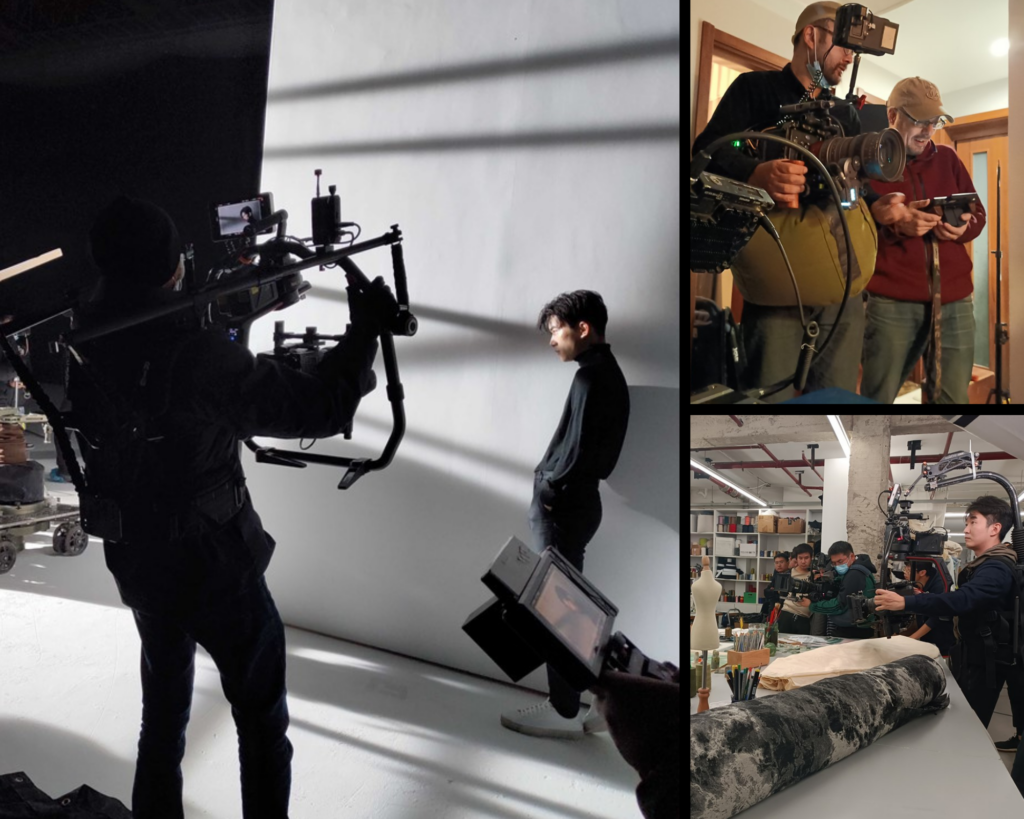
The Role of a Gaffer in Chinese Film Productions
The gaffer is the head of the lighting department. Their primary responsibility is to design and manage the lighting setup required for each shot.
Working closely with the director of photography, the gaffer translates visual concepts into practical lighting arrangements. This includes selecting lighting fixtures, determining placement, and coordinating the technical crew responsible for rigging and power distribution.
In China’s production system, the gaffer typically leads a team of lighting technicians who handle equipment setup and adjustments during filming.
Responsibilities often include:
• planning lighting diagrams with the cinematographer
• supervising lighting technicians
• coordinating power distribution and safety
• adjusting lighting setups during shooting
Because lighting setups can change frequently during production, the gaffer must manage both technical planning and rapid on-set adjustments.
Structure of the Lighting Department
The lighting department in Chinese productions usually consists of several roles working together under the gaffer’s supervision.
Lighting technicians handle fixture setup, cabling, and rigging. They install lights, position stands, and adjust lighting angles as instructed by the gaffer.
Grip teams often collaborate closely with lighting crews. While grips focus on rigging equipment and camera movement systems, their work frequently overlaps with lighting installations.
On larger commercial productions, the lighting department may include several technicians responsible for different areas of the set.
Because many crew members work together repeatedly across projects, experienced gaffers often assemble teams that are already familiar with each other’s working methods.
Lighting Equipment and Rental Infrastructure
China’s major production hubs maintain extensive inventories of professional lighting equipment. Modern LED fixtures, high-output cinema lights, and traditional tungsten systems are widely available through local rental houses.
Lighting packages often include:
• LED panels and flexible light mats
• high-output studio lights
• softboxes and diffusion frames
• stands, rigging systems, and power distribution equipment
Because these rental ecosystems are well developed, international productions rarely need to import lighting gear into China. Local sourcing simplifies logistics and allows crews to adjust equipment selections quickly during pre-production.
Gaffers often collaborate with rental technicians to assemble lighting packages that match the cinematographer’s visual plan.
Lighting Design and Collaboration With Cinematographers
Lighting design typically begins during pre-production. The cinematographer and gaffer review locations, discuss visual references, and determine how lighting will support the narrative or commercial concept.
Location scouting plays an important role in this process. The gaffer evaluates available natural light, ceiling height, electrical capacity, and rigging options.
These observations influence decisions about lighting placement and equipment requirements.
During filming, the gaffer monitors lighting consistency and adjusts setups to maintain visual continuity across shots.
Because commercial productions often involve complex lighting designs, clear communication between the gaffer and cinematographer ensures that visual goals remain achievable within the practical constraints of the location.
Working Conditions on Commercial Productions
Commercial shoots in China often operate under tight schedules. Advertising campaigns, brand films, and product commercials may require multiple setups within a single day.
The lighting department must therefore work quickly and efficiently. Gaffers typically prepare lighting plans in advance to reduce setup time on location.
Crew coordination is essential. Lighting technicians adjust fixtures while grip teams assist with rigging or camera movement equipment.
When experienced crews work together, lighting setups can be completed quickly while maintaining precise control over the visual environment.
This efficiency is particularly important when filming in urban locations where production schedules must accommodate location access limitations.
Location Constraints and Lighting Strategies
China’s dense urban environments sometimes impose restrictions on production equipment. Large lighting rigs or generators may not be feasible in certain locations.
Gaffers often adapt by designing compact lighting setups using modern LED systems. These fixtures provide high output while remaining portable and energy efficient.
Interior locations such as offices or factories may also present challenges related to ceiling height, electrical supply, or reflective surfaces.
During location scouting, the gaffer identifies these constraints and adjusts the lighting plan accordingly. Early planning helps avoid delays once filming begins.
Cross-City Productions and Logistics
Many international projects in China involve filming across multiple cities. Commercial campaigns may combine scenes filmed in urban environments with industrial or natural landscapes.
Lighting equipment and crew must therefore move between locations efficiently.
Some productions transport lighting packages by truck between cities, while others assemble separate lighting teams locally in each region.
The decision often depends on production schedule and equipment availability. Local rental houses in major cities typically maintain similar lighting inventories, which simplifies cross-city planning.
Experienced gaffers coordinate closely with production management to ensure that lighting equipment arrives on schedule for each filming location.
Communication and Bilingual Production Teams
International productions frequently involve creative teams from multiple countries. Directors, agency representatives, and producers may all participate in discussions during filming.
In these situations, bilingual communication becomes essential. Lighting instructions must be clearly understood by technicians, while creative direction from the cinematographer must translate into precise technical adjustments.
Production coordinators often assist with translation, but experienced gaffers also develop familiarity with international production terminology.
This communication structure allows lighting teams to respond quickly to creative changes without interrupting the shooting schedule.
Safety and Electrical Management
Lighting departments are responsible for managing electrical systems and ensuring safety on set. Large lighting setups require careful planning of power distribution and cable routing.
Gaffers oversee these technical aspects while working with lighting technicians to maintain safe working conditions.
Common safety considerations include:
• stable mounting of lighting fixtures
• proper cable management
• electrical load balancing
• coordination with other departments on set
Because commercial productions often involve significant electrical equipment, safety planning becomes a critical part of lighting department responsibilities.
Practical Considerations for International Producers
Working with an experienced gaffer in China can significantly improve production efficiency. Lighting crews with strong technical knowledge and established working relationships help productions maintain both speed and visual quality.
International producers often evaluate lighting teams based on their ability to adapt to location constraints, communicate effectively with cinematographers, and coordinate equipment logistics.
China’s production industry provides a deep pool of skilled lighting professionals. When combined with modern rental infrastructure and experienced technical crews, these teams support a wide range of commercial and documentary productions.
For international productions entering China, understanding how lighting departments operate helps ensure that creative ideas translate smoothly into practical on-set execution.