Production sound is often underestimated until problems appear in post-production. While camera departments receive most attention during filming, audio recording determines whether interviews, dialogue, and ambient sound can actually be used in the final edit. For productions working in China, hiring an experienced sound recordist becomes particularly important because filming environments often present acoustic challenges.
China’s commercial and documentary production industry includes a large pool of professional production sound technicians. These professionals are commonly referred to by several titles, including sound recordist, sound mixer, sound operator, soundman, or simply “soundie.” On larger productions, they may work with additional crew such as boom operators and sound assistants.
For international productions, understanding how sound crews operate locally helps ensure smooth collaboration between camera, lighting, and production teams.
This guide explains how production sound departments typically function in China and how international producers integrate sound teams into commercial and documentary filming workflows.
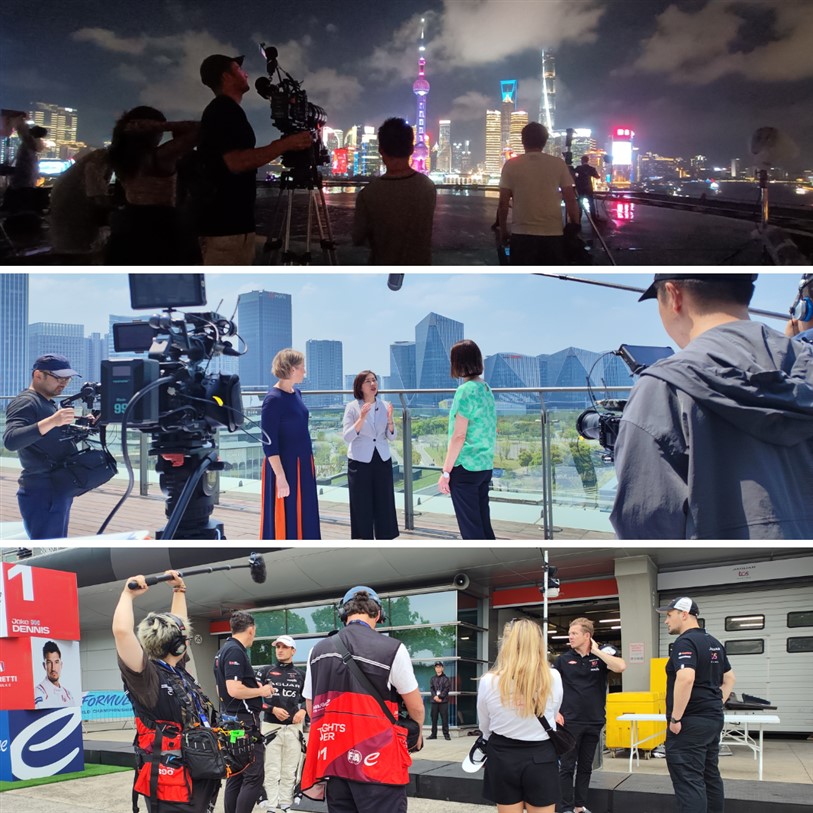
Understanding the Role of the Sound Recordist
The sound recordist is responsible for capturing clean dialogue and environmental audio during filming. While the director of photography oversees the visual image, the sound recordist manages the audio environment on set.
Their responsibilities often include:
• recording dialogue using lavalier or boom microphones
• monitoring audio levels during filming
• managing wireless microphone systems
• coordinating with camera and lighting teams
• recording ambient sound for post-production
Because many productions rely heavily on interviews or dialogue-driven scenes, the sound recordist plays a critical role in maintaining technical quality.
Unlike camera work, audio problems are often difficult or impossible to fix later. This makes careful monitoring and preparation essential during filming.
Sound Department Structure on Production Sets
The size of the sound department depends largely on the scale of the production. Smaller shoots often involve a single sound recordist managing both recording and microphone placement.
On larger productions, the sound department may include multiple roles.
A typical structure might include:
• production sound mixer (sound recordist)
• boom operator
• sound assistant or utility technician
The sound mixer manages the recording equipment and monitors audio signals. The boom operator handles microphone placement during dialogue scenes.
Sound assistants may manage wireless systems, batteries, and equipment preparation.
Many sound crews in China work together regularly across projects. These established teams allow productions to move efficiently when schedules are tight.
Equipment Used by Sound Recordists
Production sound equipment typically includes portable digital recorders, wireless microphone systems, and directional microphones.
Common audio setups include:
• field audio recorders and mixing units
• wireless lavalier microphone systems
• shotgun microphones mounted on boom poles
• audio monitoring headsets
• backup recording systems
Modern digital recorders allow multiple microphone channels to be captured simultaneously. This flexibility is important for interview-based productions or scenes involving multiple speakers.
China’s major production centers maintain reliable rental infrastructure for audio equipment. Many sound recordists also maintain their own professional kits, which simplifies equipment logistics for smaller productions.
Audio Challenges in Urban Filming Environments
Filming in Chinese cities often introduces significant audio challenges. Urban environments can include constant background noise from traffic, construction, and pedestrian activity.
Crowded public areas may produce unpredictable sound interruptions, while indoor locations sometimes create echo or reverberation problems.
Sound recordists address these issues by selecting appropriate microphones and positioning them carefully. Boom microphones are often used to isolate dialogue, while lavalier microphones provide backup audio sources.
Experienced sound professionals also monitor ambient noise levels throughout filming. If environmental noise becomes too disruptive, they may request brief pauses in shooting to ensure usable recordings.
These decisions require constant coordination with the director and camera team.
Coordination Between Sound and Camera Departments
Sound recording must operate closely with the camera department. Microphone placement, boom movement, and wireless transmitter positioning all depend on camera framing.
The boom operator often works just outside the camera frame, positioning the microphone as close to the subject as possible without entering the shot.
This coordination requires clear communication between departments. The sound team must know when camera angles change or when actors move within a scene.
For interview-based productions, the sound recordist often works directly with the director and producer to ensure that questions and responses are captured clearly.
When camera and sound departments collaborate effectively, filming proceeds smoothly without interruptions caused by technical conflicts.
Working Conditions for Corporate and Documentary Shoots
Corporate productions frequently involve interviews with executives, engineers, or factory managers. These shoots typically take place in offices, conference rooms, or manufacturing facilities.
Sound recordists must adapt to a variety of acoustic environments. Conference rooms may produce echo, while industrial locations may introduce machinery noise.
Documentary productions present even more dynamic conditions. Interviews may occur outdoors, in homes, or in crowded urban environments.
Because documentary crews often operate with smaller teams, the sound recordist must work efficiently with minimal setup time.
Portable recording systems and wireless microphones allow the sound team to move quickly between locations while maintaining audio quality.
Cross-City Productions and Travel Logistics
Many international projects in China involve filming across multiple cities. Corporate videos may include interviews at company offices in several regions, while documentaries often travel between different locations.
Sound equipment must therefore remain portable and reliable during travel.
Most sound recordists use compact equipment kits designed for mobility. Recorders, microphones, wireless systems, and monitoring equipment can typically fit within a few protective cases.
China’s transportation infrastructure makes cross-city travel relatively efficient. High-speed rail connections allow production teams to move equipment quickly between major cities.
Careful planning ensures that audio equipment arrives safely and remains ready for immediate use.
Bilingual Communication and Interview Recording
Language coordination is another important aspect of production sound work in China. Interviews may involve Chinese-speaking participants, international producers, and translators.
During interviews, translators often sit near the camera to interpret questions or responses. The sound recordist must ensure that both the original dialogue and translated audio are recorded clearly.
Multiple microphone channels may be used to capture each participant separately.
Accurate audio recording is especially important for documentary productions where spoken content forms the backbone of the story.
Clear communication between the sound team, translators, and producers helps ensure that interviews proceed smoothly.
Safety and Technical Management on Set
Production sound departments also manage technical safety considerations related to audio equipment.
Wireless microphone systems must operate within appropriate frequency ranges to avoid interference. In crowded urban environments, radio signals from other devices can sometimes affect wireless audio transmission.
Sound recordists monitor these signals carefully and adjust frequencies when necessary.
Battery management is another important responsibility. Wireless transmitters, receivers, and recorders must maintain sufficient power throughout long shooting days.
Because audio equipment is often worn by interview subjects or mounted near actors, secure mounting and cable management are essential for both safety and comfort.
Practical Considerations for International Producers
Hiring a professional sound recordist in China ensures that productions maintain high audio quality throughout filming. Experienced sound crews understand how to adapt to the unique acoustic conditions found in busy cities, industrial environments, and documentary locations.
For international productions, working with a local sound team offers several advantages. These professionals are familiar with local equipment suppliers, transportation logistics, and common filming environments.
When planning production sound, producers typically focus on three factors:
• the complexity of the shooting environment
• the number of people speaking on camera
• the mobility required for the project
Matching the sound crew structure to the needs of the production helps prevent audio problems that might otherwise complicate post-production.
China’s production industry offers a wide range of experienced sound professionals. When integrated effectively with the camera and lighting departments, these teams ensure that dialogue, interviews, and environmental sound are captured with clarity and reliability.