Beijing remains one of the most important filming hubs in China. As the country’s political and cultural center, the city hosts a wide range of productions including international documentaries, broadcast journalism, corporate communications, and commercial campaigns. For international teams entering Beijing, assembling a reliable camera crew becomes one of the first practical steps in planning a production.
The city maintains a large pool of experienced camera professionals who regularly collaborate with both domestic and international productions. These crews operate within a production ecosystem that includes equipment rental houses, technical specialists, and bilingual production coordinators.
Understanding how camera crews operate in Beijing helps international producers plan their projects more effectively. Production workflows, crew structure, and location logistics can differ from Western markets, particularly in a city where filming often intersects with administrative and logistical considerations.
This guide explains how camera crews typically function in Beijing and how international productions integrate them into commercial, corporate, and documentary filming environments.
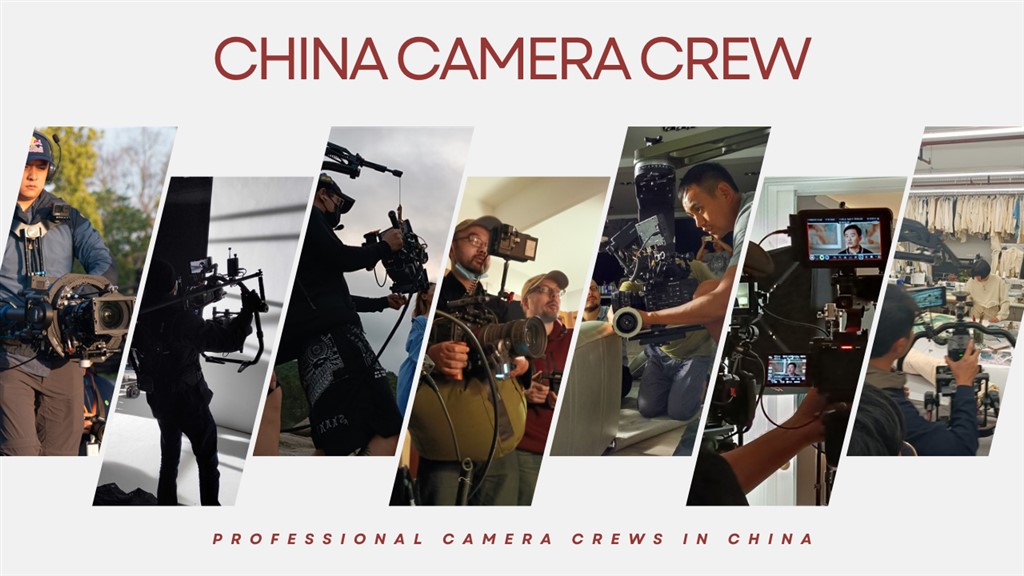
Structure of a Beijing Camera Crew
A camera crew in Beijing generally follows a structure similar to professional productions worldwide, though crew size often varies depending on the scale of the project.
A typical camera department may include:
• director of photography
• camera operator
• focus puller or first assistant camera
• second assistant camera
• digital imaging technician on larger productions
Smaller productions, such as corporate interviews or documentary shoots, may operate with a reduced camera team. In these cases, the cinematographer may handle both camera operation and basic technical setup.
Larger commercial campaigns typically involve more specialized roles within the camera department. Each member focuses on specific responsibilities such as focus control, lens management, or media handling.
Because Beijing hosts many international productions, local camera professionals are often familiar with global production standards and workflows.
Collaboration With International Directors and Producers
Many productions in Beijing involve directors and producers traveling from abroad while assembling technical crews locally. This hybrid structure is common in documentary, advertising, and corporate production.
In these situations, the camera crew works closely with visiting creative teams to translate visual concepts into practical filming setups.
Pre-production discussions often focus on topics such as:
• camera system selection
• lens choices
• lighting requirements
• camera movement strategies
Because international productions frequently operate under tight schedules, clear communication during early planning stages helps ensure that camera setups align with both creative goals and logistical realities.
Experienced Beijing camera crews often adapt quickly to different directing styles and production formats.
Equipment Infrastructure in Beijing
One advantage of filming in Beijing is the availability of extensive equipment rental infrastructure. The city hosts professional rental houses supplying digital cinema cameras, lenses, lighting systems, and grip equipment.
Most productions rent camera equipment locally rather than importing gear from abroad. This approach simplifies logistics and avoids complications related to customs clearance.
Rental packages typically include:
• digital cinema camera bodies
• lens sets and accessories
• monitoring systems
• camera support equipment
Camera assistants coordinate with rental houses to prepare equipment before filming begins. These checks confirm that recording formats, power systems, and accessories match the production requirements.
Reliable rental infrastructure allows camera crews to operate efficiently even when projects are organized on short notice.
Location Constraints and Camera Planning
Filming in Beijing requires careful consideration of location logistics. The city contains a mix of historic architecture, government districts, commercial areas, and residential neighborhoods.
Each environment presents different filming conditions.
Busy public areas may limit equipment size or require additional coordination with property managers or local authorities. Historic locations sometimes impose restrictions to protect cultural sites.
Camera crews often adapt their setups accordingly. Compact camera systems and lightweight rigs are frequently used when filming in crowded or sensitive environments.
Location scouting helps determine how camera placement and movement will function within these constraints.
Camera Movement and Visual Strategy
Camera movement plays an important role in shaping visual storytelling. Beijing camera crews regularly work with a variety of movement systems depending on the needs of the production.
Common setups include:
• handheld camera rigs for documentary filming
• stabilized gimbal systems for smooth motion
• track and dolly systems for controlled camera movement
• crane or jib arms for elevated perspectives
Commercial productions often combine multiple movement techniques to create visually dynamic sequences.
Grip departments assist the camera crew by assembling and maintaining these movement systems during filming.
Pre-production planning ensures that camera movement equipment aligns with the physical conditions of each location.
Bilingual Coordination and Communication
Language coordination is an important aspect of international productions in Beijing. Camera crews often collaborate with directors, producers, and agency representatives from different countries.
Bilingual production coordinators frequently assist with communication between departments.
During filming, camera operators and assistants must respond quickly to creative adjustments. Clear communication ensures that technical instructions are understood across the crew.
This coordination becomes especially important during interview-based productions, where camera framing, lighting adjustments, and sound recording must remain synchronized.
Efficient communication allows the production team to maintain momentum throughout the shooting schedule.
Cross-City Productions and Regional Logistics
Many projects filmed in Beijing also include additional locations across China. Commercial campaigns, documentaries, and corporate films often combine scenes shot in multiple cities.
In these cases, the Beijing camera crew may travel with the production or collaborate with technical teams in other regions.
Transportation logistics within China are generally efficient. High-speed rail and domestic flights connect major production hubs such as Shanghai, Shenzhen, and Guangzhou.
Equipment rental infrastructure in these cities is often comparable to Beijing, allowing productions to assemble consistent camera packages across different locations.
Planning cross-city logistics early helps maintain continuity throughout the production schedule.
Scheduling and Production Efficiency
Filming schedules in Beijing can be influenced by a variety of factors including location access, transportation logistics, and institutional coordination.
Production teams typically conduct thorough pre-production planning to minimize delays during filming.
Camera crews prepare equipment, test recording systems, and confirm lens selections before shooting begins.
This preparation allows filming to proceed efficiently once the crew arrives on location.
Experienced crews are accustomed to working within tight production schedules, particularly on commercial shoots where multiple setups must be completed in a single day.
Efficient collaboration between departments helps ensure that production timelines remain on track.
Managing Production Risks
International productions entering Beijing often prepare contingency plans to address logistical uncertainties.
Potential challenges may include:
• location restrictions
• weather conditions
• transportation delays
• schedule adjustments
Camera crews play an important role in adapting to these changes. Flexible equipment setups and efficient crew coordination help maintain progress even when production conditions shift.
By anticipating potential challenges during pre-production, producers can reduce the likelihood of disruptions once filming begins.
Practical Considerations for International Producers
Working with a Beijing camera crew provides access to experienced professionals familiar with both local filming conditions and international production standards.
For international teams, preparation remains the key factor in ensuring successful filming. Early coordination of equipment, locations, and crew structure allows productions to operate smoothly once shooting begins.
Beijing’s production ecosystem offers skilled camera professionals, modern equipment infrastructure, and diverse filming environments ranging from historic districts to contemporary urban landscapes.
When combined with effective logistical planning and clear communication, these resources allow international productions to execute complex filming projects within China’s capital city.