Hiring a videographer in China often involves more than simply selecting a camera operator. For international productions, a videographer frequently operates within a broader production framework that includes local crew coordination, equipment logistics, location management, and bilingual communication.
China’s video production industry has expanded rapidly over the past two decades. Corporate communication, brand marketing, technology documentation, and documentary storytelling all contribute to a steady demand for experienced videographers across major Chinese cities.
For international producers, the practical challenge is understanding how videographers fit into China’s production ecosystem. The role may vary depending on the scale of the project, the type of content being produced, and the structure of the local production team.
This guide explains how videographers typically work in China and how international teams approach corporate and documentary video shoots within the local production environment.
Understanding the Role of a Videographer in China
In China’s production environment, the term “videographer” can describe several different roles depending on the project. Smaller productions often use the term to refer to a camera operator who manages both filming and basic equipment setup.
On larger productions, however, the videographer may work within a structured camera department led by a director of photography.
For corporate interviews or documentary shoots, a videographer may handle multiple responsibilities:
• camera operation
• basic lighting setup
• sound coordination
• equipment preparation
These projects often prioritize mobility and efficiency. A compact crew allows production teams to move quickly between locations while maintaining professional image quality.
Understanding how the videographer fits into the production structure helps producers determine whether a single operator or a larger crew is required.
Corporate Video Production Workflows
Corporate video projects represent one of the most common types of productions involving videographers in China. Multinational companies frequently commission internal communications, executive interviews, product demonstrations, and factory documentation.
These productions typically follow a streamlined workflow. A small crew arrives on location, sets up lighting and sound, conducts interviews, and captures supporting footage of the environment.
Corporate shoots often take place in offices, conference rooms, manufacturing facilities, or research laboratories. Because these environments are usually controlled spaces, production logistics are relatively straightforward compared to large commercial shoots.
Videographers working in these settings must balance technical quality with efficiency. Corporate schedules are often tight, and interviews may need to be completed within limited time windows.
Documentary and Editorial Shooting Environments
Documentary projects introduce different challenges. Videographers working on documentaries must adapt to dynamic environments and unpredictable shooting conditions.
Interviews may occur in private homes, small businesses, rural locations, or public spaces. The ability to work with lightweight equipment and flexible lighting setups becomes essential.
Documentary videographers often work closely with directors or producers who guide the storytelling process. While the creative direction may come from the editorial team, the videographer translates those ideas into visual footage.
Mobility plays a major role in documentary production. Compact camera systems and portable audio setups allow crews to move quickly between locations without extensive setup time.
Equipment Planning and Local Rental Infrastructure
Equipment decisions for video shoots in China depend largely on the scale and purpose of the production. Smaller corporate or documentary projects may rely on compact digital cinema cameras or mirrorless systems.
Larger productions often use more advanced camera packages with dedicated lighting and grip equipment.
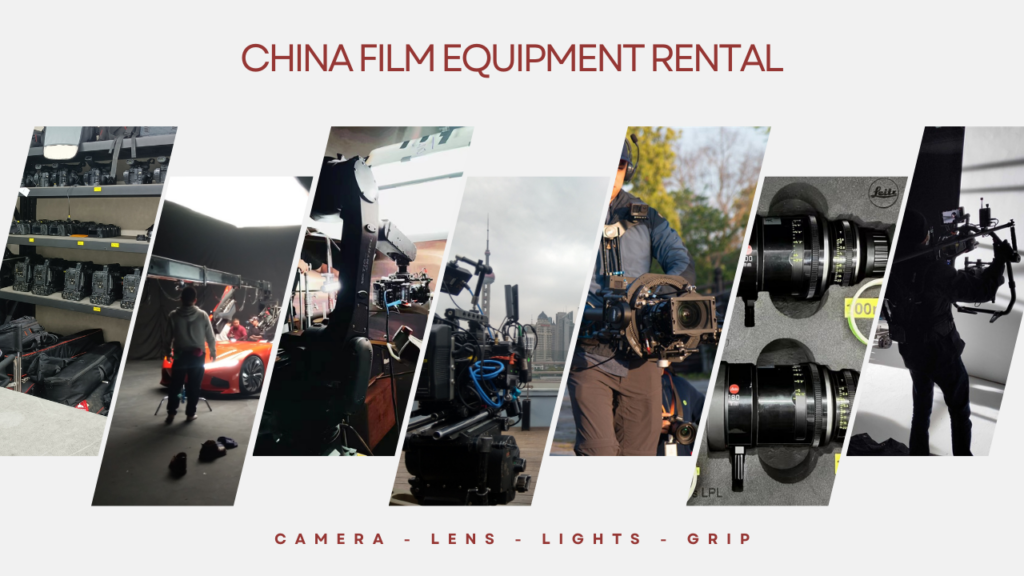
China’s major production hubs maintain well-developed rental infrastructure. Professional cameras, lenses, lighting systems, and audio equipment can be sourced locally in cities such as Shanghai, Beijing, Shenzhen, and Guangzhou.
For international productions, sourcing equipment locally often simplifies logistics. Importing equipment can involve customs documentation and transportation planning, while local rental houses provide ready-to-use camera packages.
Videographers typically collaborate with production managers to determine which equipment configuration best suits the project.
Location Access and Filming Considerations
Location logistics play a significant role in how videographers operate during shoots. Corporate projects usually take place in private facilities, which simplifies location access.
Documentary projects sometimes involve filming in public environments. In these situations, production teams may coordinate with property managers or local authorities depending on the visibility of the shoot.
Urban locations present additional considerations. Busy streets, commercial districts, and industrial zones often require careful planning to avoid disrupting normal activity.
Videographers must adapt their shooting approach to the location environment. Compact setups and minimal crew footprints often make filming more manageable in crowded spaces.
Working With Local Crew Members
Even when a videographer operates as the primary camera operator, local support crew often assist with production logistics.
Common support roles include:
• production assistants
• sound technicians
• lighting assistants
• drivers or local coordinators
These crew members help manage equipment, organize schedules, and maintain communication with location managers.
Because China’s production industry relies heavily on freelance professionals, videographers frequently work with crew members they know from previous projects. This familiarity helps production teams operate efficiently.
For international producers, working with experienced local crew often simplifies the production process.
Bilingual Communication and Interview Coordination
Language coordination is another important factor when filming in China. Many corporate and documentary projects involve interviews with Chinese-speaking participants.
Bilingual coordinators or translators often assist during these interviews. They help ensure that questions are understood correctly and that responses can be translated accurately.
Videographers must also coordinate with translators to maintain natural conversation flow during interviews. Camera placement, lighting adjustments, and sound monitoring all continue while translation occurs.
Clear communication between all participants helps interviews proceed smoothly and ensures that the final footage captures meaningful responses.
Scheduling and Production Efficiency
Production schedules for corporate and documentary shoots often operate within tight timeframes. Companies may allocate only a few hours for executive interviews, while documentary projects may need to capture multiple locations within a single day.
Videographers contribute significantly to maintaining efficiency during these shoots. Preparing equipment in advance, organizing lighting setups, and coordinating with crew members all help reduce setup time.
Efficient scheduling becomes especially important when productions move between multiple locations. Transportation logistics, equipment packing, and location access must all align with the day’s timeline.
When planning is handled carefully, even small crews can complete complex shooting schedules.
Regional Differences in Video Production
China’s major cities offer different filming environments for videographers. Each region presents unique logistical conditions and production opportunities.
Shanghai and Beijing host a large share of corporate headquarters, international agencies, and media organizations. These cities offer diverse filming locations and strong rental infrastructure.
Shenzhen and Guangzhou frequently host technology and manufacturing-related productions. Factories, laboratories, and product development facilities provide unique filming environments.
Rural regions and smaller cities may require additional travel coordination but often offer distinctive visual settings for documentary storytelling.
Understanding these regional differences helps production teams plan schedules and crew arrangements more effectively.
Practical Considerations for International Producers
Hiring a videographer in China requires understanding how the role integrates with the broader production environment. Videographers often collaborate closely with local crew members, production coordinators, and translators.
For international producers, preparation remains the most important factor. Clear communication about the project’s goals, shooting locations, and technical requirements allows videographers to plan effectively.
Corporate and documentary productions each present different challenges, but both benefit from experienced professionals who understand how filming operates within China’s logistical and regulatory framework.
When planning and coordination are handled carefully, videographers in China can deliver high-quality results across a wide range of production environments.