Understanding real-world international filming China experience requires more than knowing equipment or hiring local crew. Filming in China combines structured administrative processes, regional operational differences, and culturally specific workflow expectations. Foreign producers who approach projects with assumptions based on Western markets often discover that success depends on early planning around production logistics China, filming permits, and bilingual crew coordination.
This guide outlines practical lessons drawn from international production workflows. The goal is to help producers anticipate challenges before they appear on schedule sheets or budgets. Instead of focusing on theory, it examines how production systems actually function across Chinese cities and how teams adapt to maintain efficiency.
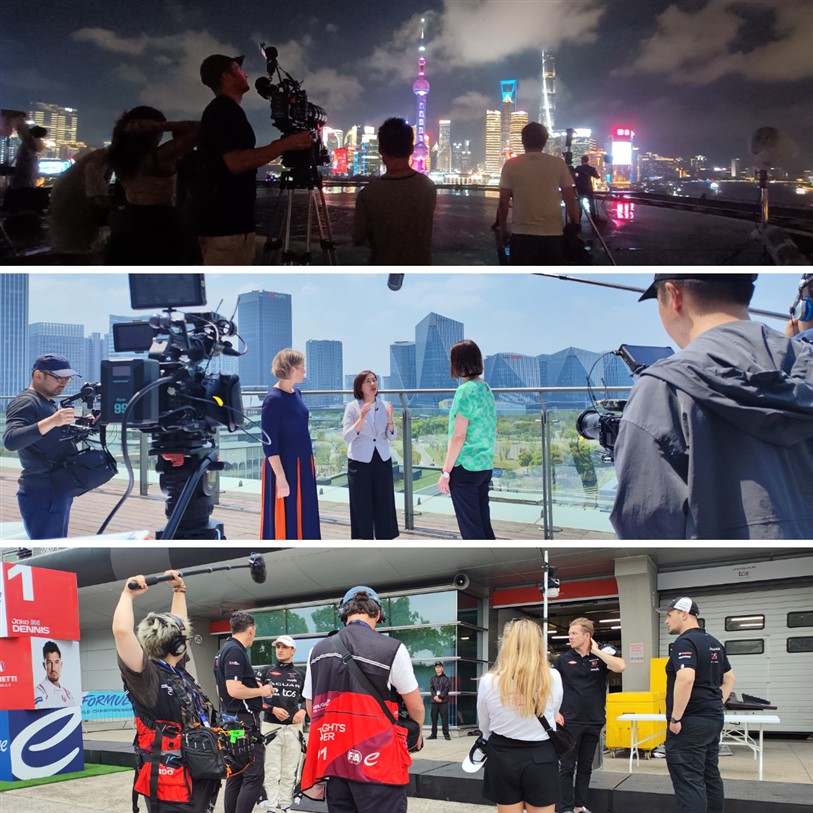
International Filming China Experience Begins with Administrative Awareness
One of the first lessons learned when filming in China is that administrative preparation shapes production timelines more than creative scheduling.
Foreign teams frequently prioritize casting, locations, or creative concepts before confirming filming permits feasibility. In China, the reverse approach works better.
Administrative factors include:
- Location approvals from building management or districts
- Equipment lists aligned with filming permits requirements
- Clear project descriptions translated into Chinese
Administrative clarity does not slow production; it prevents later disruption.
Understanding procedural expectations early stabilizes the entire workflow.
Workflow Differences Between International Productions and Local Practices
International crews often expect flexible workflows where decisions can be made quickly on set. Chinese production environments may emphasize structured planning and defined roles.
Lessons from real international filming China experience include:
- Confirming technical details earlier than usual
- Preparing written documentation to avoid ambiguity
- Defining clear communication channels before production begins
These practices reduce friction between creative and operational teams.
Adapting workflow expectations leads to smoother collaboration without compromising creative freedom.
Production Logistics China: Lessons from Real Coordination Challenges
Production logistics China become particularly visible when equipment and crew coordination intersect with administrative constraints.
Common lessons include:
- Equipment booking should align with permit confirmation timelines.
- Transport logistics between cities require realistic buffers.
- Crew availability varies depending on regional production ecosystems.
For example, transporting a camera package China setup between cities without factoring freight delays can create cascading schedule issues.
Integrated logistics planning avoids reactive problem-solving.
Equipment Rental China and Camera Package China Planning Realities
China offers strong equipment infrastructure, especially in major hubs. However, international productions often assume uniform availability nationwide.
Lessons learned include:
- Verify camera package China inventory in each city separately.
- Identify alternative rental houses as contingency.
- Plan technical compatibility between international gear and local equipment standards.
Equipment rental China decisions benefit from flexibility rather than rigid specification lists.
Adjusting technical plans based on regional availability often saves time and cost.
International Filming China Experience with Filming Permits
Filming permits remain one of the most misunderstood aspects of working in China.
Permit requirements vary depending on:
- Public versus private locations
- Drone use
- Commercial branding visibility
Producers often learn that permit timelines should guide schedule planning rather than follow it.
A strong lesson from international filming China experience is that compliance planning must happen during early development.
Waiting until pre-production introduces risk.
Bilingual Crew Coordination as a Structural Advantage
Communication challenges extend beyond language translation.
International crews bring different working styles, decision-making habits, and communication expectations.
A bilingual crew structure helps:
- Translate technical terminology accurately
- Clarify creative intent across departments
- Maintain workflow consistency between foreign and local teams
Effective bilingual coordination prevents misunderstandings that could otherwise slow production.
Rather than serving as translators, bilingual crew members act as workflow integrators.
Cross-City Production Lessons from Multi-Location Projects
Many international productions involve multiple cities to capture varied environments or access specialized facilities.
Cross-city production lessons include:
- Treat each city as its own production ecosystem.
- Confirm filming permits independently for each location.
- Evaluate whether to transport equipment or rent locally.
For example, hiring local lighting teams in different regions while maintaining a consistent creative core often improves efficiency.
Cross-city production works best when flexibility is built into planning.
Budget and Scheduling Realities for International Productions
Foreign producers often expect cost structures similar to other markets. However, budgeting lessons emerge quickly.
Key considerations include:
- Administrative processes influencing shoot dates
- Equipment availability affecting rental pricing
- Travel logistics impacting crew continuity
Scheduling buffers reduce risk.
International filming China experience shows that realistic timelines often reduce overall budget pressure more effectively than aggressive scheduling.
Communication Barriers and Cultural Interpretation
Communication challenges arise not only from language but from different approaches to collaboration.
Examples include:
- Indirect feedback styles influencing on-set discussions
- Different expectations regarding hierarchy
- Varied approaches to problem-solving under pressure
Understanding these dynamics allows international teams to adapt communication strategies.
Structured briefing sessions and clear written materials help maintain alignment.
Risk Management and Timeline Planning
One consistent lesson across international filming China experience is the importance of proactive risk management.
Effective strategies include:
- Confirm administrative feasibility before finalizing locations.
- Build buffer days into cross-city production schedules.
- Conduct technical verification for equipment rental China early.
Predictability improves when planning anticipates uncertainty rather than reacting to it.
Practical Example: Multi-City Corporate Production
An international corporate project required interviews in Shanghai, manufacturing footage in Shenzhen, and lifestyle sequences in Chengdu.
Early assumptions involved transporting all equipment between locations.
Revised planning introduced:
- Local equipment rental China partners per city
- Travel for key creative roles only
- Bilingual coordination teams ensuring consistent workflow
This approach reduced transport risk and improved schedule stability.
Final Perspective: Lessons from International Filming China Experience
Producing international shoots in China requires understanding that operational success depends on preparation rather than improvisation.
Filming in China rewards teams that align creative planning with administrative reality. Production logistics China, filming permits processes, and bilingual crew integration form the foundation of stable execution.
The most valuable lesson is simple: treating China as a collection of distinct production environments rather than a single unified system improves outcomes.
When workflow planning integrates regional differences, communication clarity, and realistic scheduling, international productions operate efficiently and confidently across diverse locations.