Bilingual film crew coordination plays a central role in successful filming in China, where language differences intersect with structured administrative systems and regionally distinct production practices. Foreign producers often assume that translation alone solves communication barriers, but real-world production logistics China require coordinated workflow design that integrates technical direction, cultural expectations, and compliance procedures.
A bilingual crew does more than bridge language. It aligns creative intent with operational execution, ensures filming permits processes remain clear, and supports equipment rental China coordination across multiple departments. This guide explores how bilingual film crew coordination functions behind the scenes and why it becomes essential when managing complex productions across different Chinese cities.
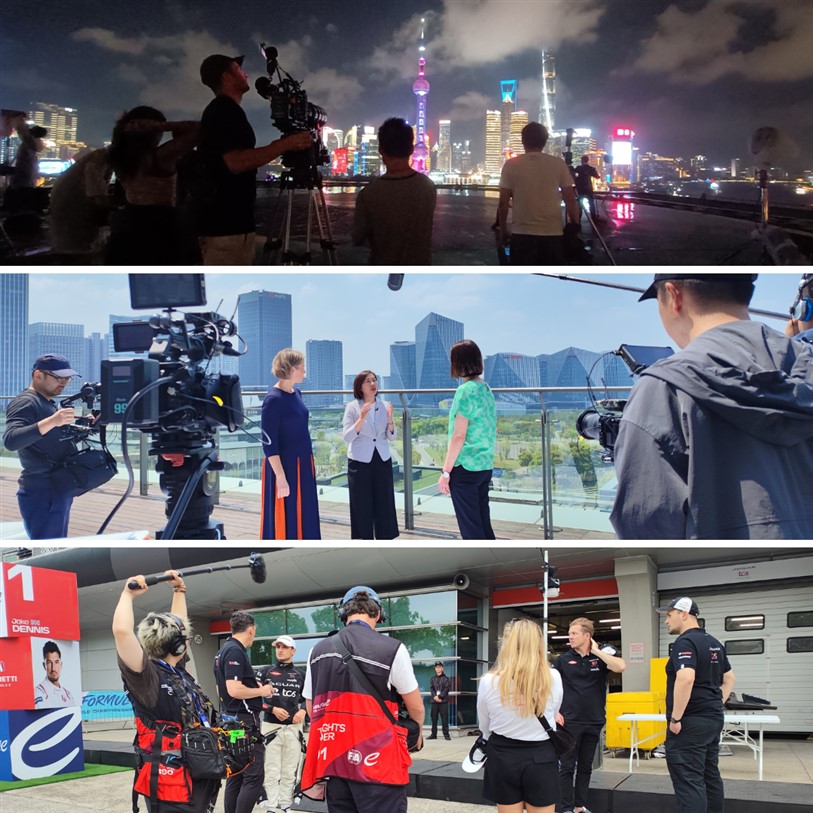
Understanding Bilingual Film Crew Coordination in Real Production Context
Bilingual film crew coordination refers to structured communication systems that connect international creative teams with local technicians. The goal is not simply interpretation but workflow integration.
Typical responsibilities include:
- Translating technical terminology into locally understood workflow
- Managing communication between departments with different working styles
- Clarifying creative intent during fast-paced decision-making
- Ensuring safety and procedural instructions are accurately delivered
Without structured coordination, small misunderstandings escalate quickly. A lighting setup interpreted differently or unclear shot priority can delay production.
Bilingual coordination ensures continuity between creative vision and execution.
Why Filming in China Requires Structured Communication Systems
Filming in China often involves multiple layers of approval and coordination. Administrative expectations, cultural communication styles, and hierarchical decision-making structures influence how teams operate.
Western productions frequently rely on informal communication. Chinese production environments often favor clarity, written documentation, and defined responsibility chains.
Bilingual crew members help translate not only language but expectations:
- Who makes final decisions
- How instructions are delivered
- When approval is required before action
This alignment prevents workflow confusion.
Workflow Differences Between Western Crews and Local Teams
International productions entering China sometimes encounter friction due to different operational rhythms.
Common differences include:
- Western crews emphasizing rapid improvisation
- Local teams preferring structured preparation before execution
- Variations in how feedback is delivered
Bilingual film crew coordination creates shared understanding by adapting communication style to both sides.
Rather than forcing one system onto another, coordination blends workflows into a cohesive structure.
Production Logistics China and Communication Flow
Production logistics China involve more than physical coordination. Communication must flow smoothly between:
- Creative leadership
- Technical departments
- Local authorities
- Rental houses
For example, confirming a camera package China setup may require technical clarification in English while documentation is prepared in Chinese.
A bilingual coordinator ensures that equipment rental China decisions align with permit timelines and location requirements.
Misalignment between logistics and communication often leads to delays.
Equipment Rental China and Technical Translation
Technical language does not always translate directly between markets.
Examples include:
- Lighting terminology varying between regions
- Rigging practices influenced by local standards
- Camera package China configurations requiring adaptation to available inventory
Bilingual crew members verify that requested equipment matches local specifications.
They also confirm compatibility between international workflows and regional equipment ecosystems.
This reduces the risk of incorrect orders or missing components.
Managing Filming Permits Through Bilingual Coordination
Filming permits processes depend heavily on accurate documentation.
Applications often require:
- Project descriptions
- Equipment lists
- Shooting schedules
A bilingual coordinator ensures that written submissions accurately reflect production plans.
Misinterpretation at this stage can delay approvals.
Clear communication between creative teams and administrative authorities maintains compliance while preserving creative flexibility.
Cross-City Production and Maintaining Communication Consistency
Cross-city production introduces additional communication challenges.
Moving between Shanghai, Beijing, Shenzhen, or Chengdu means adapting to regional crew ecosystems while maintaining consistent workflow.
Bilingual coordination helps by:
- Standardizing call sheet language
- Maintaining consistent reporting structures
- Translating creative priorities clearly across teams
Without consistent communication, each city risks developing separate workflow habits, which slows production.
Consistency enables faster adaptation.
Real Example: Coordinating International Commercial Production
A commercial shoot required bilingual film crew coordination across three cities.
Challenges included:
- Different local lighting teams interpreting direction differently
- Equipment rental China partners using varying terminology
- Remote creative leadership communicating through video calls
The coordination strategy included:
- Pre-production briefings conducted in both languages
- Standardized equipment naming conventions
- Daily bilingual summaries for all departments
The result was smoother transitions between cities and reduced setup time.
Budget and Scheduling Benefits of Strong Bilingual Workflow
Effective bilingual coordination improves cost efficiency.
Benefits include:
- Reduced overtime caused by misunderstandings
- Faster equipment setup due to clear instructions
- More accurate scheduling around filming permits timelines
Communication clarity minimizes unexpected adjustments.
While bilingual roles add planning complexity, they stabilize overall workflow and reduce reactive problem-solving.
Risk Management: Preventing Miscommunication Before It Happens
Risk management in filming in China involves anticipating communication gaps.
Key strategies include:
- Translating creative briefs early
- Confirming technical terminology across departments
- Creating visual references to supplement verbal instructions
Bilingual film crew coordination ensures that planning documents are not only translated but understood.
Preventing confusion early saves significant time during production.
Remote Production and Bilingual Crew Leadership
Many foreign producers oversee projects remotely. In these situations, bilingual crew members become the operational link between creative leadership and on-site execution.
Responsibilities may include:
- Providing real-time updates in both languages
- Verifying equipment setup visually
- Relaying feedback quickly during live shoots
Remote collaboration works best when communication remains structured and centralized.
Final Perspective on Bilingual Film Crew Coordination in China
Bilingual film crew coordination is not simply a support function. It is a core structural component of successful filming in China.
By aligning communication styles, administrative requirements, and technical workflows, bilingual teams enable foreign producers to navigate regional differences with confidence.
Production logistics China become more predictable when communication systems are designed intentionally rather than improvised.
In a production environment defined by layered processes and diverse working styles, coordination transforms potential friction into operational clarity — allowing creative teams to focus on storytelling while execution remains stable behind the scenes.