Video Production China: Corporate, Commercial & Documentary

China has become one of the world’s largest production environments for corporate, commercial, and documentary filming. Global brands, media organizations, and technology companies regularly conduct video production across major Chinese cities and industrial regions. For international producers, however, the operational structure of video production in China can differ significantly from Western markets.

Production workflows often involve multiple layers of coordination. Location permissions, crew assembly, equipment logistics, and regulatory awareness all play a role in how a project moves from concept to execution. Many productions also operate across several cities, which adds logistical complexity.

Understanding how video production in China actually functions helps international teams plan efficiently. The following guide explains how corporate, commercial, and documentary projects are typically organized and executed within China’s production ecosystem.

Video Production China: Corporate, Commercial & Documentary

Understanding the Video Production Landscape in China

China’s production industry spans several major sectors. Corporate communication projects, brand advertising campaigns, and documentary productions often coexist within the same infrastructure of crews and equipment providers.

Corporate productions are among the most common. Multinational companies frequently produce executive interviews, factory documentation, training videos, and internal communications across Chinese operations.

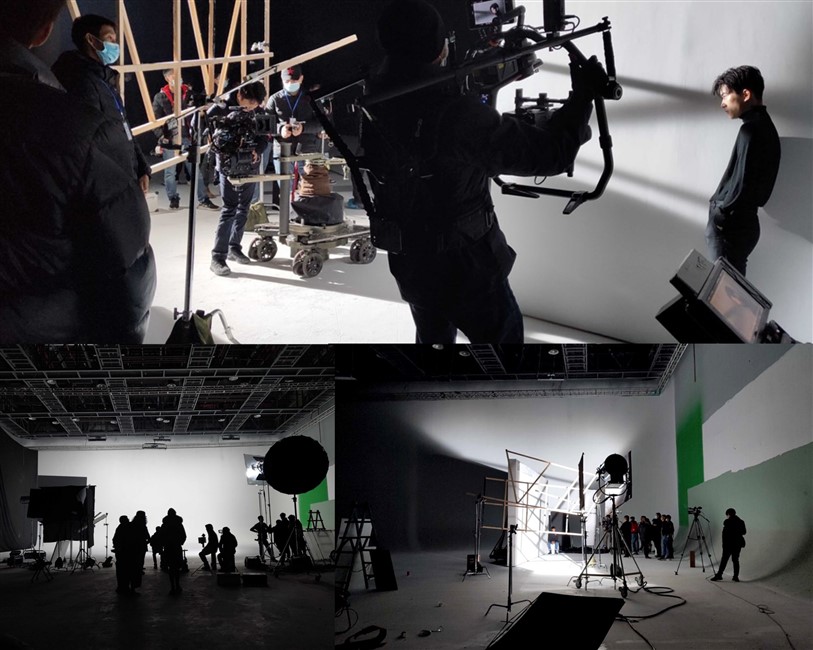
Commercial campaigns tend to involve larger crews and more complex logistics. These productions often combine studio work with urban location filming.

Documentary projects typically focus on research, interviews, and location-based storytelling. They may involve smaller crews but often require deeper location access and regulatory awareness.

Despite their differences, these project types share a common production ecosystem built around flexible crew networks and strong rental infrastructure.


Production Workflows Compared to Western Markets

International producers often notice structural differences when working in China. Production companies commonly operate as coordination hubs rather than fully integrated studios.

A production management team typically organizes the project while technical crew members are assembled from established freelance networks. Camera assistants, gaffers, grips, and location teams often work together across multiple projects.

This system allows productions to scale quickly depending on project size. A small corporate interview might involve only a few crew members, while a commercial campaign could expand to a much larger team.

The workflow also emphasizes pre-production planning. Location coordination, transportation logistics, and equipment scheduling usually begin earlier than many international producers expect.


Location Control and Urban Filming Considerations

Location access in China often determines how production schedules are structured. Major cities such as Shanghai, Beijing, Shenzhen, and Guangzhou offer visually diverse environments, but they also require careful coordination.

Many urban locations operate under layered management structures. Public spaces may involve district authorities, property management companies, and building security teams.

Filming in commercial districts, industrial parks, or transportation areas often requires advance discussions with location managers. Some environments allow flexible filming, while others impose restrictions on equipment size or crew footprint.

Location scouting is therefore a key step in planning. Early conversations with property management teams often clarify whether filming is feasible and what limitations might apply.


Equipment Sourcing and Camera Logistics

One of the most practical decisions for international productions involves equipment sourcing. While importing gear into China is possible, many productions rely on local rental infrastructure.

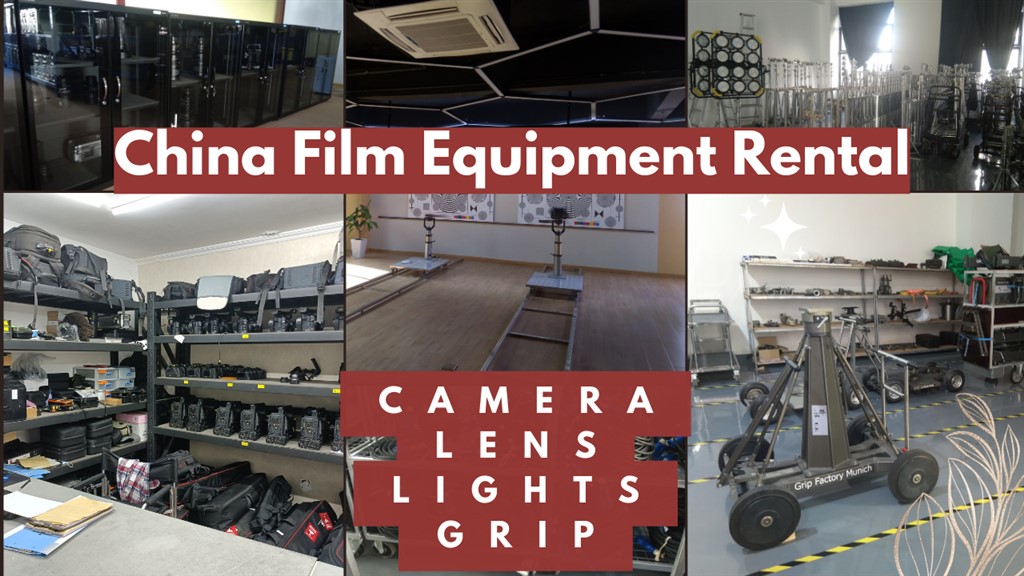
Major production hubs maintain extensive inventories of professional equipment. Cameras, lenses, lighting systems, grip hardware, and support rigs are widely available through established rental houses.

Using locally sourced equipment offers several advantages. It simplifies customs procedures, reduces shipping costs, and allows productions to adapt quickly if technical adjustments are needed.

Local rental providers also maintain technical teams who assist with equipment preparation and troubleshooting. This support becomes particularly valuable on larger commercial shoots.


Crew Structure and Bilingual Production Coordination

Crew organization is another area where international productions encounter differences. Technical teams are often assembled through long-standing professional networks.

A typical video production crew may include:

• director of photography
• camera assistants
• gaffer and lighting technicians
• grip crew
• sound recordist
• production assistants
• location coordinators

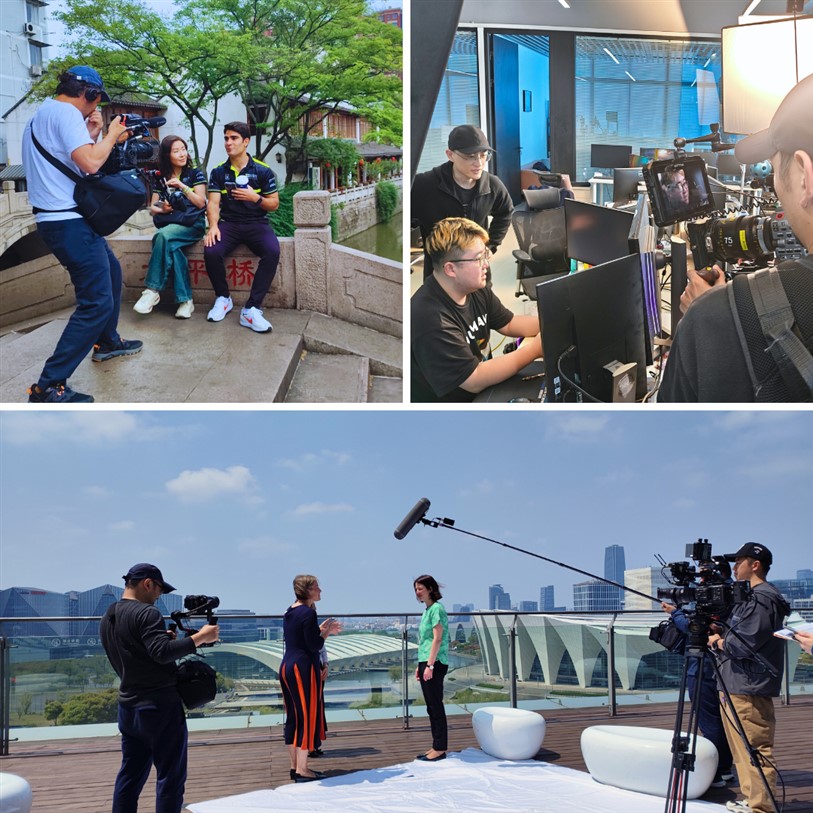
International productions frequently bring directors, producers, or agency representatives from abroad while working with local technical crews.

Bilingual coordination plays an important role in this structure. Production management teams often act as translators between creative leadership and local crew members. Clear communication ensures that schedules, technical requirements, and safety considerations are understood by everyone involved.


Regulatory Awareness and Filming Permissions

While many corporate and documentary shoots operate smoothly within private facilities, filming in public environments sometimes requires additional coordination.

Local authorities may request notification or approval when productions involve visible equipment or large crews in public areas. Requirements can vary between districts and cities.

In practice, many productions work closely with local partners who understand how these processes function in specific regions. Their role often involves coordinating with property managers, municipal offices, or district cultural departments when necessary.

Regulatory awareness is less about navigating a single permit system and more about understanding how local expectations differ between filming environments.


Cross-City Production and Travel Logistics

China’s geographic scale often leads productions to operate across multiple locations. A corporate film might include interviews in Shanghai, factory footage in Guangdong, and product development scenes in Shenzhen.

Managing these transitions requires careful scheduling. Crew travel, equipment transport, and accommodation planning must align with the production timeline.

Some production companies maintain networks across several cities, allowing them to assemble local crews in each region. This approach reduces travel costs and allows production teams to work more efficiently.

Cross-city production planning also involves understanding regional transportation options. High-speed rail connections between major cities often simplify logistics and shorten travel time.


Budget Structure and Production Planning

Budget expectations for video production in China vary depending on project scale and location. While labor costs for technical crews may differ from Western markets, logistical factors can significantly influence the final budget.

Location access fees, equipment transportation, and travel coordination often represent major cost categories.

Experienced production planners typically provide detailed cost breakdowns early in the pre-production process. Transparent budgeting helps producers identify which elements of a project carry the greatest financial impact.

Budget planning also benefits from flexible scheduling. Adjusting shoot days or combining locations can sometimes reduce logistical complexity.


Managing Production Risks and Operational Challenges

Every international production involves some degree of uncertainty. In China, many of these challenges relate to logistics rather than creative execution.

Common production risks include:

• location restrictions
• transportation delays
• scheduling changes
• equipment availability adjustments

Experienced production teams address these issues through early preparation. Detailed scouting, clear communication with location managers, and contingency planning help prevent disruptions during filming.

Flexibility also plays an important role. Production schedules often include buffer time to accommodate unexpected changes without compromising the overall project timeline.


Practical Insights for International Producers

Video production in China operates within a mature but highly localized ecosystem. Major cities provide skilled technical crews, extensive rental infrastructure, and visually diverse filming environments.

For international producers, success usually depends on preparation and collaboration. Understanding how local workflows function allows production teams to adapt their planning strategies.

Projects tend to run most smoothly when producers focus on:

• early logistical coordination
• clear communication between international and local teams
• flexible production schedules
• careful location planning

With these factors in place, China offers a highly capable production environment for corporate communication, commercial campaigns, and documentary storytelling.

Film Production Company China: Choosing the Right Partner

International producers entering China often begin with the same question: how do you choose the right local production partner? The production ecosystem in China is large, fragmented, and structured differently from many Western markets. A company that appears similar on paper may operate in a very different way in practice.

Understanding how a film production company in China actually functions requires looking beyond websites and showreels. Operational capability, local authority relationships, crew management experience, and logistical coordination often determine whether a production runs smoothly.

For international brands, agencies, and broadcasters, the decision is less about finding a vendor and more about selecting a partner capable of navigating the realities of production inside China.

This guide explains how experienced producers typically evaluate a production partner and what operational factors matter most.

Film Production Company China: Choosing the Right Partner

Understanding the Structure of a Film Production Company in China

Production companies in China do not always follow the same structure as those in North America or Europe. Many operate as production management hubs rather than fully vertically integrated studios.

A typical structure may include:

• a core production management team
• a network of freelance crew members
• relationships with equipment rental houses
• partnerships with local location managers

Instead of maintaining permanent in-house departments, production companies often assemble project-based crews depending on the scale and type of production.

For international producers, this model can be efficient. It allows production teams to scale quickly while drawing from a large pool of experienced technical crew across major cities.

However, it also means evaluating a company requires understanding its real operational network rather than just its internal staff list.


Regulatory Environment and Why Local Partners Matter

One of the main reasons international productions rely on local production companies is regulatory coordination. Filming activities in China often involve multiple authorities, particularly when working in public spaces or high-visibility locations.

Local production partners typically coordinate:

• location permissions
• district-level filming notifications
• coordination with municipal authorities
• communication with property management teams

Because regulatory expectations can vary between cities and even between districts, a company with strong local experience often prevents administrative complications.

International producers sometimes underestimate how quickly a shoot can encounter regulatory friction. A production partner familiar with the local environment often resolves issues before they escalate.


Evaluating Operational Experience

Showreels can demonstrate creative capability, but they do not always reflect production management experience. For international projects, operational reliability often matters more than visual style.

Producers typically evaluate a potential partner by examining:

• experience with international crews
• history of managing cross-border productions
• familiarity with agency workflows
• understanding of brand compliance requirements

Another indicator is how a production company approaches pre-production. Experienced teams tend to emphasize detailed planning, location logistics, and scheduling coordination rather than focusing solely on creative presentation.

When communication during early planning is structured and transparent, it often reflects how the company manages production operations.


Crew Networks and Technical Capacity

China’s film and commercial production industry relies heavily on freelance technical crews. Camera assistants, gaffers, grips, production assistants, and location teams are typically assembled for each project.

A strong production company maintains long-term relationships with these professionals.

This matters because crew coordination determines whether production days run efficiently. Crews familiar with each other’s working methods often move faster and handle technical challenges more smoothly.

International productions also benefit from bilingual crew members who can bridge communication between foreign creative leadership and local technical teams.

When evaluating a production partner, producers often ask how crews are assembled and how frequently teams work together.


Equipment Logistics and Local Rental Infrastructure

Equipment planning is another area where local production partners provide significant value. China’s major production hubs maintain extensive rental ecosystems with high-end cameras, lenses, lighting systems, and grip equipment.

Rather than importing equipment, many international productions rely on locally sourced gear.

This approach reduces several operational risks:

• customs clearance delays
• transportation costs
• equipment insurance complications

Local production companies typically coordinate with established rental houses to assemble camera packages and lighting systems that match international technical standards.

When producers review equipment planning with a potential partner, they are often assessing how efficiently the company can source and manage gear logistics.


Location Control and Production Planning

Location access in China requires careful planning. While some spaces operate similarly to private venues in other countries, many urban environments involve layered management structures.

A commercial district plaza, for example, may require coordination with:

• district authorities
• property management
• building security teams

Experienced production companies conduct early location scouting to identify these layers of control. They often begin conversations with site managers before formal scheduling decisions are made.

This proactive approach reduces the risk of location cancellations or last-minute restrictions during filming.

For international producers, location planning is one of the clearest indicators of a production partner’s operational competence.


Communication and Bilingual Production Management

Communication is a recurring challenge on cross-border productions. Creative direction, technical planning, and regulatory coordination often involve participants from multiple countries.

A capable production partner usually acts as a communication bridge between:

• international creative teams
• local technical crews
• location authorities
• regulatory offices

Bilingual production management becomes particularly important during pre-production meetings and on shooting days. Clear communication prevents misunderstandings about schedules, equipment requirements, and location limitations.

Producers often notice the difference when a production company structures communication in a calm, organized manner. It typically reflects strong internal coordination.


Cross-City Production Logistics

Many international projects in China involve multiple cities. A commercial campaign might combine urban scenes in Shanghai with industrial environments in southern China or manufacturing facilities in Guangdong.

Cross-city logistics add several layers of complexity:

• crew travel coordination
• equipment transport planning
• location scouting in unfamiliar regions
• regulatory communication with multiple authorities

Production companies experienced in nationwide projects usually maintain networks in multiple cities. They may coordinate local crew teams while maintaining central production management.

This approach keeps schedules manageable and reduces the logistical burden on international producers.


Budget Expectations and Cost Structure

Budget structures in China can differ from Western markets. Labor costs for technical crew may be lower in some cases, but logistical expenses can vary widely depending on location and production scale.

Costs often depend on factors such as:

• location access fees
• transportation logistics
• equipment availability
• crew travel requirements

An experienced production partner usually provides clear budget breakdowns early in the planning process. Transparent budgeting helps producers identify potential cost drivers before production begins.

When budgets are structured carefully during pre-production, it reduces the likelihood of unexpected expenses later.


Practical Considerations When Selecting a Production Partner

For international producers, choosing a film production company in China ultimately comes down to operational trust.

Several factors often influence the decision:

• demonstrated experience with international productions
• strong local crew networks
• familiarity with regulatory processes
• clear and consistent communication
• practical production planning

While creative capability is important, operational reliability often determines whether a project stays on schedule.

Producers who take time to evaluate these elements usually find that the right production partner becomes a valuable guide to navigating China’s complex but highly capable production environment.


Understanding how production companies operate in China helps international teams plan with greater confidence. The market offers a large pool of talented crews and modern infrastructure, but success often depends on choosing a partner who understands both the creative and logistical realities of filming in China.

China Filming Permit: How Foreign Productions Get Permission

For international producers planning a shoot in China, the permit process is often the least understood part of production planning. The China filming permit system operates differently from many Western markets. Approvals are not always centralized, and the practical path to permission often depends on the type of project, the location, and the organizations involved.

In practice, most commercial productions, documentaries, and branded content projects operate within a layered approval framework. Understanding how this framework works helps producers avoid delays, budget surprises, or last-minute location cancellations. The key is not simply obtaining a permit, but navigating the regulatory environment correctly from the start.

This guide explains how filming permissions typically work in China and how international productions approach the process in real production scenarios.

China Filming Permit: How Foreign Productions Get Permission

Understanding the Regulatory Landscape for Filming in China

China does not operate a single nationwide permit system for all productions. Instead, approvals may involve multiple authorities depending on the nature of the project.

Broadly, filming oversight can involve:

• national-level media regulators
• municipal publicity departments
• district cultural bureaus
• location-specific authorities

The structure exists because filming is treated both as a media activity and as a public-space activity. A documentary crew filming historical content may fall under different supervision compared to a commercial brand shoot in an urban district.

For international productions, local coordination is essential because many approvals are handled at the city or district level rather than through a single national office.


Types of Productions That Typically Require Filming Approval

Not every production entering China requires the same level of approval. The regulatory expectations often depend on the production category.

Common categories include:

Commercial productions
Advertising campaigns and branded content shoots often require location permissions and local authority notification, especially for larger crews.

Documentary and television projects
Projects intended for broadcast distribution may require higher-level approvals and partnerships with domestic production entities.

Feature film productions
Foreign film productions generally involve co-production structures or partnerships with Chinese companies to obtain formal approvals.

Small editorial or corporate shoots
Interviews or corporate documentation projects sometimes operate with simplified location permissions when the footprint is small and the filming is conducted on private property.

The complexity of the approval process tends to increase with crew size, equipment footprint, and public visibility.


How Filming Permissions Are Handled at the City Level

Many international productions assume permits are issued by national regulators. In reality, municipal authorities often control practical filming permissions.

Cities such as Shanghai, Beijing, Shenzhen, and Guangzhou each operate slightly differently. Some districts maintain structured approval processes, while others rely on location-based permissions.

For example, filming in a business district plaza may require:

• district-level filming approval
• coordination with property management
• local security notification

Meanwhile, filming inside a privately owned office building may only require property authorization.

Local knowledge becomes critical because regulations are interpreted differently between districts, even within the same city.


Location Control and Filming Restrictions in Urban China

Location access is one of the most important practical aspects of filming in China. While permits may authorize filming activity, location control ultimately determines what is possible.

Public landmarks, transportation hubs, and historical sites are often managed by multiple authorities. Even when filming is allowed, restrictions may apply to:

• camera size
• tripod use
• lighting equipment
• drone operations

Urban density also creates logistical constraints. In busy city centers, filming activity can quickly attract public attention, which may trigger additional supervision from local security teams.

Because of this, location scouting often includes early conversations with property management and district authorities.


Equipment Decisions: Shipping Gear vs Local Sourcing

Another operational consideration tied to filming permissions involves equipment logistics. International crews sometimes assume they must ship camera packages into China. In practice, many productions rely on locally sourced equipment.

There are several reasons for this approach.

First, importing gear through customs using temporary import procedures requires detailed documentation and coordination. While feasible, the process adds administrative complexity and time.

Second, most major Chinese production hubs maintain well-developed rental ecosystems with high-end camera, lighting, and grip equipment available locally.

Finally, locally sourced equipment simplifies permit discussions. Authorities are generally more comfortable with equipment supplied through established domestic channels.

For many productions, renting equipment locally reduces both regulatory friction and logistics risk.


Crew Structure and Communication on International Shoots

Crew structure is another area where productions encounter differences when filming in China.

International productions often bring key creative roles such as:

• director
• director of photography
• agency representatives

However, the majority of the technical crew is usually assembled locally. This includes camera assistants, lighting teams, grips, production assistants, and location coordinators.

Bilingual coordination becomes essential because communication flows between international creative leadership and local technical teams.

Production management often acts as the bridge between these groups, ensuring both sides understand expectations and compliance requirements.

Clear communication helps avoid misunderstandings, especially when dealing with regulatory authorities or location management teams.


Timeline Compression and Approval Realities

Production schedules in China often operate under compressed timelines. Permits, location confirmations, and logistical approvals can move quickly, but they also require flexibility.

One common misconception is that permits follow rigid timelines similar to those in some Western markets. In reality, approvals can sometimes be obtained faster than expected if relationships and documentation are already in place.

However, last-minute changes can also create complications. Location substitutions, equipment adjustments, or changes in crew size may require new approvals or notifications.

Because of this, experienced productions often build contingency plans into the schedule.

Early preparation and local coordination usually determine whether approvals move smoothly.


Regional Differences Between Major Production Cities

China’s major production cities share many similarities but also have distinct operational characteristics.

Shanghai tends to be one of the most internationally accessible filming environments, with a strong commercial production ecosystem and well-established rental infrastructure.

Beijing remains the center of national media regulation and government communication, which can affect projects involving documentary or broadcast elements.

Shenzhen is often used for technology and industrial filming due to its concentration of manufacturing and innovation companies.

Guangzhou and southern China provide logistical advantages for projects covering manufacturing supply chains and export industries.

Understanding these regional differences helps productions plan logistics more effectively and choose locations aligned with the project’s needs.


Risk Management Strategies for Foreign Productions

Experienced producers approaching filming in China typically focus on risk management rather than simply obtaining permits.

Practical risk mitigation often includes:

• conducting early location scouting
• confirming equipment availability locally
• aligning crew structure with regulatory expectations
• building flexible production schedules
• maintaining clear communication with local authorities

Many challenges that appear regulatory are actually logistical. When locations, equipment, and crew planning are aligned early, the permit process tends to follow more smoothly.

The key lesson for international productions is that preparation matters more than paperwork alone.


Practical Takeaways for International Producers

Filming permissions in China are best understood as part of a broader production coordination process. Permits exist within a framework that includes location management, regulatory oversight, and logistical planning.

International productions that succeed in China typically approach the process with three priorities:

• early coordination with local production teams
• realistic scheduling expectations
• flexibility in equipment and location planning

Rather than viewing permits as a single administrative step, it is more accurate to see them as one component of a larger operational system.

Understanding that system allows productions to plan more confidently and execute projects smoothly across China’s major filming locations.

International Filming China Experience: Production Lessons

Understanding real-world international filming China experience requires more than knowing equipment or hiring local crew. Filming in China combines structured administrative processes, regional operational differences, and culturally specific workflow expectations. Foreign producers who approach projects with assumptions based on Western markets often discover that success depends on early planning around production logistics China, filming permits, and bilingual crew coordination.

This guide outlines practical lessons drawn from international production workflows. The goal is to help producers anticipate challenges before they appear on schedule sheets or budgets. Instead of focusing on theory, it examines how production systems actually function across Chinese cities and how teams adapt to maintain efficiency.

International Filming China Experience: Production Lessons

International Filming China Experience Begins with Administrative Awareness

One of the first lessons learned when filming in China is that administrative preparation shapes production timelines more than creative scheduling.

Foreign teams frequently prioritize casting, locations, or creative concepts before confirming filming permits feasibility. In China, the reverse approach works better.

Administrative factors include:

  • Location approvals from building management or districts
  • Equipment lists aligned with filming permits requirements
  • Clear project descriptions translated into Chinese

Administrative clarity does not slow production; it prevents later disruption.

Understanding procedural expectations early stabilizes the entire workflow.


Workflow Differences Between International Productions and Local Practices

International crews often expect flexible workflows where decisions can be made quickly on set. Chinese production environments may emphasize structured planning and defined roles.

Lessons from real international filming China experience include:

  • Confirming technical details earlier than usual
  • Preparing written documentation to avoid ambiguity
  • Defining clear communication channels before production begins

These practices reduce friction between creative and operational teams.

Adapting workflow expectations leads to smoother collaboration without compromising creative freedom.


Production Logistics China: Lessons from Real Coordination Challenges

Production logistics China become particularly visible when equipment and crew coordination intersect with administrative constraints.

Common lessons include:

  • Equipment booking should align with permit confirmation timelines.
  • Transport logistics between cities require realistic buffers.
  • Crew availability varies depending on regional production ecosystems.

For example, transporting a camera package China setup between cities without factoring freight delays can create cascading schedule issues.

Integrated logistics planning avoids reactive problem-solving.


Equipment Rental China and Camera Package China Planning Realities

China offers strong equipment infrastructure, especially in major hubs. However, international productions often assume uniform availability nationwide.

Lessons learned include:

  • Verify camera package China inventory in each city separately.
  • Identify alternative rental houses as contingency.
  • Plan technical compatibility between international gear and local equipment standards.

Equipment rental China decisions benefit from flexibility rather than rigid specification lists.

Adjusting technical plans based on regional availability often saves time and cost.


International Filming China Experience with Filming Permits

Filming permits remain one of the most misunderstood aspects of working in China.

Permit requirements vary depending on:

  • Public versus private locations
  • Drone use
  • Commercial branding visibility

Producers often learn that permit timelines should guide schedule planning rather than follow it.

A strong lesson from international filming China experience is that compliance planning must happen during early development.

Waiting until pre-production introduces risk.


Bilingual Crew Coordination as a Structural Advantage

Communication challenges extend beyond language translation.

International crews bring different working styles, decision-making habits, and communication expectations.

A bilingual crew structure helps:

  • Translate technical terminology accurately
  • Clarify creative intent across departments
  • Maintain workflow consistency between foreign and local teams

Effective bilingual coordination prevents misunderstandings that could otherwise slow production.

Rather than serving as translators, bilingual crew members act as workflow integrators.


Cross-City Production Lessons from Multi-Location Projects

Many international productions involve multiple cities to capture varied environments or access specialized facilities.

Cross-city production lessons include:

  • Treat each city as its own production ecosystem.
  • Confirm filming permits independently for each location.
  • Evaluate whether to transport equipment or rent locally.

For example, hiring local lighting teams in different regions while maintaining a consistent creative core often improves efficiency.

Cross-city production works best when flexibility is built into planning.


Budget and Scheduling Realities for International Productions

Foreign producers often expect cost structures similar to other markets. However, budgeting lessons emerge quickly.

Key considerations include:

  • Administrative processes influencing shoot dates
  • Equipment availability affecting rental pricing
  • Travel logistics impacting crew continuity

Scheduling buffers reduce risk.

International filming China experience shows that realistic timelines often reduce overall budget pressure more effectively than aggressive scheduling.


Communication Barriers and Cultural Interpretation

Communication challenges arise not only from language but from different approaches to collaboration.

Examples include:

  • Indirect feedback styles influencing on-set discussions
  • Different expectations regarding hierarchy
  • Varied approaches to problem-solving under pressure

Understanding these dynamics allows international teams to adapt communication strategies.

Structured briefing sessions and clear written materials help maintain alignment.


Risk Management and Timeline Planning

One consistent lesson across international filming China experience is the importance of proactive risk management.

Effective strategies include:

  • Confirm administrative feasibility before finalizing locations.
  • Build buffer days into cross-city production schedules.
  • Conduct technical verification for equipment rental China early.

Predictability improves when planning anticipates uncertainty rather than reacting to it.


Practical Example: Multi-City Corporate Production

An international corporate project required interviews in Shanghai, manufacturing footage in Shenzhen, and lifestyle sequences in Chengdu.

Early assumptions involved transporting all equipment between locations.

Revised planning introduced:

  • Local equipment rental China partners per city
  • Travel for key creative roles only
  • Bilingual coordination teams ensuring consistent workflow

This approach reduced transport risk and improved schedule stability.


Final Perspective: Lessons from International Filming China Experience

Producing international shoots in China requires understanding that operational success depends on preparation rather than improvisation.

Filming in China rewards teams that align creative planning with administrative reality. Production logistics China, filming permits processes, and bilingual crew integration form the foundation of stable execution.

The most valuable lesson is simple: treating China as a collection of distinct production environments rather than a single unified system improves outcomes.

When workflow planning integrates regional differences, communication clarity, and realistic scheduling, international productions operate efficiently and confidently across diverse locations.

Bilingual Film Crew Coordination in China Guide

Bilingual film crew coordination plays a central role in successful filming in China, where language differences intersect with structured administrative systems and regionally distinct production practices. Foreign producers often assume that translation alone solves communication barriers, but real-world production logistics China require coordinated workflow design that integrates technical direction, cultural expectations, and compliance procedures.

A bilingual crew does more than bridge language. It aligns creative intent with operational execution, ensures filming permits processes remain clear, and supports equipment rental China coordination across multiple departments. This guide explores how bilingual film crew coordination functions behind the scenes and why it becomes essential when managing complex productions across different Chinese cities.

Bilingual Film Crew Coordination in China Guide

Understanding Bilingual Film Crew Coordination in Real Production Context

Bilingual film crew coordination refers to structured communication systems that connect international creative teams with local technicians. The goal is not simply interpretation but workflow integration.

Typical responsibilities include:

  • Translating technical terminology into locally understood workflow
  • Managing communication between departments with different working styles
  • Clarifying creative intent during fast-paced decision-making
  • Ensuring safety and procedural instructions are accurately delivered

Without structured coordination, small misunderstandings escalate quickly. A lighting setup interpreted differently or unclear shot priority can delay production.

Bilingual coordination ensures continuity between creative vision and execution.


Why Filming in China Requires Structured Communication Systems

Filming in China often involves multiple layers of approval and coordination. Administrative expectations, cultural communication styles, and hierarchical decision-making structures influence how teams operate.

Western productions frequently rely on informal communication. Chinese production environments often favor clarity, written documentation, and defined responsibility chains.

Bilingual crew members help translate not only language but expectations:

  • Who makes final decisions
  • How instructions are delivered
  • When approval is required before action

This alignment prevents workflow confusion.


Workflow Differences Between Western Crews and Local Teams

International productions entering China sometimes encounter friction due to different operational rhythms.

Common differences include:

  • Western crews emphasizing rapid improvisation
  • Local teams preferring structured preparation before execution
  • Variations in how feedback is delivered

Bilingual film crew coordination creates shared understanding by adapting communication style to both sides.

Rather than forcing one system onto another, coordination blends workflows into a cohesive structure.


Production Logistics China and Communication Flow

Production logistics China involve more than physical coordination. Communication must flow smoothly between:

  • Creative leadership
  • Technical departments
  • Local authorities
  • Rental houses

For example, confirming a camera package China setup may require technical clarification in English while documentation is prepared in Chinese.

A bilingual coordinator ensures that equipment rental China decisions align with permit timelines and location requirements.

Misalignment between logistics and communication often leads to delays.


Equipment Rental China and Technical Translation

Technical language does not always translate directly between markets.

Examples include:

  • Lighting terminology varying between regions
  • Rigging practices influenced by local standards
  • Camera package China configurations requiring adaptation to available inventory

Bilingual crew members verify that requested equipment matches local specifications.

They also confirm compatibility between international workflows and regional equipment ecosystems.

This reduces the risk of incorrect orders or missing components.


Managing Filming Permits Through Bilingual Coordination

Filming permits processes depend heavily on accurate documentation.

Applications often require:

  • Project descriptions
  • Equipment lists
  • Shooting schedules

A bilingual coordinator ensures that written submissions accurately reflect production plans.

Misinterpretation at this stage can delay approvals.

Clear communication between creative teams and administrative authorities maintains compliance while preserving creative flexibility.


Cross-City Production and Maintaining Communication Consistency

Cross-city production introduces additional communication challenges.

Moving between Shanghai, Beijing, Shenzhen, or Chengdu means adapting to regional crew ecosystems while maintaining consistent workflow.

Bilingual coordination helps by:

  • Standardizing call sheet language
  • Maintaining consistent reporting structures
  • Translating creative priorities clearly across teams

Without consistent communication, each city risks developing separate workflow habits, which slows production.

Consistency enables faster adaptation.


Real Example: Coordinating International Commercial Production

A commercial shoot required bilingual film crew coordination across three cities.

Challenges included:

  • Different local lighting teams interpreting direction differently
  • Equipment rental China partners using varying terminology
  • Remote creative leadership communicating through video calls

The coordination strategy included:

  • Pre-production briefings conducted in both languages
  • Standardized equipment naming conventions
  • Daily bilingual summaries for all departments

The result was smoother transitions between cities and reduced setup time.


Budget and Scheduling Benefits of Strong Bilingual Workflow

Effective bilingual coordination improves cost efficiency.

Benefits include:

  • Reduced overtime caused by misunderstandings
  • Faster equipment setup due to clear instructions
  • More accurate scheduling around filming permits timelines

Communication clarity minimizes unexpected adjustments.

While bilingual roles add planning complexity, they stabilize overall workflow and reduce reactive problem-solving.


Risk Management: Preventing Miscommunication Before It Happens

Risk management in filming in China involves anticipating communication gaps.

Key strategies include:

  • Translating creative briefs early
  • Confirming technical terminology across departments
  • Creating visual references to supplement verbal instructions

Bilingual film crew coordination ensures that planning documents are not only translated but understood.

Preventing confusion early saves significant time during production.


Remote Production and Bilingual Crew Leadership

Many foreign producers oversee projects remotely. In these situations, bilingual crew members become the operational link between creative leadership and on-site execution.

Responsibilities may include:

  • Providing real-time updates in both languages
  • Verifying equipment setup visually
  • Relaying feedback quickly during live shoots

Remote collaboration works best when communication remains structured and centralized.


Final Perspective on Bilingual Film Crew Coordination in China

Bilingual film crew coordination is not simply a support function. It is a core structural component of successful filming in China.

By aligning communication styles, administrative requirements, and technical workflows, bilingual teams enable foreign producers to navigate regional differences with confidence.

Production logistics China become more predictable when communication systems are designed intentionally rather than improvised.

In a production environment defined by layered processes and diverse working styles, coordination transforms potential friction into operational clarity — allowing creative teams to focus on storytelling while execution remains stable behind the scenes.

Multi City Filming China: Production Guide

Multi city filming China projects require a different level of planning than single-location shoots. Filming in China across multiple regions introduces layered permits, regional crew differences, equipment availability shifts, and transport logistics that cannot be treated as secondary concerns. Production logistics China must integrate administrative sequencing, equipment rental China coordination, and bilingual crew management from the earliest planning stage.

Foreign producers often approach multi-city projects as expanded versions of standard shoots. In practice, each city operates as its own production ecosystem. Understanding how to structure cross-city production workflows reduces risk, protects schedule integrity, and stabilizes budgets.

This guide outlines how experienced teams manage multi-location shoots across China in real operational terms.

Multi City Filming China: Production Guide

Multi City Filming China: Why It Is Structurally Different

Unlike smaller markets, China functions as a network of semi-independent production environments. Shanghai, Beijing, Shenzhen, Chengdu, and other cities each have distinct administrative processes and crew ecosystems.

Key structural differences include:

  • Varying filming permits procedures
  • Different equipment rental China inventory concentrations
  • Regional working styles among crew
  • Local authority expectations

Treating a multi-city project as a single administrative workflow often leads to delays. Each city requires its own evaluation phase.

Multi city filming China planning begins with acknowledging these differences rather than standardizing them.


Regional Ecosystems and Cross-City Production Strategy

When productions span several cities, decision-making must balance efficiency with realism.

Strategic questions include:

  • Should core crew travel or be sourced locally?
  • Is the camera package China available in every city?
  • Does equipment transport outweigh local rental cost?

For example, a project covering corporate interviews in Shanghai and manufacturing footage in Shenzhen may benefit from traveling key creative roles while hiring local technicians.

Cross-city production efficiency often depends on blending traveling and regional resources.


Production Logistics China: Moving Equipment Between Cities

Equipment logistics represent one of the most sensitive variables in multi city filming China.

Transporting a camera package China between cities requires:

  • Secure freight planning
  • Equipment insurance coordination
  • Realistic transport timelines

In some cases, shipping lighting gear overnight appears efficient but introduces risk if transit delays occur.

Equipment rental China decisions should consider:

  • Availability of backup units
  • Local technical support
  • Setup time after transport

Careful sequencing ensures that equipment arrives only after filming permits are confirmed and location access is secured.


Filming Permits Across Multiple Jurisdictions

Filming permits vary not only by content type but by city interpretation.

A public commercial shoot in one region may require district-level filing, while another city may impose additional documentation steps.

Drone usage often introduces separate registration processes.

Multi city filming China requires permit mapping for each location before finalizing production calendars.

Producers should avoid locking travel and accommodation before confirming administrative timelines.

Permit sequencing directly affects crew scheduling and equipment bookings.


Bilingual Crew Integration Across Regions

Communication becomes more complex as productions move between cities.

Local crew structures differ slightly from region to region. Expectations around workflow hierarchy, timing, and reporting can vary.

A bilingual crew framework provides continuity. It ensures:

  • Technical instructions remain consistent
  • Creative direction translates clearly
  • Safety briefings maintain clarity

Consistency across cities reduces re-explanation time and improves on-set efficiency.

Structured communication prevents small misunderstandings from expanding into operational delays.


Workflow Differences vs Western Markets

Foreign producers often expect uniformity in administrative processes. In China, flexibility must coexist with procedural awareness.

Western productions often confirm creative details first and address administrative steps later. Multi city filming China requires reversing that order.

Administrative feasibility should guide creative scheduling rather than follow it.

Understanding production logistics China as an integrated system — not a checklist — improves predictability.


Budget and Scheduling Implications of Multi-City Production

Cross-city planning introduces cost layers that are easy to underestimate.

Common variables include:

  • Separate permit fees per city
  • Crew accommodation and travel
  • Equipment duplication or transfer costs
  • Additional prep days after relocation

Budget stability depends on building transition buffers between cities.

Tight back-to-back scheduling increases risk exposure if permits or equipment arrival shift even slightly.

Realistic pacing often protects overall budget more effectively than aggressive scheduling.


Practical Example: Three-City Corporate Production

A corporate documentary required interviews in Beijing, industrial filming in Shenzhen, and exterior lifestyle shots in Chengdu.

Initial planning assumed transporting the full crew and camera package China setup throughout the schedule.

Revised planning introduced:

  • Local lighting and grip hire in each city
  • Core creative team travel only
  • Equipment rental China partnerships in each region

Results included:

  • Reduced freight exposure
  • Faster setup times
  • Lower cumulative travel fatigue

Multi city filming China often benefits from decentralized execution rather than centralized transport.


Communication Barriers and Coordination Risks

Communication friction increases during transitions.

Frequent challenges include:

  • Differences in regional crew availability
  • Varying interpretations of filming permits scope
  • Inconsistent reporting formats

Structured production management ensures information flows clearly between cities.

Maintaining a unified reporting system keeps creative leadership informed without overwhelming local teams.

Coordination clarity becomes more valuable than raw speed.


Risk Management and Timeline Design

Multi-city schedules require intentional buffers.

Best practice includes:

  • Confirming permit status before equipment dispatch
  • Allowing equipment testing time after arrival
  • Scheduling travel days separate from shoot days
  • Verifying local crew availability ahead of relocation

Timeline design should reflect regional realities rather than aspirational efficiency.

Predictability is achieved through conservative planning rather than compressed calendars.


Final Perspective: Behind the Scenes of Multi-City Production in China

Multi city filming China projects succeed when planning acknowledges regional autonomy and logistical complexity.

Each city functions as its own production ecosystem. Equipment rental China availability, filming permits processes, and crew communication patterns shift subtly across regions.

Producers who integrate production logistics China early — rather than reactively — create stable workflows across multiple locations.

Behind the scenes, successful cross-city production depends less on creative ambition and more on structured coordination. When administrative sequencing, equipment planning, and bilingual crew communication align, multi-city filming in China becomes controlled and efficient rather than unpredictable.

Production Challenges in China — China Fixer Explained

This guide explores real-world China fixer explained scenarios through the lens of filming challenges China presents to foreign crews. Filming in China involves a unique mix of regulatory structure, regional variation, and communication differences that can surprise experienced producers. Many challenges do not come from technical complexity but from workflow expectations that differ from Western production systems.

Understanding production logistics China early helps avoid scheduling disruptions, equipment sourcing delays, and permit-related issues. This article examines practical challenges foreign teams encounter and explains how structured coordination, including the China fixer role, supports stable and predictable execution.

Production Challenges in China — China Fixer Explained

Filming Challenges China Presents Compared to Western Markets

Foreign crews often arrive with established production habits shaped by Europe or North America. China’s production environment functions differently in several key areas.

First, approval processes involve multiple stakeholders. A location might require building management authorization, local district acknowledgment, and internal security coordination.

Second, documentation standards emphasize written preparation. Even small productions may require formal paperwork in Chinese.

Third, timelines often depend on administrative steps rather than purely creative scheduling.

These differences are not obstacles when understood early. They simply require adjusted workflow planning.


China Fixer Explained Through Operational Challenges

A useful way to understand China fixer explained is by looking at situations where productions encounter friction.

Typical operational challenges include:

  • Misinterpreting filming permits requirements
  • Assuming equipment availability without local verification
  • Communication gaps between foreign creative teams and local crew
  • Underestimating cross-city production logistics

A China fixer functions as a central coordinator who integrates regulatory awareness, equipment networks, and bilingual communication into a unified workflow.

This role reduces uncertainty across departments.


Equipment and Camera Package China Challenges

Equipment rental China infrastructure is strong, especially in major cities. However, inventory distribution varies widely.

Foreign producers often assume that any camera package China setup available in one market exists nationwide.

Reality differs:

  • High-end cinema gear concentrates in Tier 1 cities.
  • Specialty equipment may require inter-city transfer.
  • Freight coordination involves timing and documentation.

A common challenge arises when equipment is booked before filming permits are confirmed. If schedules shift, rental availability may change.

Production logistics China require aligning technical planning with administrative approval timelines.


Filming Permits and Compliance Layers

Filming permits represent one of the most significant operational challenges.

Requirements vary based on:

  • Location type
  • Content sensitivity
  • Equipment footprint
  • Drone usage

Corporate interviews inside offices often involve minimal paperwork. Public commercial filming may require district-level approval.

Foreign crews sometimes assume permits function similarly across countries. In China, regional interpretation and local relationships influence processes.

Early compliance planning prevents last-minute complications.


Communication Barriers and the Role of Bilingual Crew

Language differences extend beyond vocabulary. They influence workflow expectations and on-set communication.

Common challenges include:

  • Misunderstood technical instructions
  • Different interpretations of creative priorities
  • Variations in safety protocol communication

A bilingual crew structure helps bridge these gaps. The China fixer ensures clarity between foreign creative leadership and local technicians.

Clear communication reduces overtime risk and improves efficiency.


Cross-City Production Logistics and Regional Variation

China’s size makes cross-city production common. However, administrative and logistical conditions vary significantly between regions.

Challenges include:

  • Different filming permits processes between cities
  • Equipment availability disparities
  • Travel scheduling affecting crew continuity

For example, transporting a camera package China setup between Shanghai and Chengdu may require careful planning to maintain schedule reliability.

A China fixer evaluates whether traveling equipment or sourcing locally offers better efficiency.

Regional awareness becomes critical for multi-location shoots.


Budget and Scheduling Realities for Foreign Producers

Many filming challenges China presents relate to scheduling assumptions.

Foreign teams often prioritize creative timelines first and administrative planning later. In China, the reverse approach proves more effective.

Budget risks arise from:

  • Permit delays extending shoot days
  • Equipment substitutions due to availability shifts
  • Misaligned crew expectations leading to overtime

Structured workflow planning stabilizes cost projections.

Efficiency comes from aligning logistics early rather than reacting during production.


Real Example: Corporate Production with Multi-City Logistics

A corporate film required interviews in Beijing and factory footage in Shenzhen.

Initial planning involved traveling the entire crew between cities. The China fixer recommended hiring local technical crew in Shenzhen while maintaining key creative roles from Beijing.

Benefits included:

  • Reduced travel costs
  • Simplified equipment rental China coordination
  • Faster setup due to local familiarity with locations

Cross-city production efficiency depends on regional strategy rather than uniform workflows.


Remote Collaboration Challenges

Increasingly, foreign producers manage shoots remotely.

Remote workflows introduce challenges such as:

  • Limited direct oversight of equipment setup
  • Communication delays during technical decisions
  • Difficulty verifying filming permits progress

A local coordinator provides real-time updates, ensuring remote teams maintain creative control without losing operational clarity.

The China fixer acts as the local execution bridge.


China Fixer Explained as Workflow Integration

The term China fixer explained ultimately refers to integration.

The fixer connects:

  • Administrative compliance
  • Technical planning
  • Crew communication
  • Equipment logistics

Rather than solving problems after they occur, the role prevents fragmentation between departments.

This integrated approach aligns with how production logistics China operate most efficiently.


Risk Management and Timeline Planning

Successful productions treat risk management as part of scheduling.

Early planning steps include:

  • Evaluating permit complexity before locking locations
  • Confirming equipment rental China availability with backups
  • Structuring bilingual crew workflows during pre-production

These steps reduce last-minute decision-making.

Predictability becomes the main advantage.


Final Perspective on Filming Challenges China Presents

Foreign productions succeed when they recognize that filming in China requires structured coordination rather than improvisation.

Challenges typically arise from misaligned expectations rather than inherent difficulty.

Understanding China fixer explained helps producers approach projects with realistic planning frameworks. By integrating regulatory awareness, regional logistics, and clear communication workflows, productions maintain stability across complex environments.

China’s production landscape rewards preparation. When workflow aligns with local realities, even large-scale cross-city production becomes efficient and predictable.

China Fixer Explained: Real Production Workflow Guide

This China fixer explained guide breaks down how productions actually operate when filming in China and why foreign producers rely on structured local coordination. While many assume a fixer simply translates language, the role functions as a central operational bridge connecting filming permits, production logistics China workflows, equipment rental China networks, and bilingual crew coordination.

China’s production ecosystem combines regulatory processes with highly localized industry practices. Without integrated on-the-ground support, foreign productions often encounter delays related to permits, communication gaps, or equipment sourcing challenges. Understanding the real function of a China fixer helps producers plan schedules accurately and maintain operational stability across complex environments.

China Fixer Explained: Real Production Workflow Guide

China Fixer Explained: Beyond Translation or Local Assistance

A common misconception reduces fixers to interpreters or assistants. In reality, a China fixer operates closer to a hybrid production coordinator, logistics strategist, and compliance advisor.

Typical responsibilities include:

  • Evaluating filming permits requirements before scheduling
  • Translating technical workflows between foreign creative teams and local crew
  • Coordinating equipment rental China sourcing and delivery timelines
  • Managing location negotiations with building management or local authorities
  • Structuring bilingual crew communication to avoid misunderstandings

In many Western markets, responsibilities are divided between departments. In China, administrative systems and regional regulations often require a centralized coordinator who understands both production language and local operational expectations.


Filming in China vs Western Workflow Expectations

Foreign producers entering China frequently expect familiar workflows. However, several structural differences affect production planning.

First, approval chains can involve multiple stakeholders. A location might require building management approval, local district coordination, and security clearance.

Second, written documentation often needs preparation in Chinese. This applies even to small-scale commercial productions.

Third, communication styles differ. Local crew may rely on hierarchical structures rather than informal collaborative planning common in Western markets.

A China fixer interprets these differences early, allowing schedules and budgets to reflect real operational timelines rather than assumptions.


Real Production Example: Commercial Shoot with Permit Dependencies

A commercial production scheduled a one-day shoot involving street-level filming and lightweight camera rigs. Initial planning assumed minimal permits because the crew size was small.

The China fixer identified that equipment placement on public walkways triggered additional filming permits. Early submission ensured approval before shoot day.

Without this awareness:

  • The camera package China setup would have faced shutdown during setup.
  • Crew overtime costs would increase.
  • Location availability would be lost.

This example highlights that procedural understanding, rather than technical complexity, often defines production success.


Production Logistics China and the Fixer’s Strategic Function

Production logistics China involve interconnected layers:

  • Equipment transport
  • Location access documentation
  • Crew scheduling
  • Permit timelines

A fixer ensures that each layer aligns with the others.

For example, equipment rental China bookings must match confirmed permit approval windows. Scheduling equipment delivery before administrative clearance risks unnecessary costs.

Centralized coordination allows departments to operate within a single timeline rather than independently.


Equipment Rental China and Camera Package China Decisions

China offers strong rental infrastructure, particularly in major production hubs such as Shanghai and Beijing. However, inventory distribution varies by region.

A fixer evaluates:

  • Availability across multiple rental houses
  • Compatibility with production scale and technical needs
  • Transport logistics for cross-city production
  • Backup equipment options in case of shortages

For instance, specialty lenses or high-end lighting units may require transport from another city. Freight coordination involves scheduling, insurance, and handling documentation.

Without local coordination, producers may assume equipment availability that does not reflect regional realities.


China Fixer Explained Through Crew Coordination

Crew integration represents one of the most critical roles for a fixer.

Foreign creative teams often prioritize flexibility, while local crew may expect structured decision hierarchies. Without clear communication, confusion can arise around:

  • Shot priorities
  • Lighting setups
  • Equipment preparation
  • Overtime expectations

A bilingual crew workflow prevents these issues. The fixer ensures call sheets, technical briefings, and daily updates remain precise and culturally aligned.

Efficient communication reduces stress on set and maintains schedule discipline.


Regional Differences and Cross-City Production Challenges

China’s production environment varies significantly between cities. A shoot in Shenzhen operates differently from one in Beijing or Chengdu.

Cross-city production introduces variables such as:

  • Local permit standards
  • Equipment availability differences
  • Travel logistics
  • Crew hiring strategy

A China fixer evaluates whether to travel the full team or combine traveling key positions with locally hired technicians.

This decision impacts both budget efficiency and operational reliability.

Localized knowledge ensures production strategies reflect real regional conditions.


Filming Permits: Practical Compliance Strategy

Filming permits represent one of the most complex aspects of filming in China. Requirements depend on content type, location sensitivity, and equipment setup.

Examples include:

  • Public commercial filming requiring district-level notification
  • Drone usage requiring registration approval
  • Certain brand-related productions needing script summaries

A China fixer conducts early risk evaluation before finalizing shoot dates. This approach prevents situations where production elements are booked before compliance requirements are fully understood.

Permits are not simply administrative tasks. They shape production timelines.


Timeline Planning and Risk Management

Successful productions integrate fixer expertise early.

Typical workflow:

Initial Planning

  • Feasibility assessment of locations and cities
  • Preliminary permit requirement review
  • Equipment ecosystem evaluation

Pre-Production

  • Crew sourcing and scheduling
  • Equipment rental China coordination
  • Documentation submission

Production Phase

  • On-site authority liaison
  • Real-time communication between departments
  • Rapid problem-solving when unexpected changes occur

Early involvement reduces uncertainty and strengthens schedule predictability.


Communication Barriers and Solutions

Language differences are only one aspect of communication challenges. Cultural expectations regarding negotiation, hierarchy, and workflow also affect collaboration.

A fixer translates intent, not just words. This includes:

  • Clarifying creative priorities to local technicians
  • Explaining local procedural requirements to foreign producers
  • Managing expectations between departments

Structured communication prevents minor misunderstandings from escalating into production delays.


Budget and Scheduling Realities

Some producers initially view fixer roles as an added cost. In practice, the role stabilizes budgets by preventing operational inefficiencies.

Common risks avoided include:

  • Overtime caused by unclear communication
  • Equipment substitutions due to incorrect bookings
  • Permit-related schedule disruptions

When logistics remain aligned, productions avoid reactive problem-solving that increases cost exposure.

Budget efficiency often results from workflow stability rather than cost reduction alone.


Final Perspective: China Fixer Explained in Real Operational Context

Understanding China fixer explained means recognizing the role as an integration point between administrative systems, technical production needs, and cross-cultural communication.

Filming in China is structured rather than unpredictable. Producers who approach projects with clear procedural planning and experienced local coordination find the environment highly workable.

The China fixer does not eliminate complexity. Instead, the role organizes complexity into a cohesive workflow, enabling foreign productions to operate confidently within China’s unique production landscape.

Filming Cost China Producer Guide | Real Budget Breakdown

Understanding real budgets is essential before committing to a shoot. This filming cost china producer guide explains what international producers actually pay when filming in China — beyond headline rates or assumptions. Filming in China involves structured labor systems, permit layers, regional cost differences, and production logistics China workflows that differ from Western markets.

This resource breaks down real cost structures, how equipment rental China pricing works, and where foreign producers typically miscalculate budgets. It reflects operational realities used by execution partners such as videographer.cn, who manage bilingual crew coordination, camera package China sourcing, and cross-city production planning for international teams.

Filming Cost China Producer Guide | Real Budget Breakdown

Why Filming Cost China Producer Planning Is Different

Many overseas producers expect China to be either extremely cheap or extremely complicated. In reality, costs are structured and predictable when planned correctly.

Three main factors shape budgets:

  • Administrative structure rather than union rules
  • Strong local equipment ecosystems
  • Regional cost variation between cities

Unlike Western markets, labor rates alone do not define budgets. Logistics coordination and compliance requirements influence cost more significantly.

A producer may save on crew rates but spend more on coordination if planning is weak.

The key is understanding where costs originate.


Core Budget Categories in a Filming Cost China Producer Breakdown

A realistic budget usually divides into the following categories:

Production Management & Coordination

This includes local producer roles, bilingual coordination, scheduling, permits handling, and vendor management.

Foreign teams often underestimate this category because coordination replaces several roles typically handled by agencies overseas.

Crew Costs

China has strong mid-level technical crew availability:

  • Camera operators
  • ACs
  • Gaffers
  • Sound mixers
  • Production assistants

Rates vary by city and experience level.

Equipment Rental China

Camera package China pricing depends heavily on city inventory and availability.

Locations & Permits

Fees vary widely depending on filming permits and location control structures.

Logistics

Travel, freight, accommodation, and coordination time.


Equipment Rental China: Real Pricing Structure

China offers high-quality rental infrastructure in major cities. However, equipment pricing follows local inventory logic rather than standardized rate cards.

Typical considerations:

  • Camera bodies may be competitive compared to Western markets.
  • Specialty lenses or niche accessories may require cross-city production logistics.
  • Lighting inventory varies significantly by region.

For example:

  • Shanghai and Beijing support full cinema packages.
  • Smaller cities may require transport from rental hubs.

Transport costs include freight insurance, transport permits, and handling fees.

Producers often miss these secondary costs when comparing budgets internationally.


Crew Structure and the Role of Bilingual Workflow

A large portion of filming cost china producer planning relates to communication efficiency.

Bilingual crew roles include:

  • Local producer
  • Production coordinator
  • Assistant director or fixer

These positions bridge technical terminology and local administrative expectations.

Without bilingual structure:

  • Call sheets require additional revisions
  • Permit communications slow down
  • Crew expectations become misaligned

Investing in bilingual workflow reduces overtime risk and scheduling errors.

In China, efficiency often reduces total cost more than chasing lower day rates.


Filming Permits and Compliance: Hidden Budget Variables

Filming permits do not always represent a single line item.

Costs may include:

  • Application preparation
  • Location filings
  • Police coordination in public areas
  • Drone registration and compliance

Commercial filming, especially involving foreign brands, may require additional documentation.

Permit timelines influence crew booking and equipment availability. Delays can create cascading costs.

Experienced production logistics China teams manage permit timing alongside budget forecasting.


Cross-City Production Costs in China

China’s geography makes cross-city production common.

Typical scenarios:

  • Corporate interviews in Shanghai
  • Manufacturing footage in Shenzhen
  • Lifestyle footage in Chengdu

Costs arise from:

  • High-speed rail or flight logistics
  • Equipment freight
  • Crew accommodation
  • Local crew replacement versus traveling crew

Sending full teams across cities increases costs quickly.

Hybrid crew strategies — local technicians combined with traveling key positions — often produce the best balance.

This approach reflects how experienced execution teams operate.


Real Workflow Example: Budget Flow from Pre-Production to Shoot

To understand real filming cost china producer planning, consider a typical workflow:

Pre-Production Phase

  • Budget alignment with local execution partner
  • City feasibility evaluation
  • Permit assessment
  • Equipment availability confirmation

This stage defines the majority of cost control.

Technical Planning

  • Camera package China selection
  • Equipment rental China sourcing
  • Crew availability checks

Early locking of technical details prevents last-minute premium pricing.

Execution Phase

  • Equipment prep day
  • Shoot days
  • Data handling and export planning

Operational stability reduces overtime and re-shoot risk.


Regional Cost Differences When Filming in China

Costs vary significantly between cities.

Tier 1 Cities (Shanghai, Beijing)

  • Higher location fees
  • Larger crew pool
  • Strong equipment infrastructure

Greater Bay Area (Shenzhen, Guangzhou, Hong Kong)

  • Commercial filming experience
  • Competitive crew pricing
  • Corporate-friendly environments

Emerging Production Cities

  • Lower location costs
  • Limited equipment selection
  • Additional logistics planning required

Regional strategy impacts both budget and efficiency.


Communication Barriers and Budget Risk

One underestimated factor in filming cost china producer planning is communication clarity.

Misunderstandings can lead to:

  • Incorrect equipment orders
  • Permit delays
  • Location disputes
  • Overtime expenses

Clear bilingual documentation reduces these risks.

Structured workflow processes — often provided by experienced execution partners — maintain alignment between foreign creative teams and local vendors.


Remote Production and Cost Efficiency

Not all foreign producers travel to China.

Remote workflows now include:

  • Video-based tech scouts
  • Equipment preview calls
  • Real-time monitoring during shoots
  • Same-day proxy uploads

Remote collaboration reduces travel costs but requires strong local execution.

Production logistics China teams manage on-site decisions while overseas producers maintain creative control.


The Filming Cost China Producer Reality

China is neither unusually cheap nor excessively expensive.

It is structured.

Costs become predictable when producers understand:

  • Administrative workflow
  • Equipment ecosystems
  • Regional differences
  • Communication structures

Execution-focused partners such as videographer.cn specialize in coordinating these layers. Their role centers on logistics clarity, equipment execution, and bilingual production workflows rather than heavy marketing claims.


Final Notes for Producers Budgeting China Shoots

The most successful budgets prioritize clarity over assumptions.

When planning filming in China:

  • Define technical requirements early.
  • Confirm filming permits before locking dates.
  • Understand cross-city production implications.
  • Invest in bilingual crew structure.
  • Align logistics timelines with equipment availability.

A strong filming cost china producer strategy is less about cutting costs and more about preventing inefficiencies.

When workflow aligns with local realities, China becomes one of the most operationally reliable production environments available to international producers.

Filming in China Producer Guide | What Happens

If you are planning a shoot in China, this filming in china producer guide explains what truly happens on the ground. Filming in China operates differently from Western markets. Production logistics China require local coordination, bilingual crew management, equipment planning, and structured permit workflows.

This is not theory. It reflects how international commercial, branded, and corporate productions actually function across cities like Shanghai, Beijing, Shenzhen, and Chengdu.

For foreign producers, understanding these realities early prevents costly delays and misaligned expectations.

Filming in China Producer Guide | What Happens

Understanding the Filming in China Producer Guide Framework

A proper filming in china producer guide is not about paperwork alone. It is about managing systems.

China’s production ecosystem combines:

  • Government-regulated filming permits
  • Regional administrative layers
  • Equipment rental China networks
  • Bilingual crew structures
  • Cross-city production logistics

Unlike many Western markets, you rarely “plug in” an overseas crew and operate independently. Most productions require local execution partners to navigate approvals, labor structure, and equipment sourcing.

Foreign producers who assume China works like Southeast Asia or Europe often underestimate coordination time.

Planning starts earlier here.


How Filming in China Differs from Western Workflows

Decision Chains Are Longer

Permits and location approvals often involve multiple departments. A location manager might coordinate with district authorities, building management, and police.

Decisions do not always happen instantly.

Paperwork Is Structured

For commercial filming permits, documentation may include:

  • Script summaries
  • Brand background
  • Shooting schedule
  • Equipment lists
  • Passport copies

The level of scrutiny depends on content and location type.

Labor Structure Is Formal

Crew hiring often flows through production entities. Contracts and invoicing follow regulated practices.

This is why bilingual crew coordination matters.


Production Logistics China: What Actually Happens Pre-Shoot

In this section of the filming in china producer guide, we focus on the timeline.

4–6 Weeks Before Shoot

  • Confirm city and locations
  • Begin filming permits process
  • Lock preliminary crew structure
  • Define camera package China requirements

2–3 Weeks Before Shoot

  • Secure equipment rental China inventory
  • Confirm cross-city transport if applicable
  • Finalize call sheets in bilingual format
  • Align on payment structure

3–5 Days Before Shoot

  • Reconfirm location permissions
  • Test major camera systems
  • Arrange vehicle access passes
  • Confirm drone registration if required

China rewards early clarity.


Equipment Rental China & Camera Package Coordination

China has strong rental infrastructure in Tier 1 cities. ARRI, RED, Sony, and high-end lighting packages are readily available.

However, realities vary by city.

Shanghai & Beijing

  • Full cinema-grade camera package China options
  • Experienced focus pullers
  • Advanced lighting inventory
  • Strong studio ecosystem

Shenzhen & Guangzhou

  • Corporate-heavy market
  • Smaller cinema inventory
  • Strong commercial crews

Chengdu & Western Cities

  • Growing rental market
  • Often require cross-city production logistics for specialty gear

Transporting equipment between cities requires careful documentation. Freight times must be built into schedules.

Foreign producers often underestimate this.


Filming Permits & Compliance in China

This is a key part of any filming in china producer guide.

Permits vary depending on:

  • Content type (corporate, commercial, documentary)
  • Location (public street vs private building)
  • Use of drones
  • Number of foreign crew

Drone registration requires separate coordination. In some cities, police filing is mandatory before takeoff.

Commercial shoots in sensitive areas require earlier submission.

Ignoring permit timelines can shut down a shoot day.

This is where on-the-ground partners like videographer.cn typically manage filings and local liaison work.


Bilingual Crew: Why It Matters More Than You Think

Language is not just translation.

A bilingual crew bridges:

  • Cultural expectations
  • Technical terminology
  • Union-style working rhythms
  • Client presentation standards

Western producers expect structured call sheets, digital asset flow, and safety protocols. Local crew may operate with different communication patterns.

A bilingual producer or fixer ensures both sides stay aligned.

In practice, this prevents small misunderstandings from becoming budget issues.


Cross-City Production Realities

Many international shoots span multiple cities.

For example:

  • Shanghai corporate interviews
  • Shenzhen factory filming
  • Chengdu lifestyle exteriors

Cross-city production introduces:

  • High-speed rail scheduling
  • Equipment transport documentation
  • Local crew replacement vs traveling crew
  • Varying permit offices

In China, cities operate semi-independently.

You cannot assume identical regulations across provinces.

A strong production logistics China plan includes city-by-city analysis.


Remote Collaboration for Overseas Producers

A modern filming in china producer guide must include remote workflows.

Many overseas producers do not travel for smaller shoots.

Remote collaboration often includes:

  • Pre-shoot tech scout video calls
  • Shared equipment lists
  • Live-streamed monitor feeds
  • Proxy upload on shoot day
  • Structured bilingual reports

Internet infrastructure supports this well in major cities.

Clear documentation replaces physical presence.


Budget & Scheduling Realities

China is not automatically cheaper.

Costs vary by:

  • City
  • Crew level
  • Equipment specification
  • Permit requirements
  • Travel between cities

Labor is often competitive compared to Western markets. However, permit complexity and structured invoicing affect cash flow timing.

A realistic schedule includes:

  • Permit buffer
  • Equipment confirmation window
  • Translation time
  • Travel contingency

Rushed schedules create compounding risk.


Step-by-Step: What a Typical Filming in China Production Looks Like

To make this filming in china producer guide practical, here is a simplified flow:

  1. Initial concept discussion
  2. City feasibility check
  3. Permit risk assessment
  4. Crew structure proposal
  5. Camera package China confirmation
  6. Equipment rental China booking
  7. Location filing
  8. Pre-light or prep day
  9. Shoot day execution
  10. Data handoff and export compliance

Each stage requires coordination across language and regulatory layers.

Foreign producers who plan with this structure avoid operational surprises.


Why Execution Matters More Than Theory

Many online resources discuss filming in China in general terms.

In reality, production success depends on execution detail:

  • Does the building security require a stamped letter?
  • Does the drone operator hold valid local registration?
  • Is the camera package insured under Chinese policy?
  • Has cross-city freight time been calculated correctly?

These are not theoretical questions.

They determine whether a shoot day proceeds smoothly.

This is why production partners like videographer.cn focus heavily on logistics, equipment execution, and bilingual communication rather than marketing language.


Final Considerations for Foreign Producers

Filming in China is highly achievable.

But it rewards structure.

This filming in china producer guide is built on operational patterns observed across commercial, corporate, and branded productions.

Success depends on:

  • Early planning
  • Clear permit awareness
  • Reliable equipment rental China partners
  • Strong bilingual crew leadership
  • Realistic cross-city production timelines

China is not difficult.

It is procedural.

When you understand how production logistics China actually function, you gain predictability.

And predictability is what foreign producers value most.